

Elizabeth Sullivan: A Lifelong Advocate for Coexistence

A LIFE FOREVER SHAPED BY A LION ENCOUNTER

When Elizabeth Sullivan first saw a mountain lion, she was barely twenty. Hiking the ridgeline above Marin County with her now husband and their dog, she watched in awe as a tawny lion appeared ahead of them—graceful, silent, and powerful. “It was gliding down the hill,” she recalls, “those big, beautiful feet working so effortlessly.” That fleeting moment became a turning point in her life, sparking a passion that would guide her for decades.

FROM ADVOCATE TO BOARD LEADER

Elizabeth joined the Mountain Lion Foundation’s board in 1997 after helping gather signatures for the original Proposition 117 campaign that banned mountain lion hunting in California. A lifelong nature lover—she grew up rescuing pollywogs from creeks and still draws portraits of trees—Elizabeth brought both a lawyer’s precision and an advocate’s heart to MLF. Trained at UC Hastings, she spent years in environmental and toxic litigation before redirecting her skills toward estate planning and philanthropy, helping MLF establish its planned giving program and strengthen its long-term sustainability.

SHIFTING PUBLIC PERCEPTION OF MOUNTAIN LIONS

Over the years, Elizabeth has seen public attitudes toward lions evolve—from fear and misunderstanding to respect and coexistence. “In the early days, every sighting made the news,” she says. “We worked hard to change that narrative—to help people understand that mountain lions belong here. They are not our enemies; they are our neighbors.”

A LEGACY OF COEXISTENCE AND CONNECTEDNESS

From supporting predator-proof pen programs to championing coexistence education, Elizabeth’s influence runs deep in MLF’s legacy. Her vision is clear: to help people reconnect with the wildness that still runs through America’s wild landscapes.

MOUNTAIN LIONS STILL NEED US

“We need mountain lions,” she says. “They keep ecosystems in balance—and they remind us of who we are and what we stand to lose if we forget that connection.”

The Next Chapter in Mountain Lion Conservation: Keeping America’s Wild – Wild

By Ellen C. O’Connell, Executive Director, and Byron Weckworth, Chief Conservation & Advocacy Officer, Mountain Lion Foundation

HONORING OUR LEGACY

For nearly four decades, the Mountain Lion Foundation has stood as a leading voice for mountain lions. From securing landmark victories like California’s Proposition 117 to advancing science-based coexistence programs and protecting vital wildlife corridors, MLF’s legacy is one of courage, advocacy, and impact. Today, as we step into new leadership roles, we do so with deep respect for this history and a renewed sense of purpose for what comes next.

MOUNTAIN LIONS MATTER MORE THAN EVER

Mountain lions are more than a symbol of the wild. They are essential to the health of the landscapes we all depend on. These quiet, elusive predators shape ecosystems from the top down, keeping deer and elk populations balanced, allowing forests and riparian vegetation to recover, and supporting the biodiversity that sustains entire watersheds. Yet the challenges facing mountain lions are growing. From habitat loss and fragmentation to increased human-wildlife conflict, mountain lions are at a crossroads—and so are we.

A NEW CHAPTER ROOTED IN SCIENCE AND ADVOCACY

The work ahead of us is both urgent and inspiring. As the Mountain Lion Foundation enters its next chapter, we are committed to strengthening the bridge between science and advocacy, grounding every campaign in research, collaboration, and compassion. Protecting mountain lions is not just about saving a species—it’s about safeguarding the integrity of the ecosystems that give us clean air, flowing water, and the wild places that inspire us.

BUILDING A FUTURE WHERE PEOPLE AND LIONS THRIVE TOGETHER

Our vision is one where people and mountain lions thrive together. Going forward, we must deepen our partnerships with communities, scientists, and policymakers to create solutions that work for everyone. That means expanding our understanding of how lions move through fragmented landscapes, advancing coexistence tools that reduce conflict, and turning new science into smarter management. And it means telling the stories that remind us of our connection to nature — stories that link people, whether they live in mountain towns or urban neighborhoods, to the wildscapes that sustain us all.

LEADERSHIP FOR A CHANGING LANDSCAPE

We bring to this mission complementary perspectives: Ellen’s decades of leadership across conservation, humanitarian, and policy arenas, and Byron’s background leading conservation programs that unite science, partnerships, and action on behalf of wildlife. Together, we aim to channel new energy into an organization whose roots run deep, building on the foundation of those who came before us while preparing for a rapidly changing future.

STRENGTHENING COMMUNITY, COLLABORATION, AND COEXISTENCE

We also recognize that we cannot do this work alone. The strength of the Mountain Lion Foundation has always come from its community—our incredible supporters, our tireless volunteers, our board, our partners, and every individual who believes that coexistence is possible. In the months ahead, we’ll be reaching out to listen, learn, and co-create a strategy that honors MLF’s proud legacy while charting a bold, forward-looking course.

LOOKING AHEAD WITH PURPOSE AND POSSIBILITY

Our message is simple: the story of the mountain lion is the story of us all. As we honor our past and look to the horizon, we invite you to join us in ensuring that mountain lions—and the wild landscapes they represent—endures for generations to come.

Florida M-CORES and No Roads to Ruin Update

We wanted to share an update from the No Roads to Ruin Coalition of which we are a part. Along with the Coalition, we have actively been working to halt the development of the toll roads that would further fragment crucial habitat that Florida panthers and other wildlife rely on for survival.

READ:  Controversial plan to expand toll roads hits dead end over environmental, cost concerns

“Campaign Update! No Roads to Ruin Steering Committee Statement on SB 100:

We are eternally grateful for all the time and effort No Roads to Ruin Coalition partners and individual activists have devoted to this cause. We honor them and their work to ensure a better future for Florida.

The No Roads to Ruin Steering Committee did not support SB 100 because the bill did not stop all of the roads at the heart of M-CORES. SB 100 moves our state in the wrong direction and leaves North Florida’s rural communities and natural resources at risk. Florida needs a 21st Century transportation policy that takes us away from new roads through environmentally sensitive areas and towards sustainable transportation alternatives. As such, with two of three toll road threats remaining, we cannot proclaim that its passage and expected signing by the Governor as a triumph.

Only two years ago many of the same Florida Legislators who supported SB 100 voted nearly unanimously to approve the three Roads to Ruin. The 2021 Florida legislature had the opportunity to fully repeal M-CORES with the introductions of SB 1030/HB 763. However, neither bill was ever heard in committee.

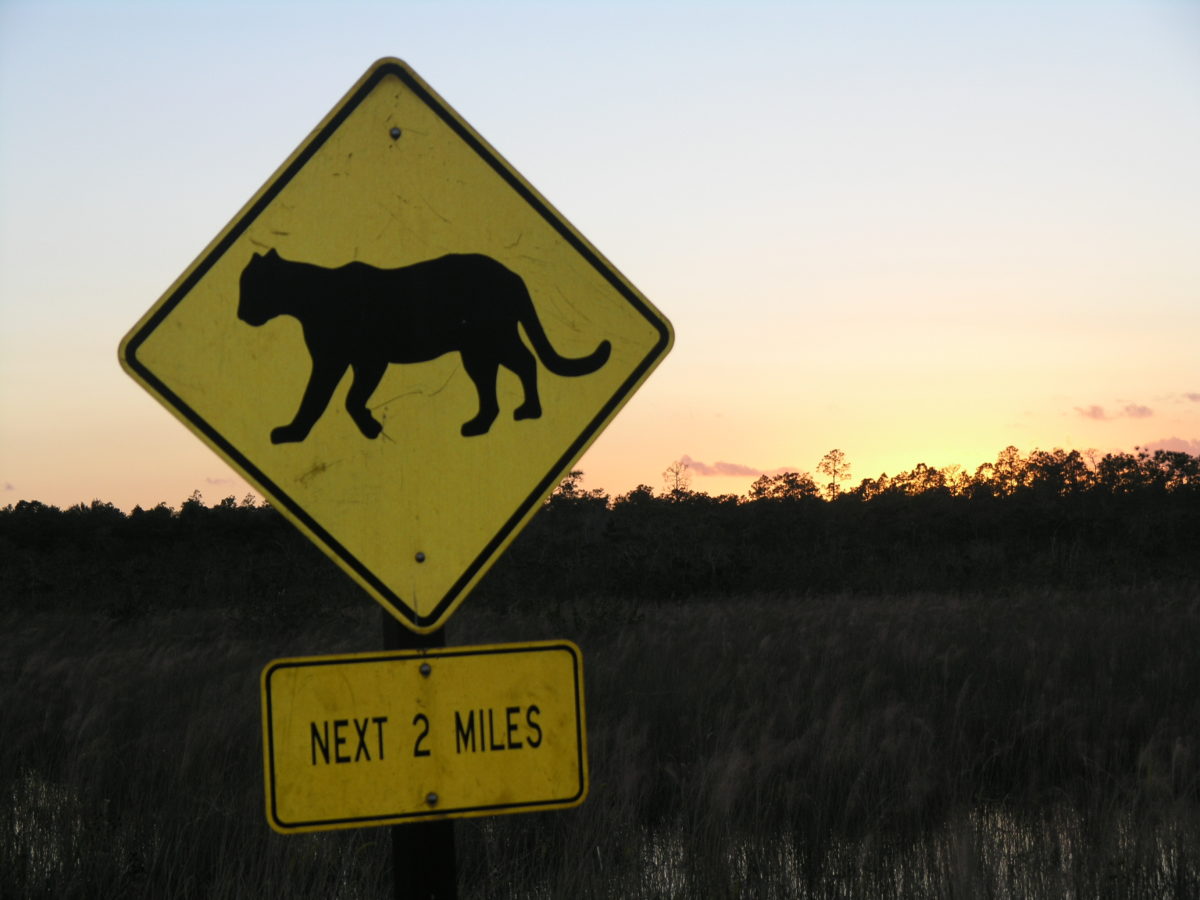
Removing the toll road that would have imperiled the Western Everglades and existentially threatened the Florida panther is a tremendous relief. With fewer than 230 Florida panthers remaining, protecting them and their habitat is critically important for their survival and recovery. Removal of an imminent Southwest Central Corridor helps with this fight.

What SB 100 does and does not do:

  1. Eliminates the M-CORES program but not all the Roads to Ruin included in the program.
  2. Eliminates the Southwest-Central Florida Connector in its entirety.
    Keeps the Northern Turnpike extension on the books with a different timetable.
  3. Does not eliminate the threat previously presented by the M-CORES Suncoast Connector.
  4. Provides US-19 north from the terminus of the Suncoast Parkway to I-10 as a way to replace the M-CORES Suncoast Connector.
  5. Includes the M-CORES task force recommendation of avoiding conservation lands with respect to upgrades of arterial highways, but only “to the greatest extent practicable,” and not specifically to the US 19 project.
  6. Frees up money once earmarked for M-CORES to be available for needed road projects throughout the state.This fight isn’t over.
We must press on together to protect our natural resources and local communities from the Roads to Ruin.”