Arizona Game and Fish Commission votes to ban the use of trail cameras for aiding the take of wildlife

For immediate release

Date: June 11, 2021

Contact:
Debra Chase, CEO, Mountain Lion Foundation
DChase@mountainlion.org
916-442-2666 ext. 103

Arizona Game and Fish Commission votes to ban the use of trail cameras for aiding the take of wildlife. 

Thanks to thousands of public comments and the 5-0 vote of the Arizona Game and Fish Commission, the use of trail cameras for aiding the take of wildlife (i.e. hunting) is prohibited in Arizona effective January 1, 2022.

Payson, AZ – On Friday, June 11, 2021, the Arizona Game and Fish Commission voted 5-0 to ban the use of trail cameras for aiding the take of wildlife after at least three years of debate, representing a win for Arizona’s mountain lions and 800-plus native wildlife species.

In 2018, Arizona voted to ban live action trail cameras, opening up a larger public debate about whether other types of trail cameras should be allowed. In December 2020, the Commission proposed a full ban on all trail cameras used for aiding the take of wildlife. In response to public comments, the Commission proposed an amended rule that would only prohibit trail cameras from July 1 to January 31, except within ¼ mile of a developed water source. On Friday, however, the Commission decided to approve the original, year-round ban instead of the amended seasonal ban.

“What this issue comes down to for me is the issue of fair chase,” said Commissioner Clay Hernandez from Tucson. “It comes down to a question of passive surveillance or active surveillance. If we are out scouting, glassing, hiking or shed hunting, we are out in the habitat and we are providing scent, movement, patterns and sound, all of which the animals we are seeking or scouting can make use of with their resources and instincts. If we are not out there and it is just a camera, we are silent. It is that that I don’t believe constitutes fair chase.”

In recent years, trail cameras have become a nuisance in Arizona and other states as more hunters use these devices to aid their pursuit of wildlife. Many recreationists report concerns about their personal privacy, while ranchers report disturbances to their cattle operations when cameras are placed near water sources. Additionally, the natural movement of wildlife species that rely on scarce water sources is interrupted when trail cameras are placed in the field and frequently checked.

“In all states where mountain lion hunting is allowed, hunters use many technologies and practices that give them an unfair advantage, such as hounds, electronic calls and trail cameras,” said Logan Christian, Region II Conservation Advocate for Mountain Lion Foundation. “This decision to ban trail camera use for aiding the take of wildlife is an important step towards improving fair chase hunting practices.”

The ban will go into effect on January 1, 2022. Trail cameras used for general wildlife photography, research, cattle management or any reason other than hunting will remain legal.

Founded in 1986, the Mountain Lion Foundation is a national nonprofit organization with a mission to ensure that America’s lion survives and flourishes in the wild.

Nebraska Game and Parks Commission approves 2022 hunt

For immediate release

Date :  June 11, 2021

Contact:  
Debra Chase, CEO, Mountain Lion Foundation

DChase@mountainlion.org
916-442-2666 ext. 103

Nebraska Game and Parks Commission approves 2022 hunt

Chadron, NE – On June 11, the Nebraska Game and Parks Commission voted unanimously to approve a 2022 mountain lion hunt in the state’s Pine Ridge region. Nebraska’s mountain lion population in the region is far too small to sustain a hunt and permitting a hunt at all is overly aggressive, unsustainable, and jeopardizing their long-term viability.

As of 2019, the mountain lion population in the Pine Ridge was estimated at 34 individuals, including kittens. This number does not include the 11 lions killed in the 2020 and 2021 seasons. When you factor in lions removed by hunters, the population size dwindles to 23. If 2/3 of the population is of adult age, then the population proposed to be hunted is closer to 15 individuals. This estimate does not include lions that may have been killed by other sources of human-caused mortality.

“Allowing trophy hunters to target such a small population is poor management and is not supported by science,” stated Denise Peterson, Conservation Advocate for the Mountain Lion Foundation. She continued, “Mountain lions have only recently reclaimed this small portion of their former range. Permitting this hunt threatens their long-term survival in the state and is not supported by the majority of Nebraskans.”

We asked the Commission to stop the hunt to preserve the few mountain lions that remain in Nebraska. Despite our request, feedback from the public, and science that shows that hunting such a small population threatens its long-term viability, the hunt will move forward. However, our fight is not over. We will continue to our efforts in Nebraska until mountain lions are protected from poor management decisions such as this.

If you want to support our efforts or get involved in Nebraska, visit MountainLion.org.

Founded in 1986, the Mountain Lion Foundation is a national nonprofit organization with a mission to ensure that Americas lion survives and flourishes in the wild.

Help Stop the Sheriff and His Killing Posse

We have joined a lawsuit against renegade Sheriff Songer in Klickitat County, Washington for unlawfully killing cougars. The Sheriff went rogue in 2019 convening a large posse to kill cougars just for being seen or living their natural lives in their natural environment.

This cougar killing program has resulted in the slaughtering of at least 16 cougars between August 2019 and July 2020. Just. For. Existing.

The lawsuit seeks a declaration by the court that the agency’s use of hounds to hunt cougars is unconstitutional, as well as a judgment stripping the civilian posse of any credentials to hunt cougars with the use of hounds or other means.

It also seeks a judgment by the court barring the sheriff’s office from killing cougars damaging property without authorization from Washington Department of Fish and Wildlife (WDFW).

Please help us stop this cruel and inhumane practice by the Klickitat Sheriff and his posse.

We must move faster to protect these beautiful lions. Please give today to Stop the Sheriff and help Save Washington’s Cougars.

Carmel Area State Parks adds over 1600 acres for mountain lions!

For immediate release

Date:  May 24, 2021

Contact:  Debra Chase, CEO, Mountain Lion Foundation
DChase@mountainlion.org
916-442-2666 ext. 103

Carmel Area State Parks adds over 1600 acres for mountain lions! 

Thanks to public support and the 6-0 vote of the California Parks and Recreation Commission, we now have 1200 more acres in natural preserve for mountain lions!

Sacramento, CA –  On Friday, May 21, 2021, the California Parks and Recreation Commission voted unanimously to approve the Carmel Area State Parks General Plan which included the creation of a New State Park consisting of 1604 acres which incorporates the Hatton Canyon and Point Lobos Ranch properties.

The New State Park will be called Ishxenta (Eesh-hen-ta) State Park, reflecting the original name given to the area from the Rumsen people whose presence substantially predates Spanish and Euro-Americans settlement.

Ishxenta State Park consists of two new Natural Preserves, recognizing the Point Lobos Ranch was purchased with Proposition 117 Mountain Lion Initiative funds. The Natural Preserve sub-classification is one of the highest levels of protection State Parks has for areas of special biological significance.

“Having worked on the Carmel Area State Park General Plan since 2012 it is exceptional to see some of California’s most unique and rare habitat types preserved for mountain lions and for the people of California,” stated Stephen Bachman, California Senior Park & Recreation Specialist.

“The Mountain Lion Foundation championed passage of Proposition 117 in 1990, which outlawed the sport hunting of mountain lions in California and also created the Habitat Conservation Fund (HCF) to acquire, enhance, or restore specified types of lands for wildlife or open space,” said Debra Chase, CEO of the Mountain Lion Foundation, “It is great to see these funds being put to good use to protect critical mountain lion habitat.”

The Point Lobos Ranch Property preserves and protects a scenic, naturally sensitive, and culturally important landscape, including high-elevation vistas offering spectacular views of Carmel Bay and the coastline. The land supports one of the world’s largest intact native Monterey pine forests, globally significant populations of the rare Gowen cypress, and other rare maritime chaparral habitat.

“We are losing far too much lion habitat to human encroachment and habitat fragmentation, it is critically important that we are intentional in our conservation and preservation of biodiversity, particularly as we face the unknowns of climate change,” said Chris Bachman, Region 1 Conservation Advocate for the Mountain Lion Foundation.

  • The Point Lobos Ranch acquisition was purchased using Proposition 117 California Wildlife Protection Act Funds. As such the Proposition, Chapter 9, Article 1, (2780 (a)), emphasizes the protection, enhancement, and restoration of wildlife habitat. The proposition allows for “recreational use”. The Proposition recognized the urgent need to protect the rapidly disappearing wildlife habitats that support California’s unique and varied wildlife resources.
  • Section 2781 emphasizes the need to maintain state acquired lands in open space and natural conditions to protect significant environmental values of wildlife and native plant habitat, riparian and wetland areas, native oak woodlands.
  • Section 2786(b) specifically mentions the funds are to be used for the acquisition of habitat to protect rare, endangered, threatened or fully protected species.


Founded in 1986, the Mountain Lion Foundation is a national nonprofit organization with a mission to ensure that America
s lion survives and flourishes in the wild.

Nebraska Game & Parks Commission Seeking Public Comment on Proposed 2022 Mountain Lion Hunt

Nebraska Game and Parks Commission is accepting public comment now through June 9, 2021 at 1:00 PM CT.

Nebraska’s mountain lions are in peril. In May 2021, Nebraska Game and Parks released their recommendations for yet another mountain lion hunt for the 2022 season. The recommendations are for a total of four mountain lions or a sublimit of two females in the Pine Ridge region. This is despite the fact that Nebraska has such a small population of lions, with the most recent population estimate being approximately 34 total cats (adults and kittens).

Given this population’s precarious foothold in the region, it cannot withstand any hunting whatsoever.

To submit comment:

All interested persons may attend and testify orally at the public hearing, but are strongly encouraged to submit written testimony prior to the public hearing in order to protect public health and assist in compliance with restrictions on public gatherings. Interested persons or organizations may submit written comments prior to the hearing, which will be entered into the hearing record if they: 1) include a request to be included as part of the hearing record; 2) include the name and address of the person or organization submitting the comments; and 3) are received by 1:00 p.m. CT, June 9, 2020 by Sheri Henderson at the Lincoln office, 2200 North 33rd Street, Lincoln, NE 68503-0370.

Updates will be posted here and on our Nebraska Action page.

Against the American Grain – Farms of Change in a Wild Community

Against the American Grain – Farms of Change in a Wild Community

May 20, 2021 @ 1:00PM — 2:30PM Pacific Time (US & Canada)

Join us for a conversation about growing food for humans in a changing climate – enhancing, protecting and preserving the wild landscape and building community in a multi species world.

If you missed it, watch it now!


“Wildness is a medium for mindfulness, a
consciousness in which cultivation transforms into
community and harvest into communion through the
shared language of being—of life itself.”

― Daniel Firth Griffith, Wild Like Flowers

Join us for a conversation about growing food for humans in a changing climate – enhancing, protecting and preserving the wild landscape and building community in a multi species world. We will discuss emerging young farmer perspectives, who they are, what methods they use and why it matters to all of us.

When a person decides to live on the urban edge, amid the rural valleys and the forests, among the wild things, there is an inherent responsibility to coexist within the space shared with other species of plants and animals. This is not the way of traditional farming and ranching.

Farming and Ranching with the Wild is taking on a responsibility to care for the domestic plants and animals raised and the wild native plants and animals whose space is shared. A community is built that favors the health and well-being of people and animals on both sides of the fence.

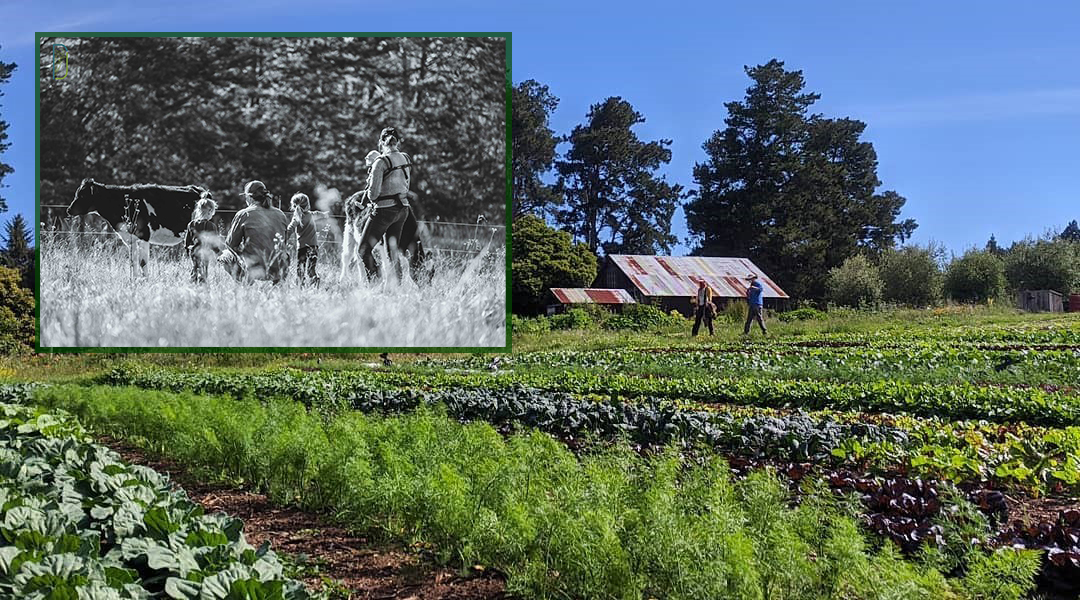
These farmers are on opposite sides of the Great Mississippi, one on the northern coast of California the other in middle Virginia. They are among a growing number of young farmers and ranchers that have chosen to regenerate and appreciate the wild lands and the wild life within, whilst raising livestock and growing crops for their community and themselves.

Meet the Farmers:

Daniel Firth Griffith

Daniel Firth Griffith is a storyteller, regenerative farmer, and a lover of the wildwoods. A first-generation farmer with a background in high-technology and entrepreneurship, Daniel’s life pivoted after being diagnosed with a life-threatening and degenerative genetic disease in 2012. He turned to farming—what ultimately emerged into regenerative conservation work—as “the last resort” in his health journey. What he found, however, was a life complete with abundance, joy, and health.

Daniel is the founder of Timshel Wildland, a 400-acre regenerative, process-led, and emergent conservation landscape in Central Virginia that partners with the wild world to co-create nutritious abundance—beef, pork, lamb, poultry, ancient vegetables, fruit, and peace. He is the Director of the Robinia Institute, a regional Hub of the Savory Institute that offers courses, consultations, and apprenticeships in the fields of natural citizenship, holistic management, and wild ecology. Under Daniel’s leadership, Robinia is pioneering land transition and regenerative scaling capital and consulting projects alongside bioregion-wide producer network emergence to co-create a uniformly diverse abundance in their region. Daniel is an acclaimed author, speaker, emergent conservationist, and an unworthy father to Elowyn, Tecumseh, and Sequoia.

His published works include: Boone: An Unfinished Portrait and Wild Like Flowers: The Restoration of Relationship Through Regeneration.

Gowan Batist

Agriculture and land management have always been an important part of Gowan Batist’s life. She is a Master Gardener, and studied Sustainable Agriculture through Oregon State University’s Extension Service. After graduating, she moved to Mendocino County to manage the farm-to-school program and the Noyo Food Forest. In 2013, Gowan Batist and her family founded Fortunate Farm. Together with North Coast Brewing Company, they purchased 40 acres–13 of which are owned by North Coast Brewing Company and 27 are owned by the Batist family. Gowan Batist manages the whole 40-acre farm as North Coast’s Sustainability Manager. The 40-acre farm located in Mendocino County produces heirloom vegetables and fresh cut flowers. To enhance the diversity of her farm, Batist also raises flock of sheep and sells the wool to local fiber artists.

Fortunate Farm utilizes sustainable farming methods such as swale contour beds to improve water storage and protect against erosion. Rotational grazing naturally adds sheep manure to the soil and increases soil fertility, eliminating the need to manually add manure to the soil. The mission of her farm is to “Feed people nutritionally dense foods, sequester carbon and empower our community.”

Webinar Bonus!

Throughout the webinar a random drawing will take place giving away 10 of Daniel’s book Wild Like Flowers: The Restoration of Relationship Through Regeneration.

All webinar attendees will have the opportunity to receive 25% off the purchase price of an autographed copy of the book Wild Like Flowers: The Restoration of Relationship Through Regeneration.

Florida M-CORES and No Roads to Ruin Update

We wanted to share an update from the No Roads to Ruin Coalition of which we are a part. Along with the Coalition, we have actively been working to halt the development of the toll roads that would further fragment crucial habitat that Florida panthers and other wildlife rely on for survival.

READ:  Controversial plan to expand toll roads hits dead end over environmental, cost concerns

“Campaign Update! No Roads to Ruin Steering Committee Statement on SB 100:

We are eternally grateful for all the time and effort No Roads to Ruin Coalition partners and individual activists have devoted to this cause. We honor them and their work to ensure a better future for Florida.

The No Roads to Ruin Steering Committee did not support SB 100 because the bill did not stop all of the roads at the heart of M-CORES. SB 100 moves our state in the wrong direction and leaves North Florida’s rural communities and natural resources at risk. Florida needs a 21st Century transportation policy that takes us away from new roads through environmentally sensitive areas and towards sustainable transportation alternatives. As such, with two of three toll road threats remaining, we cannot proclaim that its passage and expected signing by the Governor as a triumph.

Only two years ago many of the same Florida Legislators who supported SB 100 voted nearly unanimously to approve the three Roads to Ruin. The 2021 Florida legislature had the opportunity to fully repeal M-CORES with the introductions of SB 1030/HB 763. However, neither bill was ever heard in committee.

Removing the toll road that would have imperiled the Western Everglades and existentially threatened the Florida panther is a tremendous relief. With fewer than 230 Florida panthers remaining, protecting them and their habitat is critically important for their survival and recovery. Removal of an imminent Southwest Central Corridor helps with this fight.

What SB 100 does and does not do:

  1. Eliminates the M-CORES program but not all the Roads to Ruin included in the program.
  2. Eliminates the Southwest-Central Florida Connector in its entirety.
    Keeps the Northern Turnpike extension on the books with a different timetable.
  3. Does not eliminate the threat previously presented by the M-CORES Suncoast Connector.
  4. Provides US-19 north from the terminus of the Suncoast Parkway to I-10 as a way to replace the M-CORES Suncoast Connector.
  5. Includes the M-CORES task force recommendation of avoiding conservation lands with respect to upgrades of arterial highways, but only “to the greatest extent practicable,” and not specifically to the US 19 project.
  6. Frees up money once earmarked for M-CORES to be available for needed road projects throughout the state.This fight isn’t over.
We must press on together to protect our natural resources and local communities from the Roads to Ruin.”

California State Parks Grazing Bill Pulled

California Assembly Bill 434 would have expanded Commercial Grazing leases in California State Parks

The Mountain Lion Foundation lead a large and diverse coalition of conservation, public lands, and wildlife protection organizations in opposing California Assembly Bill 434.  This bill aimed to greatly expand commercial grazing leases in California’s state parks, wildlife areas, ecological reserves, and other precious public lands that mountain lions call their home.  Due to strong opposition the author pulled the bill from consideration this year.

Our opposition letter:


March 25, 2021

The Honorable Robert Rivas
California State Assembly
State Capitol
Sacramento, CA 95814

RE: Opposition to Assembly Bill 434 (Public lands: grazing leases.)

Dear Assemblymember Rivas:

On behalf of the undersigned organizations, we write to express opposition to your Assembly Bill 434 (AB 434), which would unnecessarily, and problematically, expand grazing in California’s public lands, including our state parks and lands managed by the California Department of Fish and Wildlife (CDFW) and State Lands Commission.

We have strong concerns about the conflicts with native wildlife and the recreating public that expanded grazing on our state’s public lands would create. Grazing by non-native species has led to severe and sometimes irreversible degradation of native ecosystems. Specifically, grazing can cause degradation of habitats that threatened, endangered, or sensitive native plant and animal species rely on and can cause significant impairment of water quality. Our state’s public lands belong to all Californians and must be managed to maintain their long-term ecological integrity and access for all.

AB 434 proposes to elevate the tool of grazing above other tools for resource management, even though many other tools (e.g., prescribed fire) have been shown to have greater efficacy for the resource management goals of the public lands at issue. For example, for CDFW lands, AB 434 inexplicably would promote grazing as a management tool even if it is incompatible with the purpose for which the lands were acquired or incompatible with the land management plan. AB 434 also would elevate grazing as the primary tool for resource management on state public lands even if other tools were more appropriate to meet the resource management goals at the heart of state parks’ mission – namely, protecting biodiversity and the state’s most valued natural and cultural resources.

AB 434’s proposed 5-20 year lease term locks in an arbitrary timeframe to benefit ranchers while removing latitude of public land managers to develop a grazing agreement that incorporates variables such as time, intensity, herd size, and improvements (e.g., fences, off-stream watering devices). These and other elements need to be considered as part of a holistic approach that would reflect the variable conditions across the millions of acres of California.

By allowing grazing unless it is determined to be incompatible, AB 434 upends the current authorities, which allows grazing if determined to be compatible with public land purposes. Shifting to a presumption of compatibility unless state land managers can prove incompatibility is fundamentally at odds with California’s approach to environmental laws (e.g., CEQA), and would require the state to undertake costly compatibility assessments on proposals to graze public lands. Because the measure would apply to  virtually all state public lands, such assessments could cost the public hundreds of thousands of dollars per year and would take critical staff resources from other priority biodiversity protection and climate adaptation efforts.

AB 434’s costs extend beyond such determinations of incompatibility. Other costs would include, but not be limited to:

      • installing and maintaining grazing control devices (fences);
      • installing and maintaining off-stream watering devices;
      • undertaking annual monitoring of grazing efficacy;
      • adding more staffing expertise in grazing lease development and management;
      • undertaking regulatory review for proposed leases – under CEQA, CESA, FESA, Clean Water Act, CDFW LSA, for each proposed lease;
      • completing cultural resources review including PRC 5024 review and review by the Office of Historical Preservation; and,
      • undertaking tribal cultural resources (AB 52)


While AB 434 would expand grazing on state public lands, it does not provide funding to administer or manage for this expanded use on public lands. State parks and CDFW have insufficient funding, and staff to create and administer monitoring systems that will provide reasonable assurance that adverse impacts will be minimized and promised lease benefits are achieved. State lands managers also lack enforcement and program staff needed to react to and manage inevitable conflicts between grazers and native wildlife ranging from depredation by native carnivores to impacts on threatened and endangered species.

By requiring preferential renewal if terms of the lease are met, AB 434 would significantly curtail the ability of state public land managers to adaptively manage grazing on our public lands. Changing lease terms to respond to changed management needs would begin with a presumption against the state. We believe that once a rancher has secured a public lands lease, the land will never again be available to the public – it will be income-generating land for the benefit of the private leaseholder. Grazing would displace recreational activity in the backcountry where it is already limited for many populations. In addition to impacting the goals of equitable access, this loss of recreation would negatively impact the state’s revenues, which are relied upon to underwrite resource protection and stewardship.

There is a robust documentary record of the negative impacts that grazing can have on natural and cultural resources. These impacts range from water quality and wildlife impacts, to spread of invasive exotic species to destruction of archaeological sites and tribal cultural resources. While some of these impacts   can be minimized or mitigated with good oversight and management, that oversight and management will require new dedicated and skilled staff and concomitant funding resources needed to support these new activities.

Finally, and perhaps most importantly, existing law already gives state public land managers authority to utilize grazing as a tool to manage land where they determine that it is appropriate. AB 434 thus adds no public benefits; instead, it benefits grazers to the detriment of the state’s public land managers, the recreating public, taxpayers, and our most precious public lands and the native wildlife who live there.

For all these reasons, our organizations oppose AB 434.

Sincerely,

Brandon Dawson, Policy Advocate
Sierra Club California
Lindsay Larris, Wildlife Program Director
WildEarth Guardians
Debra Chase, CEO
Mountain Lion Foundation
Brian Nowicki, CA Climate Policy Director
Center for Biological Diversity
René Rowland, Chair
PawPAC
Neal Desai, Senior Director of Field Operations
National Parks Conservation Association
Jennifer Hauge, Legislative Affairs Manager
Animal Legal Defense Fund
Adrienne Underwood, Policy Manager
California State Parks Foundation
Gordon Bennett , President
Save Our Seashore
Morgan Patton, Executive Director
Environmental Action Committee of West Marin
Geoffrey McQuilkin, Executive Director
Mono Lake Committee
Rico Mastrodonato, Government Affairs Director
Trust for Public Land
Sofia Rafikova, Policy & Operations Coordinator
Planning and Conservation League


The Washington Legislature Passed  SB 5092 – Operating Budget Will help to Protect Washington’s Cougars

For immediate release

Date April 26, 2021

Contact: 
Debra Chase, CEO, Mountain Lion Foundation
DChase@mountainlion.org
916-442-2666 ext. 103

The Washington Legislature Passed  SB 5092 – Operating Budget
Will help to Protect Washington’s Cougars

Olympia, WA – SB 5092, making the 2021-2023 fiscal biennium operating appropriations, passed the Legislature Sunday, April 25 and will soon be signed into law by Governor Inslee. The budget includes a directive on cougar management in the State.

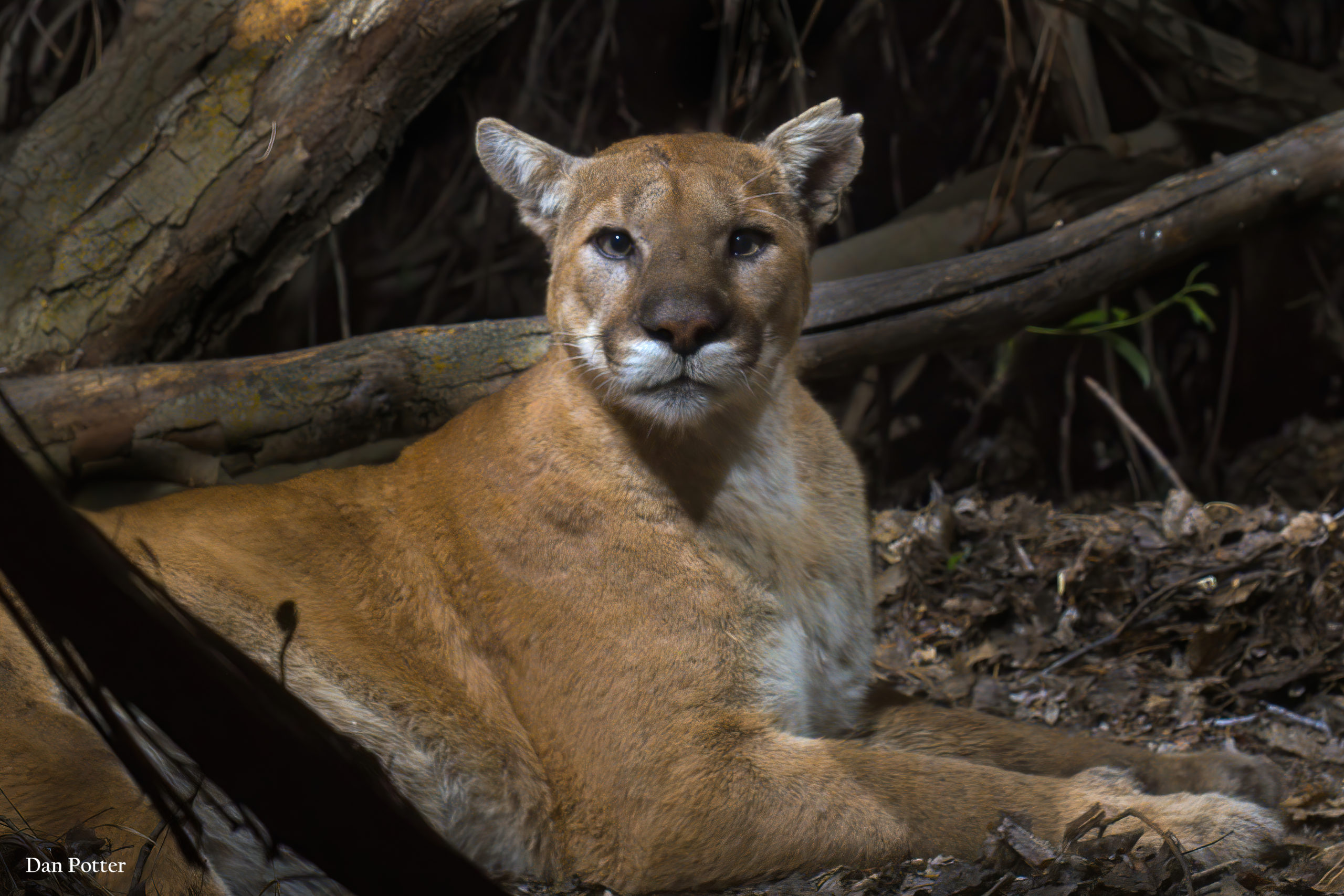
Photo: Dan Potter

SB 5092 will require the Washington Department of Fish and Wildlife (WDFW), in coordination with statewide law enforcement agencies, to provide a report to the legislature by January 2022, on the number of cougars reported to WDFW as killed by local government law enforcement agencies, cougar pursuit training opportunities provided to local law enforcement agencies, and how cougar removals by local enforcement agencies impact WDFW’s cougar management strategies.

In addition, appropriations will be provided solely for WDFW to assist local jurisdictions in responding to cougar related public safety concerns. The funding is available to a local jurisdiction only if they have a signed agreement with WDFW recognizing cougar management authority is vested with WDFW. The agreement provides criteria to determine if a cougar creates an actionable public safety risk deemed eligible for financial assistance. The approved language within the budget notes that the mere presence of a cougar on private property alone does not create an actionable public safety risk.

The National Non Profit Mountain Lion Foundation is pleased with the outcome of this operating budget.  “We want to thank the Budget Leaders Christine Rolfes and Kevin Van De Wege.  This is great news for cougars in Washington state,” stated Mountain Lion Foundation CEO, Debra Chase. “Cougars are overhunted in Washington and this budget will help to ensure they are not killed just for existing and living their lives.”

Chris Bachman, the Foundation’s Regional Conservation Advocate commented, “This directive to the Department will bring accountability, transparency and makes clear that the mere presence of a cougar on private property does not create an actionable public safety risk.”

Cougars are a keystone species in the U.S. and are found only in western states and Florida. Hunted to extinction in the east they have an ecological impact that is greater than their numbers suggest.

Founded in 1986, the Mountain Lion Foundation is a national nonprofit organization with a mission to ensure that Americas lion survives and flourishes in the wild.

This Earth Day, Touch the Earth

Click to watch our latest video.

51 years ago Earth Day was founded. One of the largest grass roots movements in support of environmental protections. That day in 1970, an estimated 20 million people attended the festivities and marched in the streets demanding that our government do more to save our planet. 20 years later it rose to 200 million and today it is estimated that one billion people celebrate the Earth and will march in the streets for stronger environmental protections this April 22nd.

This Earth Day, after a year that tested us beyond measure, many of us are anxious, bored, over worked or worse, unemployed. We are ready to get out of the house. To help you celebrate the importance of this Earth Day we aren’t presenting a webinar to watch, a town hall meeting to attend or even a march. Today is for the Earth and we are asking you to step up and do something really radical. Something that could very well change your life or at least allow you to see your life and the planet from a different perspective. We are asking you to go outside. Take a hike through a forest, walk by a lake or alongside a river. Hug some trees and put your bare feet in the water. Experience the natural world in all of its glorious splendor.

Allow yourself to indulge in an old fashioned adventure. An adventure where you don’t know how long the trail is, or where the hike will lead you, where it ends, or what previous walkers, runners, bicyclists, or hikers thought about it as posted on social media or in the latest review ap. So please, have an adventure, unplug and go outside.

As you embrace nature and your own inner transformation, you’ll discover that your power—and responsibility—to change the world around you are far greater than you’ve known.

Watch the beautiful video above as your entry into the wild and then get out there. Just walk or hike or ride a bike. Find a park, nature preserves, a forest or some other place that is natural and free. Discover what you have missed, listen to the quiet and pay homage to the planet that sustains us.

Earth. This is your Day. We recognize you. We celebrate you.

______________________________________

Sentinels and Seekers Project:

Photo: Sebastian Kennerknecht

In partnership with wildlife and conservation photographer, Sebastian Kennerknecht, we aim to build public pride and empathy for mountain lions as a means to change policy and potentially assist these cats in their ability to safely move through their habitat.

The Sentinels and Seekers Project will show the pride we have in the iconic cats that are currently protected and develop empathy for those lions that are not as lucky.

PRIDE: Mountain lions occupy much of the western US. Some individuals stand guard over the most sacred of our protected lands, like Yosemite and Glacier National Parks, and the Grand Canyon. These lucky sentinels occupy about fourteen percent of puma range. By visually depicting these sentinel cougars in the most iconic of US landscapes and habitats – showing their wildness and strength – the project aims to create a sense of national pride for them and the environments we have already protected.

EMPATHY: With your support, we can raise empathy and potentially establish policy changes for three separate wildlife habitat where the potential for wildlife corridors to be established is strong. Washington, California and Arizona have key areas that cause mortality of our cats attempting to navigate through human habitat. The photographs taken at these critical points are the catalyst for the empathy needed to protect these wildlife corridors.

The comparison of sentinel and seeker cats will introduce you to individual pumas allowing a connection to be formed between humans and cats with unique personalities and characteristics. A population of animals sometimes means little to a person, an individual cat, with a given name, means everything. Your help with this project means even more.

THE LOCATIONS

Olympic Peninsula, WA

Habitat: lush temperate rainforest

Barriers: peninsula exit points are getting cut off as Seattle suburbs expand. Interstate 5 proves another seemingly impossible road to cross for the cats.

Solutions: policy action to maintain corridors, fund-raise for 1-5 overpass.

San Francisco East Bay, CA

Habitat: oak savanna

Barriers: fast paced urban sprawl will cause isolated puma populations

Solutions: policy creation to protect wildlife corridors between populations.

Sonoran Desert, AZ

Habitat: arid desert

Barriers: Interstate 10 is a major movement barrier for cats dispersing north

Solutions: wildlife overpass over the four lane freeway.

CLICK HERE to support the Sentinels and Seekers campaign!