Reflections on Gratitude – MLF Newsletter

Welcome, 2021! Heading into a new year, we’re naturally reflective about the memories we’ll keep from the year past and the priorities we’ll carry into the new one.

While so much has been said about the many difficulties of 2020, the year also brought us reasons to celebrate and be grateful. (Read these reflections from our own Fred Hull and from our CEO Debra Chase in their columns below.)

As the Mountain Lion Foundation, we must also express our gratitude for America’s rugged, adaptable, charismatic lion — the mountain lion.

To our many volunteers and activists across America, we offer our deepest gratitude, especially to those in Klickitat County Washington. Without all of you and the precious time you give to us, we would not be as effective in doing all of the work we do to Save Americas Lion.

Click here to read the full newsletter!

The Animal Guide to Finding Love and Raising Kids

The Animal Guide to Finding Love and Raising Kids with Dr. Jennifer Verdolin 


Presented February 11, 2021

When it comes to dating, relationships, and family life, it seems us humans have some challenges. From fearing rejection to not knowing if someone really likes us, navigating our romantic lives can be a complicated affair. And just when we think we’ve got it all worked out, we start a family and things really get difficult. Whether it’s figuring out how and if to breastfeed (and for how long) or settling disputes between siblings, there are a myriad of issues parents have to figure out. This is where other species can help. Using animal behavior provides a contextual prism to view what is happening in other species and be more objective about what is going on in our own. Through this biological lens, we can explore different ideas of what it takes to have a successful relationship, what it means to parent, and why and how these behaviors evolved in humans and other species, with a special look at mountain lions. The truth is that other animals have a lot to teach us about love, relationships, and this thing called family.

Widely regarded animal behavior scientist, author, and science communicator, Jennifer has been a featured guest on BBC Earth Podcast, National Public Radio, and many others. From 2014-2018 she had a recurring role as a radio personality on the nationally syndicated D.L Hughley Show, hosted by American Peabody award-winning comedian, D.L. Hughley.

After the publication of her two nonfiction popular science books, Wild Connection and Raised by Animals, Jennifer has been using her expertise to contribute to the development and production of documentaries. From Animals in Love (Oxford Scientific Films) to Spy in the Wild (John Downer Productions) and Animal Social Networks (Rotating Planet Productions), Jennifer has been a scientific consultant, writer, researcher, and on-screen contributor. She also writes for Psychology Today and is an Assistant Professor in the School of Natural Resources and the Environment at the University of Arizona.

Aside from being sought after to contribute to media projects, Jennifer is an engaging speaker, delighting and sharing with audiences the lessons we can learn from other animals to improve our lives, relationships, and families. Her appearances have included places like the world-renowned 92nd St Y in New York City. Delivering engaging science is her specialty whether it’s in print, on the radio, on screen, or in front of a live audience.

Website: www.jenniferverdolin.com

Twitter: @RealDrJen

Instagram: @RealDrJen

In case you missed it, watch it now!

In Gratitude to Mountain Lions

Sometimes, as we meander through life, we fail to acknowledge the contributions of others to our successes. That is, we forget to say thank you, especially to nonhumans. For my part, I would like to correct this oversight by acknowledging the importance of cats – especially mountain lions – in providing me with an important reason for living a useful life.

My childhood was essentially unremarkable, culminating in graduation from Terra Nova High School in 1969. Interestingly, it was a seminal year in the evolution of the modern environmental movement. The important books Silent Spring and Born Free had already begun to increase public awareness and improve the public’s perception of wildlife, especially lions. In January of that year, an oil spill in Santa Barbara, California, and – in June – a fire on the Cuyahoga River in Ohio, officially inaugurated the modern popular environmental movement. That same year, I saw the 1964 movie Born Free, the story of Elsa the lioness. Her story led many people to acknowledge the complexity of other beings, including wild felines. Nearly simultaneously, I discovered the January 1969 issue of the Defenders of Wildlife News, the front cover of which featured an animal that would forever alter the trajectory of my life. It featured an image of a reposing cougar peacefully surveilling its rocky, barren surroundings. These two events exerted a synergistic effect on my interest in wildlife conservation, especially felid conservation.

Wild felines were in trouble. In that year, one authority estimated that India’s wild tiger population had fallen below 1,000. At the same time, the Italian actress Gina Lollobrigida appeared on the covers of fashion magazines wearing a tiger skin coat made from the skins of over 100 tigers. This fashion trend was accelerating, threatening the animals’ continued existence. The news guided my academic choices and inspired me to be increasingly involved in feline conservation.

The opportunity arose immediately. In the early 1970s, California conservationists united to propose a ban on legal mountain lion hunting formed The Coalition to Save the California Mountain Lion. The Coalition (which ultimately became the Mountain Lion Foundation) wanted to gather a scientifically determined lion population estimate and allow for behavioral research by means other than those using the scope of a rifle. I became deeply involved in the campaign to pass Assembly Bill 660, the successful passing of which began a moratorium on cougar hunting that lasted for years. I was elated.

That same year, on a hiking trip to Mount Shasta, I met my first cougar. Unfortunately, this was a mounted mountain lion exhibited at a natural history museum operated by the National Park Service. Seeing this taxidermic animal, I was enthralled by its beauty and simultaneously horrified that it had died for a seemingly senseless reason. I promised myself that I would do all I could to prevent similar things from happening to other animals.

As I began my undergraduate studies in biology, two more events converged to influence the trajectory of my life. First, I began to experience vision failure, thus eliminating any prospect of becoming an ethologist in the tradition of George Schaller, who had just published his major treatise, The Serengeti Lion. This would become the first book that I read as a visually impaired person. Actually, I had to have the book transcribed onto reel-to-reel tape so that I could listen to it, the original reels of which I still possess as a memento. Second, I was adopted by a cougar-colored abandoned domestic cat who would provide me with an important personal link to all cats, domestic and wild, throughout the remainder of my undergraduate career.

Butch, the cat, would be with me during the decade that I attempted to negotiate the vagaries of obtaining a college education. She would demonstrate conclusively to me that the domestic cat is capable of complex cognition and of forming powerful friendships, probably even loving relationships. Based on the notion of common ancestry, and because of biological similarities, I assumed that wild felids, including cougars, were as emotionally complex as Butch. I began to believe that wild cats deserved the same degree of respect as we granted to domestic cats.

Nearly at the same time, I had the unfortunate experience of visiting The San Francisco Zoo, where I watched a mother leopard obsessively grooming her single cub for over three hours, probably because her enclosure had absolutely nothing else in it other than the mother and her cub. This event was so disturbing to me that it would be the last time that I would enter a zoo for nearly a decade. I promised myself I would do something about the conditions of wild animals in captivity, and this event would ultimately dictate my decisions about what to do when I finally graduated and became an adult.

In the early 1980s, after graduating from California State University San Francisco with degrees in Ecology and Zoology, I was considered for a position within the California State Department of Fish and Game. I came to discover that, if hired, I would be studying migration corridors and managing populations of important game species, including ducks and deer. This focus on what was essentially wild animal ranching was not especially interesting to me, so I began to investigate alternative fields of study in biology. I soon discovered the concept of Behavioral Enrichment through environmental engineering for captive animals, which would become one focus of my graduate research. Ultimately, our lab produced projects ranging from developing complex, interactive environments for tigers – environments that actually allowed captive tigers to behave like free-living tigers – to other projects that investigated the effects of providing acoustic prey to captive cougars. Finally: an opportunity to work around a mountain lion! Ultimately, after receiving a doctorate in Psychobiology from U. C. Davis, I would have the privilege of developing an academic program teaching in the area of captivity and behavior.

I conducted my graduate work within the Department of Psychology at The University of California, Davis. Imagine my surprise when, on my first day in the Psychology building, typically devoid of animals other than humans, I discovered the inexpertly taxidermic mountain lion head on my assigned bookshelf.

After repeated inquiries to all of the departments throughout the university, no one could account for the mysterious appearance of this cougar head. To this day, its appearance is a mystery. This grotesque totem would be my companion all of the way through graduate school. It is ironic that the one person on the U.C. Davis campus who would be troubled by such an apparition would be the very one receiving it. The head would ultimately disappear as mysteriously as it appeared, stolen from our offices within a month of my graduation.

In 1990, after I had been distracted from mountain lion issues because of academic necessity, Proposition 117, written to protect mountain lions from scientifically unsupportable sport hunting, was placed on the ballot in California. During the campaign for Proposition 117, a television commercial documented the manner in which mountain lions, pursued and harassed by packs of hounds, then forced into trees, were assassinated by hunters and their guides. Hearing this image described to me, I felt a sense of outrage that reignited my passion for the animal that had motivated me to persevere through my college career. The combined outrage and cooperative efforts of those respecting mountain lions prevailed, and cougars became a protected species in California. This success energized me in such a way that I eventually completed my graduate program. Having earned a total of five degrees, I now had the wherewithal to speak authoritatively for lions, and even the financial ability to put a bit of money where my – and their – mouths were.

It is fair to conclude that the mountain lion, or the mascot of the very college at which I teach – the panther – gave me the motivational underpinnings and future vision to create a meaningful life. Consequently, I would like to express my gratitude to the lions of the Americas for providing me with a reason to persevere. In gratitude, I promise to continue to do as much as I can to ensure their future survival and to promote the greater knowledge of and respect for this remarkable creature, The Mountain Lion: America’s Lion. Thank you, lions! With gratitude, Chris Thomas Tromborg, Ph.D.

Washington’s Commissioners Vote to Approve the Hound Hunting Training Rule

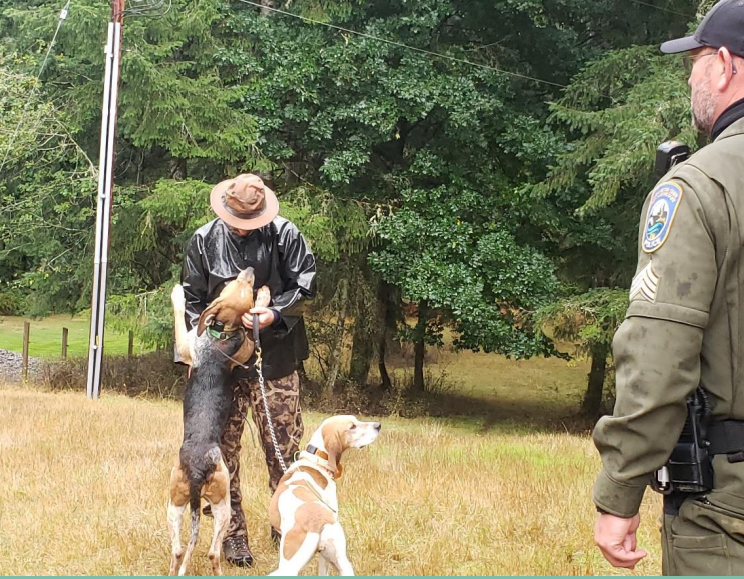
After a considerable negative public comment, the Washington Fish and Wildlife Commission (WDFW) today made the unsound decision to pass the Hound Hunting Training Rule as presented by WDFW staff. This rule will allow houndsmen to train their dogs by chasing cougars and is considered a non-lethal chase. The proposal was finally passed by a vote of 4-3, as it was presented by the WDFW staff.

The proposed training program would select 50 licensed hunters to train their own dogs by allowing them to pursue cougars until the cats are treed or cornered. Because this is a nonlethal program, participants would be expected to call off their dogs and leave the area without killing any wildlife. Opponents say this is unrealistic, and note that firearms are not prohibited on these chases.

“The legislature asked for a public safety program,” said Chase, “instead, the WDFW approved an over-reaching proposal that even allows training participants to bring along untrained and un-screened family members while they chase cougars. This makes a mockery of the legislature’s intent under the guise of public safety by allowing cougars to be chased by dogs as a recreational activity, one that Washington voters outlawed long ago.”

The heated debate over this proposal has shone a spotlight on WDFW’s internal politics. In documents obtained through public disclosure requests, WDFW’s staff scientists questioned the safety and necessity of a cougar chase season. These expert opinions were not brought forward in public commission meetings. “We fear that the commission is not hearing these voices, as they are filtered through the presentations of managers influenced by other voices,” says Debra Chase, CEO of the Mountain Lion Foundation.

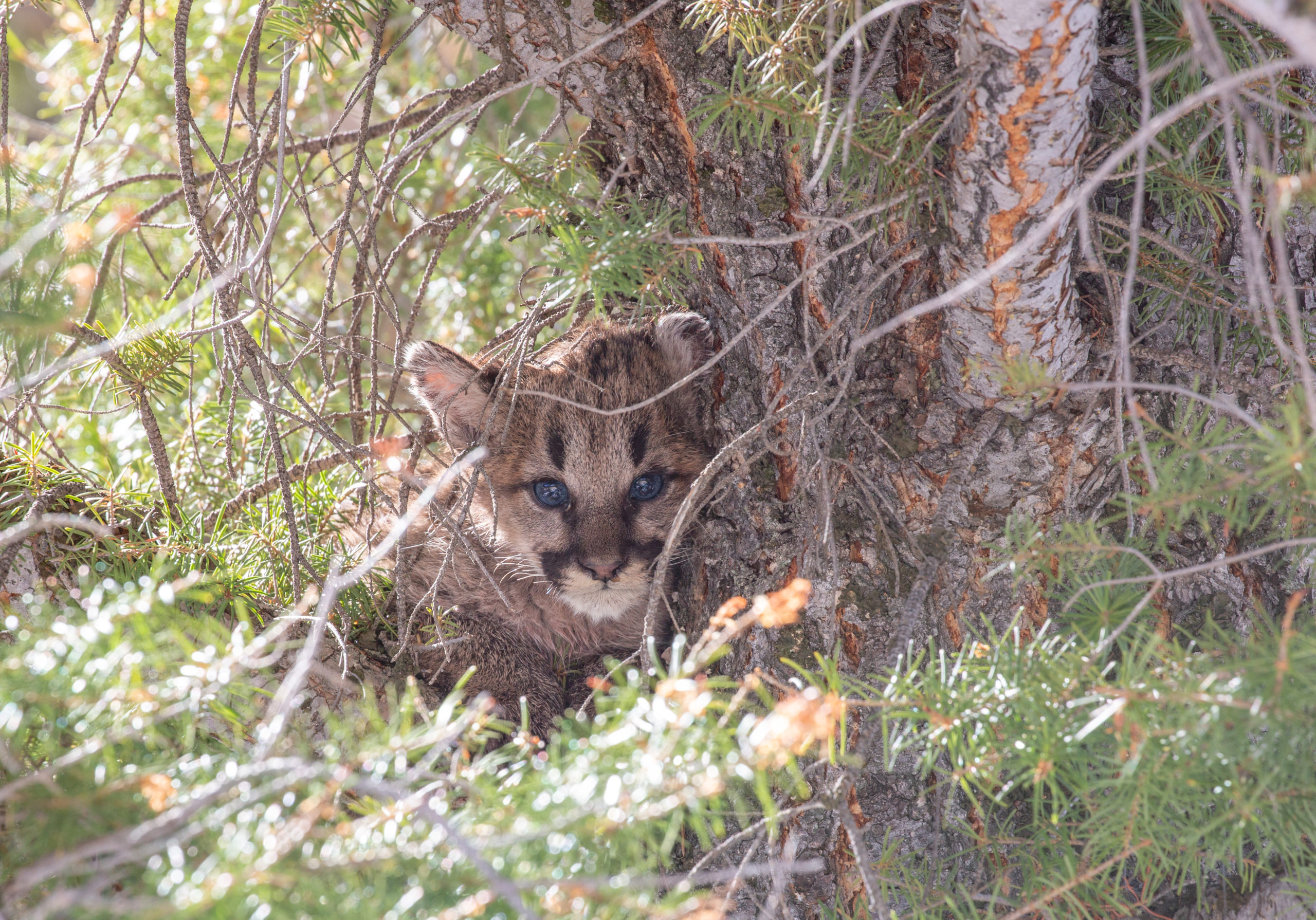
Chasing cougars with dogs will inevitably separate lactating mothers from their kittens. Even a temporary separation could prevent kittens from drinking and eating for a full day while the female is treed or hiding. This method can also cause injuries that prohibit the cougar from hunting, which leads to a slow and excruciating death for any wild carnivore.

“This is not non-lethal hounding of cougars,” says Chase. “In our opinion, there is no such thing. This is especially concerning since the commission increased the total number of cougars hunters can kill by almost 50% in April of 2020, adding more threats to the already vulnerable cougar population.”

“WAC 220-412-130 WDFW Managed Nonlethal Pursuit Training Program” came out of House Bill 1516, which directed WDFW to establish a nonlethal program for training dogs. For over an hour Commissioners debated on the rule and at one point after a motion was seconded to pass the proposal the Chair didn’t know how to proceed when that same motion was asked to be amended and tabled for two months by Commissioner Baker. Chair Carpenter had to confer with their counsel present who was not fully equipped to act as parliamentarian of the proceedings.

For several months The Mountain Lion Foundation and other conservation groups submitted much public commentary about this new rule. There are not any provisions in the rules for controlling hounds or reporting requirements that would keep the public informed.

Living with Lions on the Range

Living with Lions on the Range a 2021 California Rangeland Summit Presentation by Dr. Julie Young, Rosemary Schiano and Gowan Batist

Heeding the urgent call to coexist with mountain lions and other wildlife, today a growing number of professional and hobby farmers are embracing the time-honored husbandry practices that have worked for centuries to keep wild and domestic animals safe. They’re also employing emerging techniques and leading-edge technology and research. This presentation features three panelists with years of on-the-ground experience in keeping people, pets, and livestock safe while peacefully coexisting with mountain lions and other wildlife.

America and Her Lion

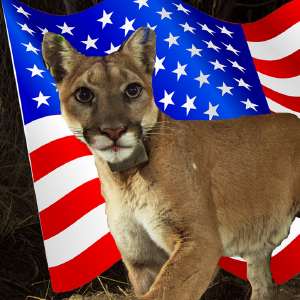
“We cannot walk alone. And as we walk, we must make the pledge that we shall always march ahead. We cannot turn back.” These words by Martin Luther King reminds us that ours has also been a remarkable journey. For 35 years the Mountain Lion Foundation has faced adversity, weathered defeat and welcomed many successes.

Today new leaders have been sworn into office. The White House can finally get back to leading the charge against the central environmental crisis of our time, giving us hope that the new administration will reverse the many attacks on our nation’s core environmental laws. The challenges ahead are great, but so are the possibilities.

Will we still have obstacles to overcome? Of course we will. And yet, we are encouraged and have hope for America and her Lion. This hope for America is reflected in the words of the young Amanda Gorman: “And yet, the dawn is ours before we knew it. Somehow we do it. Somehow we weathered and witnessed a nation that isn’t broken but simply unfinished.”

Saving America’s Lion is not work that can be done alone. The value of our unity with you, our community of supporters is key to our success. And so today, as we witness a historical change in America’s leadership, we also reflect on what we as staff, donors, volunteers, and partnering organizations have accomplished. We thank all of you for what you do. It is a beautiful fact that we aren’t alone in making the world a better place.

With that knowledge we are encouraged that our efforts to Save America’s Lion today, bring the promise of a better tomorrow.

Debra Chase, CEO

Wild Cat Conservation Photography with Sebastian Kennerknecht

Wild Cat Conservation Photography with Sebastian Kennerknecht

Presented on January 19, 2021 at 1:00 – 2:30 PM PT
There are forty species of wild cats in the world, including the well known big cats like lions, leopards, and pumas. Twenty-seven of those species are decreasing in population globally. For others, numbers are decreasing on a local scale. Wild cat photographer and advocate Sebastian Kennerknecht will talk about how photography is an effective tool to create positive conservation change. In the process he will discuss the what, how, and why of conservation photography, and how it specifically relates to wild cats.

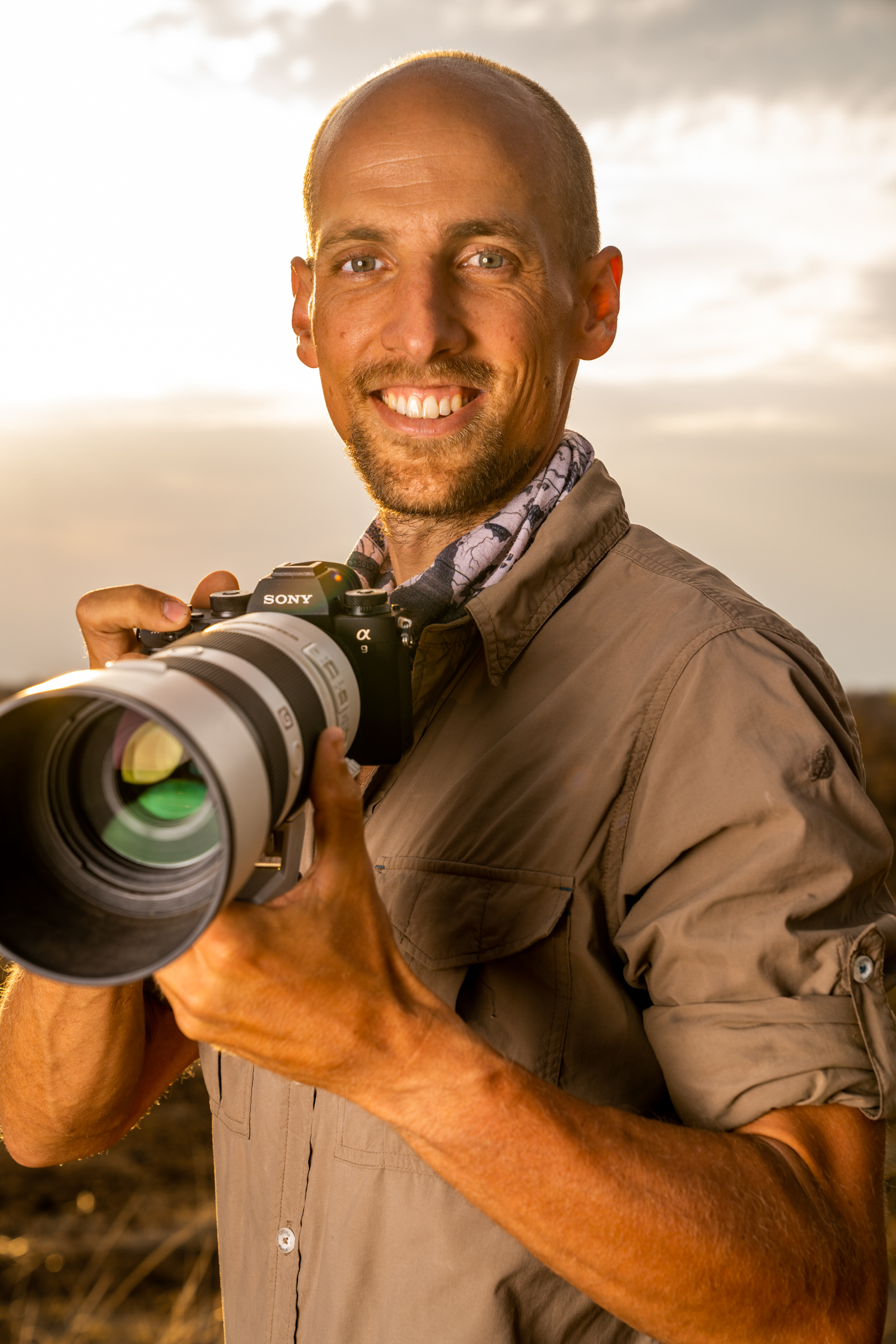
Sebastian Kennerknecht is a wildlife and conservation photographer with over fourteen years of experience visually covering wildlife and environmental issues internationally, focusing in particular on wild cats. He has produced high quality editorial photographs, time-lapses, videos, and web content featured in and by the New York Times, Washington Post, BBC Wildlife, Smithsonian, The Economist, Science, and Conservation International, among others. Using highly customized SLR camera traps, along with conventional photographic techniques, he works closely with field biologists to both effectively and ethically capture photographs of some of the rarest cats on the planet while also highlighting the threats they face. Working for conservation organizations and on magazine assignments, Sebastian has photographed twenty-three of the forty species of wild felids.

Sebastian graduated with a Bachelor of Science in Ecology and Evolution from the University of California – Santa Cruz, won NANPA’s emerging photographer award, and is an associate fellow with the International League of Conservation Photographers.

In case you missed it, watch it now!

Honoring Barry Lopez, Longtime Honorary Board Member

The Mountain Lion Foundation’s Board and staff mourn the passing of author Barry Lopez, a literary lion, friend to lions, and defender of nature. Barry played a unique role in the history and mission of the Mountain Lion Foundation, having lent his esteemed name to our Honorary Board since the Foundation’s inception in 1986.

Valuing his contribution as we did, we were honored to know that he too felt pride in the length of time he’d served in this capacity. He wanted to highlight the longevity of our relationship as he worked with us last summer to prepare a special fundraiser for the Foundation. Living with stage four cancer, he was still vibrant and writing daily, though he expressed a sense of urgency to devote the remainder of his career to elevating the cause of the wild animals.

“We refer to them as wild,” he said of mountain lions and other native species, “but many are not truly wild, because they are not free to live their lives as they choose. They are besieged by human cruelty and indifference, and they must cope every day with the destruction of their homelands.” He was preparing to offer a personally inscribed copy of his latest work, Horizon, to donors who made a significant gift to help the Mountain Lion Foundation protect mountain lions and their homelands.

Sadly, as we prepared to unveil the fundraiser, on Labor Day Barry and his wife and cat had to flee their home in Oregon’s pristine McKenzie River wilderness area. A wildfire raged through, sparing his house but destroying his archives and original manuscripts. He wrote on social media that the acres of wilderness he’d lovingly preserved for decades now looked “flayed.” He and his family relocated to nearby Eugene, Oregon, and began plans to restore their beloved property, but his health deteriorated.

He died December 25, 2020, surrounded by his wife and four daughters.

We will remember his compassion and generosity. In every interaction, he graced us with his distinctive kindness, thoughtfulness, and profound reverence for the lives of wild animals.

Even in casual conversation, he spoke as eloquently as he wrote, often expressing a deeply felt empathy for his wild neighbors. Fully aware that he lived in cougar habitat, he long hoped to observe one on his property. When a naturalist visited the property last summer, he told Barry he’d sensed the presence of a cougar and believed a cat had curiously observed him as he explored the forest. Asked whether he was slightly envious of the visitor’s luck, Barry said no. Animals aren’t obligated to present themselves to us for our edification, he said, but they do sometimes allow us to see them so we’ll have sympathy for their plight.

He told our staff member and fellow Oregonian Michelle Blake of one such encounter with a gathering of elk on his property. As he walked the mulched path to his writing studio, the elk stood nearby, alert, observing him. A matriarch stood protectively at the front of the herd. She looked directly in his eyes and conveyed to him that she and her kin could no longer protect themselves and their homes from human interference. “What are you going to do about it?” she asked.

We all know that Barry spent his lifetime doing something about it, and it speaks to his tirelessness and sincerity that he continued this work through his final days. We are humbled and grateful to have shared in that work, and especially to have benefitted from his kind support of our mission over the span of these decades.

Our thoughts are with his family and dear friends as they process this profound loss. We know we speak for many others when we say that all of us at the Mountain Lion Foundation will continue to honor and elevate Barry’s legacy of kindness, conservation, and reverence for our wild neighbors. We will work for the day when all of America’s lions can truly call themselves wild and free, knowing their lives and their habitats are safe.

About Barry Lopez:

Barry Lopez authored sixteen books of fiction and nonfiction. He received many awards and honors, including the National Book Award, the John Burroughs Medal for natural history writing, the Orion Society’s John Hay Medal for lifetime achievement, and the Christopher Medal for humanitarian writing. He was a member of the American Academy of Arts and Letters.

Horizon, published March 19, 2019, details his journeys to six places on the planet: the Oregon coast, the High Arctic, The Galápagos Islands, West Africa, Tasmania, and the interior of Antarctica. Within those journeys he reckons with human calamity and the broken, yet still beautiful, world we are about to leave to today’s young and the generations to come. He chronicles his own travels and at some points in the book walks a path with his younger self. Compelling as these travels are, we soon discover that the true hero of Horizon is our “throttled” Earth, as he calls it. In offering us an exhilarating masterpiece for a broken world, he evokes a future we can still achieve and shows us lessons from the past that point the way.

Photo credit: John Clark

The Deadly Reality of Trophy Hunting

In the mountains, a cold, crisp winter has started to set in. There’s a distinct nip in the air as the snow falls lightly to the ground. A female mountain lion and mother of three young cubs, steps lightly in the freshly fallen snow, leaving behind only footsteps. Being careful not to make a sound, this new mother hides her cubs away so she can go out on the hunt to secure a meal for her young.

Stealthily, she moves through the mountains, taking every precaution to not draw attention to herself. In the distance, barking and howling can be heard, drawing ever nearer. Her ears perk as she investigates the sounds. Betrayed by her footsteps and scent left in the snow, the hounds are soon upon her. Trying as the might, she flees with all her strength, but the hounds close the gap. She takes refuge in a tree, hoping they’ll soon depart, but the familiar cacophony of human voices becomes more audible. She quivers as they approach. With no kittens in sight, the hunters decide to claim their trophy.

As night settles in, the hungry cubs call for their mom, but she won’t be coming back to the den. Not tonight, not ever again. The cubs, who are reliant on their mothers for up to two years, have been orphaned. Without her, they will not survive.

Every year in states throughout the West, mountain lions are pursued. Killed in the name of sport, for trophy, and under the guise of conservation, lions are relentlessly targeted. However, researchers have found that mountain lions are self-regulating and do not need to be managed. On top of that, trophy hunting has been found to increase conflicts rather than decrease and does not necessarily benefit prized game species like deer that hunters seek to protect. Most tragically, more lions are lost than are reported when a hunter checks in its quarry. Many kittens are orphaned and left to die. As mountain lions breed year round, pregnant females are also lost to hunters.

Mountain lions are a keystone species, crucial to the health of ecosystems as a whole. They are not a plague on deer or blood-thirsty animals lurking around every corner. It is high time we come to recognize the value of mountain lions and start paying attention to the science. We can and we must bring an end to trophy hunting. Not just for the sake of mountain lions, their kittens, and ecosystem health, but for our benefit as well.

My Three Near Misses

Guest article by Caryl Pearson

I was 10 years old when a mountain lion peered down a skylight at our neighbor. The curious lion had decided to explore our neighborhood in the hills of Los Altos, California, one balmy summer night in 1962.

It was a new neighborhood. Most of the one-acre properties were still fields, apricot orchards, and oak woodlands. Only five lots on our cul-de-sac had houses with families in them. The well-known seascape artist Rosemary Miner and her husband Ralph were the lucky ones who had the lion pay a visit, and the event became neighborhood lore. As the telling goes, Mrs. Miner was awakened by odd sounds from overhead. She nudged her snoring husband, saying, “Ralph! There’s something on the roof!” After a few minutes of listening, Mr. Miner groggily got up, put on his robe and slippers, and shuffled to the bedroom door, pausing there to listen. The creaking sounds were unmistakable: they could only be made by something heavy.

Suddenly Mr. Miner was wide awake. He eased down the hallway, stepping softly, tracking the noises, which led him to the kitchen. He hesitated, reassuring himself that he had remembered to lock the front door the evening before. Then he heard a thump. Following the sound, he stepped forward to look up at the skylight, and instead of a human intruder, he saw a mountain lion looking down at him! Then his fear turned to amazement, and he calmly took two pans from the cupboard and walked through the foyer, unlocked the front door, and carried the pans to the front lawn. He paused there, admiring the sleek, well-grown and -muscled animal on his roof. In turn, the cat watched the human with calm interest. Mr. Miner raised the pans and knocked them together. As the clanging noises cut through the pre-dawn quiet, the cat swiveled, trotted to the edge, leapt easily from the one-story ranch house onto the ground, and loped up the street to the nearest wooded area. Thrilled, Mr. Miner hurried inside to tell his wife, “It was the most graceful animal I have ever seen.”

When the story reached the neighbors the next morning, I was incensed! I had missed it! Why had no one thought to wake me? Hungry for every possible detail, I went to the scene where the adventure unfolded, and where Mr. Miner’s footprints were still pressed into the dewy grass. I played the scenario again and again in my mind, marveling at the fact that an actual, live mountain lion had been so close to me. A lion! Mere yards from where I slept! I walked home and sat at my desk, where I wrote one note card for each of the five families in our neighborhood. With colored pen on index cards, I wrote:

Hello, my name is Caryl Pearson and I live at 11520 Old Ranch Road. My phone number is WH8-2108. PLEASE CALL ANY TIME OF THE DAY OR NIGHT IF YOU SEE A MOUNTAIN LION!!!

I passed the cards throughout the neighborhood, handing them to adults who politely received them with bemused expressions. One of them apparently called my mother, who appeared in the doorway of my room, hands on her hips. I looked up, wondering if she’d be angry. Instead, she had just one question. “Seriously? Any time of the day or night?!”

I believe this was the beginning of my mountain lion craze, as my dad called it. This fervent wish to see a mountain lion in the wild has stayed with me my whole life. While I’ve been gripped with interest and fascination for many other species of wild animals over the decades, my yearning to see our native lion has never abated. Even now, 57 years later, I wish I’d seen that lion on the Miners’ roof.


Near miss #2:

My second near miss happened in the hills of Los Altos, about six miles as the crow flies from our house, in a nature preserve called Hidden Villa. I spent many hours on the trails of this preserve, spying on the wildlife as I had done with my dad since I was about four. My family had left Maryland shortly after I was born, embarking on a series of westward moves. My first memories are of the open land around Wichita, Kansas, where Dad and I would regularly trek to a nearby pond to watch the ducks and other wildlife. He planted the seed for my future career as a naturalist. On our outdoor adventures he taught me to pay attention to the sounds and sights of the natural world, and to read the body language and manner of movement of the birds, animals, and even insects. He taught me to listen to the sounds they were making, and to watch carefully if they suddenly became quiet, which could mean another animal had come to the area. He told me to notice that when the ducks had their heads in the water to eat, we could ease forward, and when they lifted their heads again, we should stop and be still, because then they could see us. When we got back home, we would thumb through the World Book Encyclopedia and talk about it any animals we’d seen that day. These were my first wonderful experiences with fieldwork and research!

One day, while hiking a favorite trail in Hidden Villa, I smelled the pungent odor of rotting flesh and discovered the carcass of a doe, partially covered with leaves, under some bushes. I immediately knew this was a mountain lion kill. I remember an odd feeling coming over me, as if my awareness suddenly expanded to include everything around me, even what I couldn’t see. I debated whether to continue walking the trail. Looking again at the deer, and then at my surroundings, I noticed all was quiet as could be, with only a few birds chirping in the middle distance. If there had been large trees nearby, I wonder if I would have had the courage to look up, seeing whether a lion was watching me from overhead. I knew that mountain lions often hang around the vicinity of their kills. I badly wanted to see a lion, but also knew that this narrow trail would make for a really close encounter – and one that the lion might not appreciate because it was so close to his kill. Weighing risk against opportunity, I opted to turn around, knowing I could have already unknowingly passed the lion.

Adrenaline coursed through my veins, but as I got further from the dead deer, I could feel my body slowly relax – until I heard a sudden rustling to my left. The shock of that sound nearly bowled me over, and it took a mighty effort to suppress the urge to sprint down the trail. Mustering the resolve to stand still and face the direction of the sound, I waited, scanning the area, heart pounding. I saw nothing, and heard nothing else. After a minute or so, I began walking again, keeping my head partially turned in case the sight so vivid in my mind manifested itself in reality: that of a mountain lion charging toward me.

I felt a strange combination of relief and disappointment as my heightened awareness diminished and my footsteps increased the distance between me and the lion’s kill. I tried to figure out where I could plant myself somewhere at a distance to watch the kill area, but found there was too much low and medium height vegetation to offer a good vantage point. So, with part of me feeling that I made a smart choice in retreating, and another part of me feeling like a certified suburban weenie, I headed for home.


Near miss #3:

I was on a dark, tree- and meadow-lined forest service road in northern Minnesota, part of a group of interns and a leader from the International Wolf Center. We were “howling for wolves,” hoping to hear their magical, eerie sounds in reply to our feeble imitations. It was October 2015, and the stars were out in force, with the northern lights flickering coquettishly in the night sky. I stood a bit away from the group, knowing from years as a wildlife docent that people unfamiliar with dark, lonely places can never resist talking to each other. Right now, it was much more important to listen, to keep our ears and our whole beings on alert for our quarry.

The group leader was the first of us to sound off, delivering a passable rendition of an authentic wolf howl. Then we were to remain absolutely quiet for two minutes, which the leader timed. With no response to our first round, the leader gestured to the next person, who howled; then we waited another two minutes, straining to listen. After the third person howled, we heard a loud, distinct chirping sound coming from within 100 feet on the other side of our little bus, parked nearby on the side of a gravel road. Knowing instantly that this was a mountain lion, I felt a lightning bolt of energy course through me from scalp to toes. I turned my head to look at our leader, who happened to look my way at the same time. We shared a mutual knowing smile, both aware of what animal had delivered the odd sound. After several more of these chirping sounds, one intern asked, “What kind of bird is that, sounding off in the middle of the night?!”

Our leader seemed to pause before answering, and I could appreciate his dilemma. He could give an indirect answer, or he could risk the potential fear that a direct answer might incite. The thought of a wild mountain lion so close, with no barriers between us, could engender a primal fear of a large beast with sharp teeth and claws. He answered matter-of-factly, “Actually, that was a mountain lion.” The effect was instantaneous: all seven people shuffled their feet toward each other and formed a huddle. They moved as if by magic, and they were silent. Any thoughts of sprinting to the safety of the bus presented the complication that the door was on the opposite side – closest to the lion!

I felt my own feet wanting to betray me and join the group huddle, but I resolutely stood my ground, not wanting to once again miss my chance to glimpse a wild lion. The feline’s presence caused a dither of hesitation that erased our earlier thoughts of listening for distant canid howls. With our original mission clearly and silently aborted, the leader came to our rescue, confidently walking around the snout of the bus, motioning for everyone to follow. I hesitated, scanning the meadow from where the chirps had come, the areas free of shrubs glowing pale in the starlight. As I finally mounted the bus steps, I still hesitated, turning my head, hoping. I claimed a window seat, still scanning the dark meadow, and as the leader shut the door and slid into the driver’s seat, he offered to wait a few minutes to see if a mountain lion – and possibly some cubs! – would appear. But we had no such luck, and finally we rolled slowly down the gravel road until we reached the nearest turn-around, and then retraced our route, every person watching the surroundings, some with trepidation, and others, like me, with hope – but all with intense interest. But once again, it was not to be!