On the Trail with Photographer Roy Toft: The Art of Photographing Pumas and Other Wildcats

On the Trail with Photographer Roy Toft: The Art of Photographing Pumas and Other Wildcats

Credit: Roy Toft

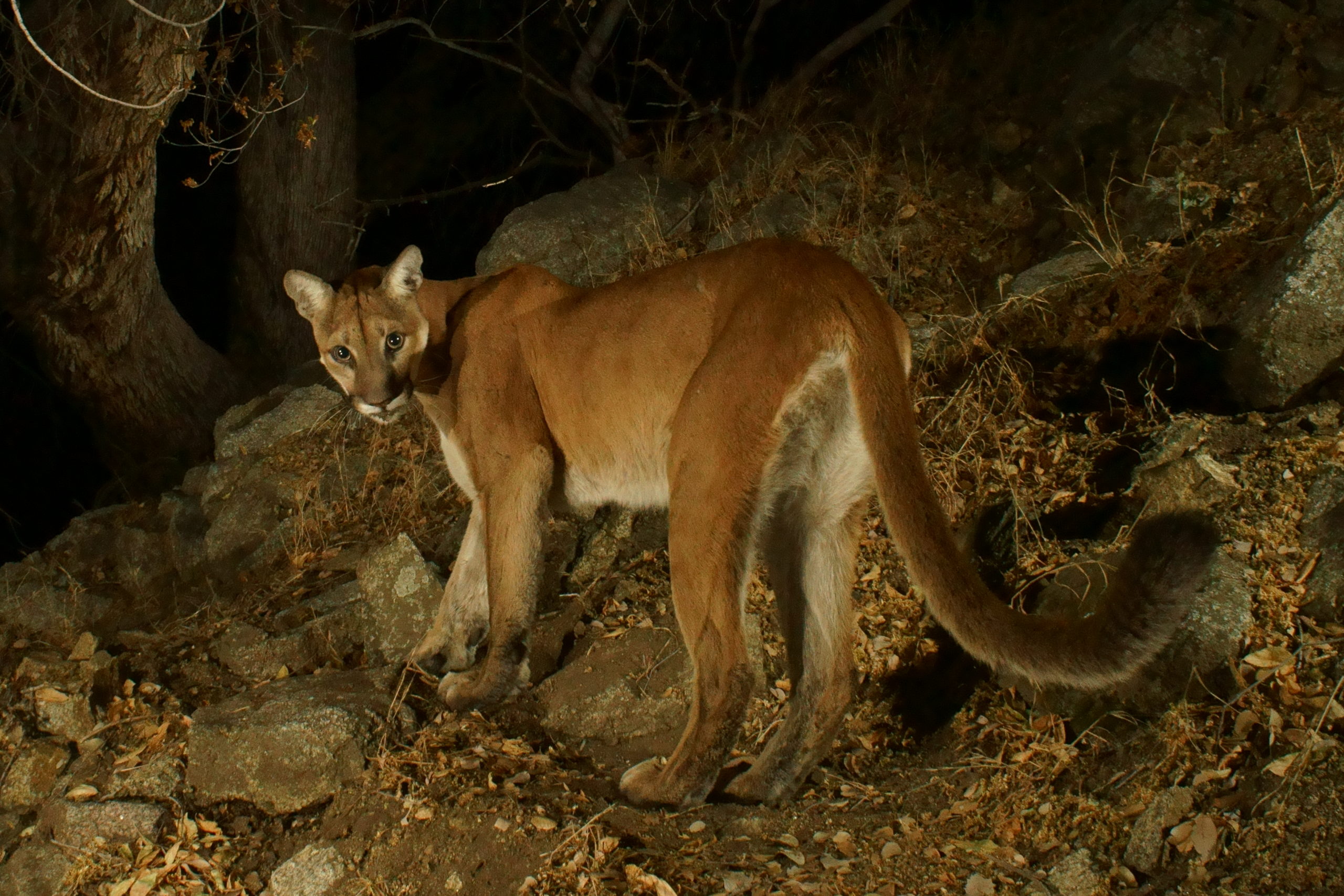
Wildlife photographer Roy Toft  discusses the art of photographing pumas and other wildcats with Mountain Lion Foundation’s own Jessica Janson.

From exotic locations all over the globe we explore photographer Roy Toft’s world of pumas and other wildcats through the lens of his camera. Join us and be part of the adventure!

About Roy Toft:

Roy started working as a full-time wildlife photographer in 1991. Spending 6-9 months in the field every year producing natural history content for magazines, books, etc. Around 2000, Roy started leading photo safaris around the world to photography enthusiasts as well as continuing his assignment and stock work. In 2005, Roy became a founding fellow in the International League of Conservation Photographers. This elite group of top professionals combine their talents to further conservation causes around the globe. Roy’s images have been published widely in popular magazines like National Geographic, Discover, Smithsonian, Audubon, etc. His coffee table book “Osa…where the Rainforest meets the Sea” is a wonderful tribute to an area in Costa Rica where Roy owned property and has been visiting for over 30 years. Roy makes his home in the beautiful boulders of Ramona with his wife Stella.

Credit: Roy Toft

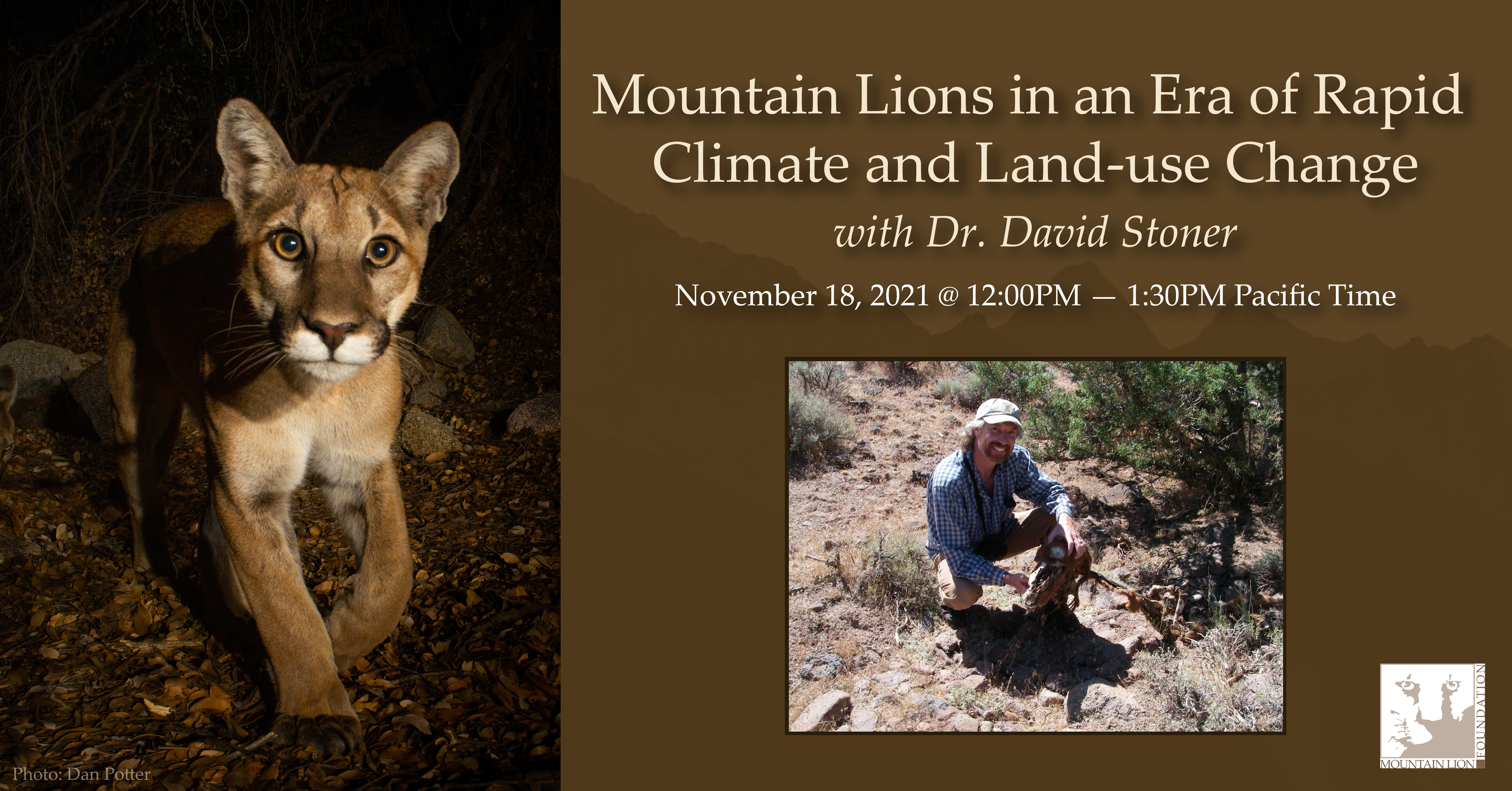
Mountain Lions in an Era of Rapid Climate and Land-use Change

Mountain Lions in an Era of Rapid Climate and Land-use Change

The mountain lion is a widely distributed carnivore, found in tropical and temperate latitudes throughout the western hemisphere. Its habitat requirements are highly generalized, being largely defined by the presence of ungulate prey and stalking cover. The species has demonstrated incredible tenacity in the face of anthropogenic pressures during the past century. Nevertheless, western landscapes are undergoing rapid changes stemming from human population growth, land-use, and climate desiccation, raising questions about the persistence of this iconic species. Dr. David Stoner explores the relationship between mountain lions and the ecological communities that support them in an era of climate change. Dr. Stoner argues that as an obligate carnivore, mountain lions should follow the changes in the distribution of their primary herbivore prey along gradients of habitat connectivity and land-use. However, drying of western ecosystems will make human subsidized landscapes increasingly important to both mountain lions and their prey, with commensurate increases in the potential for human-wildlife conflict.

About Dr. David Stoner

Dr. David Stoner is a Research Assistant Professor and Lecturer in the Quinney College of Natural Resources at Utah State University. He is a graduate of the University of California and Utah State University. Over the past 25 years he has worked with state wildlife agencies in California, Utah, and Nevada on scientific investigations of mountain lions and their major prey species. He is currently focused on interactions between mule deer, mountain lions, and wild horses in the southern Great Basin.

New Mexico Department of Game and Fish votes to amend the Furbearer rule to align with a new law that bans trapping on New Mexico’s public lands

For immediate release

Date: October 26, 2021

Contact:
Logan Christian, Conservation Advocate, Mountain Lion Foundation
Lchristian@mountainlion.org
916-442-2666 ext. 108

New Mexico Department of Game and Fish votes to amend the Furbearer rule prohibiting all “sports harvest” trapping on New Mexico public land.

Las Cruces, NM – On Friday, October 22, 2021, New Mexico Department of Game and Fish (NMDGF) Commission approved changes to the Furbearer rule (19.32.2 NMAC) with a 5-0 vote. These changes conform to statutory requirements set forth in New Mexico Senate Bill 32, the Wildlife Conservation and Public Safety Act. The Act, better known as Roxy’s Law, was passed in March 2021 and prohibits all trapping on New Mexico’s public lands.

Overall, the rule change conformed to the Act’s statutory requirements. However, the Mountain Lion Foundation (MLF) and other members of the coalition Trap Free New Mexico signed and delivered a comment letter authored by Chris Smith of WildEarth Guradians outlining certain concerns coalition members have related to future enforcement of the rule. The letter clarified that existing closures will not be opened to any sport harvest trapping and that depredation trapping shall only be carried out as specified under exemptions in the Act. The letter also acknowledged that NMDGF will work with New Mexico Indian Affairs Department to ensure that exemptions for religious or ceremonial trapping will be carried out in a lawful and respectful way consistent with federal procedures for recognizing tribes, nations, and pueblos.

Logan Christian, Conservation Advocate for Mountain Lion Foundation in New Mexico, delivered a verbal comment at Friday’s Commission meeting affirming MLF’s support for the proposed changes. In line with the comment letter, MLF also urged the NMDGF to ensure that any future publications or communications make clear that the exemptions in the Act do not open any public land to “sport harvest” trapping.

MLF will closely monitor the new Furbearer rule as implementation and enforcement begins. New Mexico is setting an example for other states, and MLF and other Trap Free New Mexico coalition members hope that this is the first of many states to ban trapping on public land for the benefit of both public safety and wildlife.

Mountain Lion Minutes – Why Advocate for Mountain Lions?

The Mountain Lion Minutes are a monthly blog authored by Zack Curcija, an Arizona-based volunteer with the Mountain Lion Foundation. 


Why Advocate for Mountain Lions?


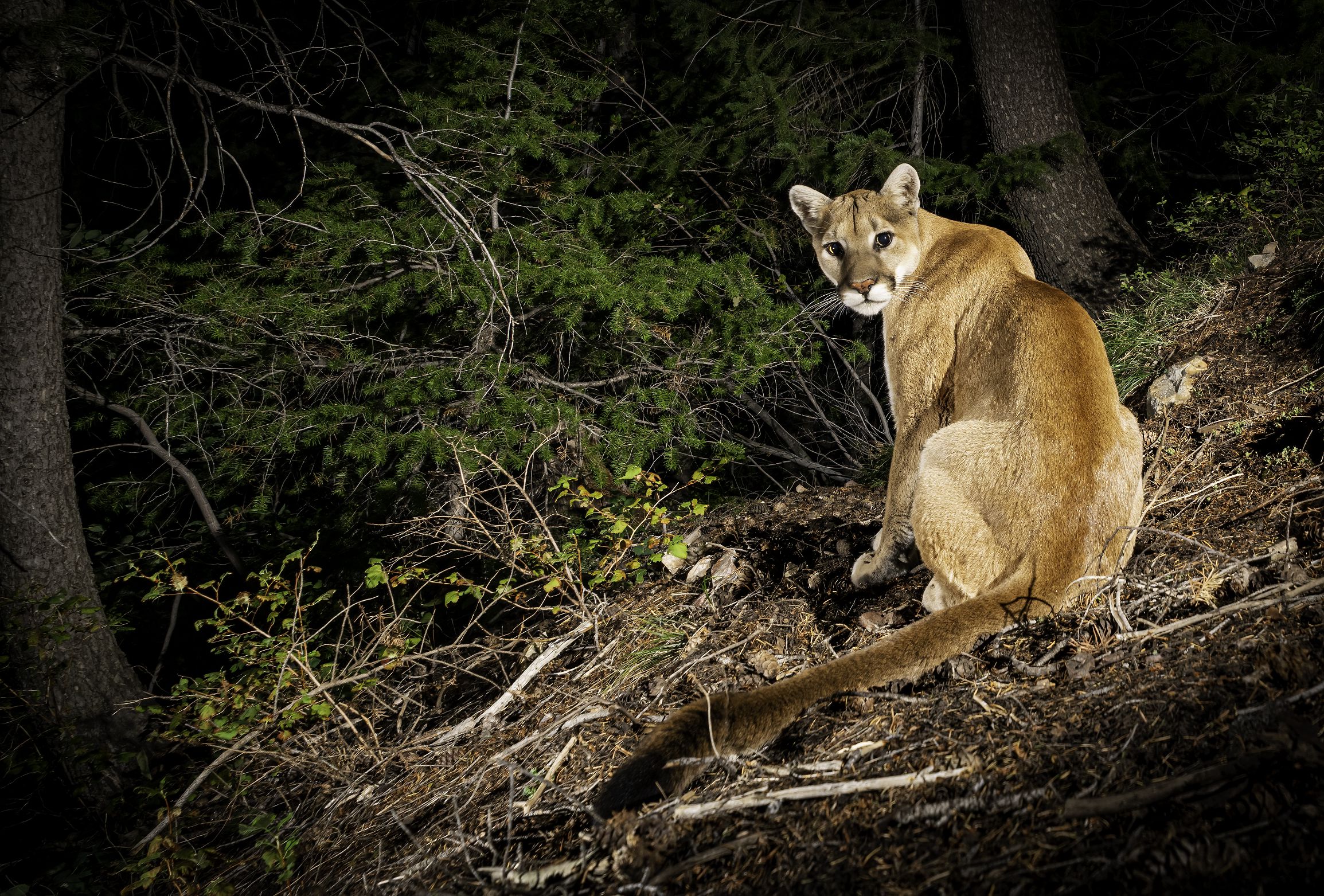
Photo Credit: Sean Hoover

Mountain lion. Puma. Cougar. Catamount. Panther. The many common names that describe the cat known scientifically as Puma concolor reflect the physical prowess and adaptability of the species. Historically ranging from  northern Canada to the southern tip of Patagonia and from the Atlantic to the Pacific coasts, the mountain lion is the most successful large mammal in the Western Hemisphere, next to humans. In the United States, the species is now primarily confined to the Mountain West, living in areas that support deer, their chief prey. From alpine meadows, through rugged canyons, and across sunbaked deserts, the mountain lion reigns as the top carnivore throughout most of its present range.

In the rugged American West, and in a small pocket of the Florida everglades, mountain lions found refuge from the centuries of persecution that extirpated the grizzly bear and wolf throughout much of the contiguous United States. Despite losing over 60% of their range in North America since the time of European contact, the IUCN registers the mountain lion as a species of “Least Concern,” since a robust population exists in the western United States and Canada where suitable habitat is currently abundant (Nielsen et al. 2008).

So why advocate for a species if their present population is deemed stable? In short, mountain lions require human advocates for the simple fact that human mismanagement of the natural world poses the greatest threat to the long-term survival of the species. Mountain lions cannot speak for themselves, but their success demonstrates their ability to flourish if afforded sufficient protection from habitat destruction and overhunting.

Ethical questions about the natural world can be viewed through three distinct yet potentially overlapping lenses. An anthropocentric view appraises the natural world for its direct and indirect value to humans. An ecocentric view is concerned with the integrity and intrinsic value of ecosystems. A biocentric view narrows the scope of ethical consideration to the well-being of individual nonhuman animals (Halsey and White 1988). I submit that the preservation of mountain lions strikes at the intersection of all three views, that each perspective forms one part of a braid that is essential to the long-term conservation of mountain lions and other nonhuman animals. In the following paragraphs, I will introduce the ways in which each perspective informs mountain lion advocacy, topics that will be explored in greater detail in subsequent essays.

Mountain lions are sentient creatures, and their capacity to suffer should warrant them ethical consideration on the individual level. Darwin’s (1871) elegant statement that, “The difference in mind between man and the higher animals, great as it is, certainly is one of degree and not of kind” has been substantiated in the fields of modern zoology, psychology, ethology, and others (de Waal 2016). Mountain lions are no exception, and, as mammals, they share with humans hundreds of millions of years of evolutionary history resulting in a similar physiology and nervous system.

Far from being the senseless killers of historical American lore, those who study mountain lions know them to be intelligent animals that exhibit the range of emotions and capacities of domestic cats. Like their domesticated feline cousins, mountain lions are playful, emotional, intelligent, and curious. Trail cameras and observations from the field reveal the otherwise secretive lives of wild mountain lions: a mother mountain lion purring while grooming and cuddling with her kittens, spirited kittens rambunctiously playing amongst themselves, an adult lion pushing and chasing a river cobble across a sandy beach.

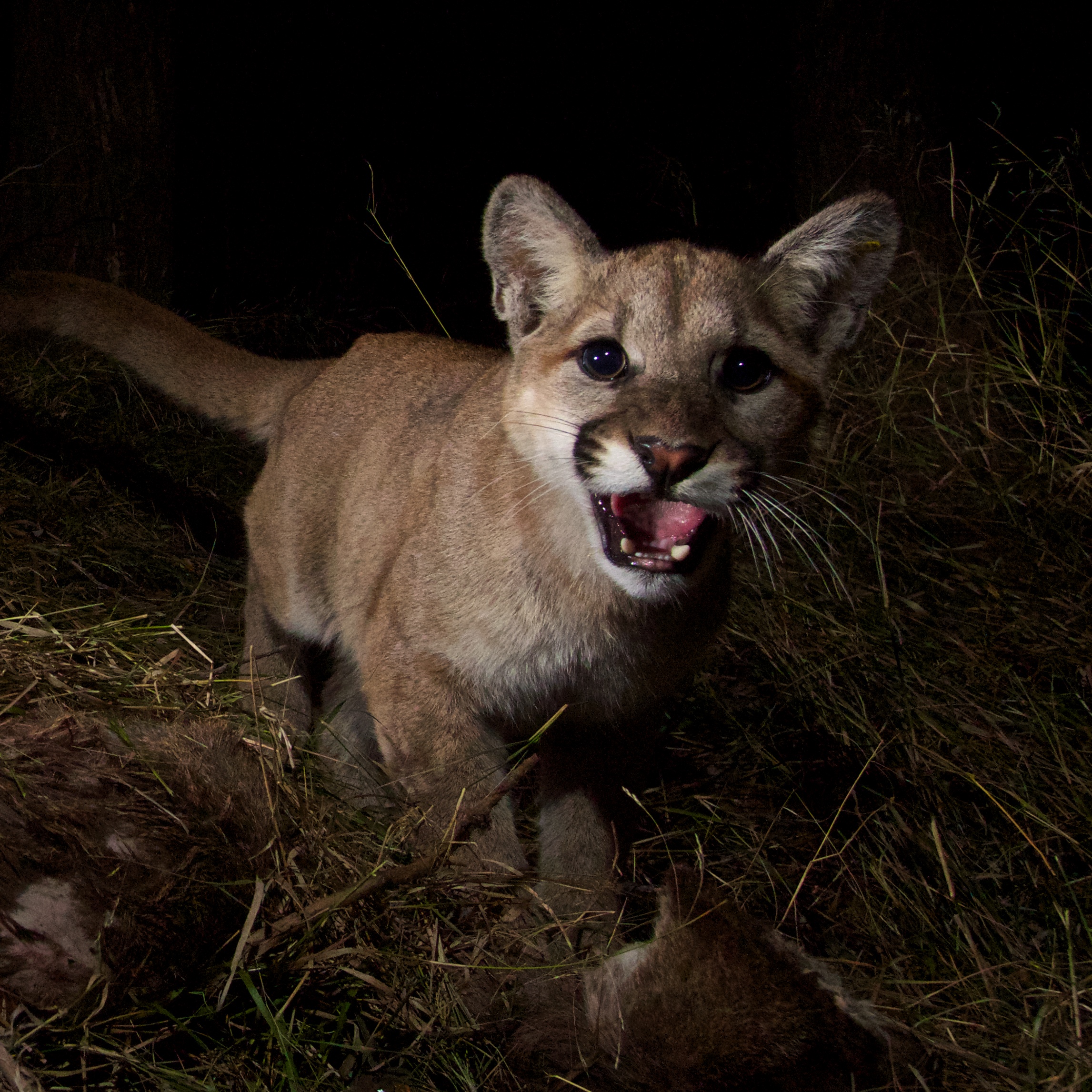
Photo Credit: Jason Klassi

Though generally regarded as solitary, mountain lions exist within a network of intraspecific interactions. Female mountain lions, in particular, spend the bulk of their adult lives caring for litters of dependent offspring. Meanwhile, adult males dedicate a significant portion of their time to patrolling their territory for infiltrating males and searching for responsive females to sire litters.

Recent research is beginning to unveil the complexity of mountain lion sociology. Elbroch and colleagues (2017) recorded reciprocally altruistic food-sharing relationships between individual mountain lions in their study area, where a successful individual shares its kill with another, often unrelated, mountain lion from an adjacent or overlapping territory. Such reciprocal relationships – a prosocial feature common to humans – requires the cognitive ability to recall past encounters, to consider the future, and to mentally map the territories of friendly conspecifics. The authors suggest that this behavior may function to reduce potentially deadly intraspecific conflict, to relieve the high energetic demands and risks associated with frequent solitary hunting, and to maintain social order and breeding access between individual mountain lions.

Existing at low population densities, each individual mountain lion forms an integral component of the regional mountain lion population. With such large territorial needs, mountain lions are known as an umbrella species, because protecting sufficient habitat for them will invariably provide abundant habitat for a plethora of other species with smaller territorial requirements (Lambeck 1997; Beier 2009). For instance, the average range of an adult male mountain lion of 75-150 square miles may harbor thousands of individuals from other mammal or bird species and millions of individual insects (Shaw 2009).

As apex predators, mountain lions are ecosystem engineers that exert top-down control over the ecosystems they inhabit. Their presence in an area modulates the behavior of prey species. By keeping ungulates alert and mobile, mountain lions prevent the overconsumption of vegetation and mitigate the detrimental ecological consequences that would result, such as inhibited riparian plant recruitment, increased erosion, and changes to stream turbidity and temperature (Ripple and Beschta 2006). By disproportionately selecting aged and diseased prey species, mountain lions help direct ungulate population health (Krumm et al. 2010). Once prey is captured, the carrion produced and distributed by mountain lions supports an unprecedented variety of organisms, including numerous species of beetles, birds, and other mammals (Barry et al. 2018).

In addition to the cultural significance of such an iconic species, mountain lions offer ecosystem services that directly and indirectly benefit humans. Although industrialization allows modern humans to feel insulated from the natural world, we still ultimately rely on healthy ecosystems and the health of the components therein. Like other top carnivores, mountain lions are essential to ecosystem function, and their conservation should therefore appeal to those holding even the strongest anthropocentric view.

Though equipped with sharp teeth, claws, and incredible physical capabilities, mountain lions are far from the most dangerous animal to humans in North America. In the United States, this distinction goes to the mountain lion’s primary prey, deer. Each year, over 1.2 million vehicular collisions with deer injure 28,000 and kill over 200 people in the US. These accidents are most frequent in the East, where mountain lions and wolves are absent, and deer have consequently reached unnaturally high densities. Since mountain lions prevent deer overpopulation and modulate deer behavior, the ecosystem services provided by mountain lions offer compelling arguments to encourage their recolonization of their former range, possibly saving hundreds of human lives and billions of dollars each year (Gilbert et al. 2016). In addition to reducing vehicular collisions with deer, mountain lions contribute to curbing the spread of diseases for which deer are vectors, such as Lyme disease and chronic wasting disease (Krumm et al. 2010; Elbroch 2020).

As sentient animals that play an integral role in the ecosystems they inhabit, and upon which humans ultimately depend, mountain lions are worthy of protection. Clairvoyance is not required to foresee the impending threats mountain lions will face in the western US in the coming decades. We need only to identify the factors that led to the extirpation to their eastern cousins a century ago, and the recent extinction of their more distant feline cousins across the globe. Though mountain lions are notoriously cryptic in their habits, decades of rigorous research has clearly established the biological needs of the species. Mountain lions, like other large cats, require large, continuous tracks of biologically productive land with connectivity between subpopulations to maintain genetic diversity. Without adequate protected space, viable populations of mountain lions cannot survive, irrespective of how the species is managed by game agencies.

While levels of sport hunting in some US states exceed historic levels of bounty hunting, the greatest long-term threat to mountain lions is the loss, fragmentation, and degradation of habitat (Shaw 1989). As the human population and attendant industrialization increases in the American West, so too does the pressure placed on mountain lions. The trends of diminishing habitat, an exploding human population, and increasing hunting thresholds in the West are – without intervention – destined to replicate the tragedy of the eastern cougar.

The chronicles of the eastern and western mountain lion populations should not be viewed as distinct, but as a continuous story of the consequences of increasing human population densities and habitat degradation across the continental US. The current plight of threatened subpopulations within the American West offers an alarming preview of a prospective future for mountain lions across their current range. Even in parts of California, where sport hunting is prohibited, immense freeways fragment small islands of protected land thereby genetically isolating small populations of mountain lions. These closed populations are beginning to manifest the same deleterious recessive genetic traits observed in endangered Florida panthers, and both populations – through secure from hunting – suffer high rates of mortality from vehicular collisions (Beier 1993; USFWS 2018; NPS 2020).

Despite their resiliency, there is nothing intrinsic about mountain lions in the West that precludes them from meeting the same fate as their extirpated eastern cousins. Only our game and land management strategies can ensure the long-term viability of mountain lion populations. The current “Least Concern” status of mountain lions should not encourage complacency, but should instead motivate proactivity to anticipate and address impending threats to the species. The present circumstances are not fixed, and only represent a slice of time amid marked demographic changes to the western US. In a sense, the resiliency of the mountain lion has afforded humans the luxury of applying what we have learned from the recent regional extirpation of eastern mountain lions to inform the future management of the species across their present range, an option lost to the numerous taxa of wild cats that went extinct within the last two centuries. From our lofty position as the dominant species on the planet, we have the knowledge, the ability, and the duty to ensure that the magnificent mountain lion thrives in our wild places in perpetuity.


References Cited:

Barry, M., Elbroch, M., Aiello-Lammens, E., Sarno, R., Seeyle, L., Kusler, A., Quigley,  H., Grigione, M. (2018) Pumas as ecosystem engineers: ungulate carcasses support beetle assemblages in the Greater Yellowstone Ecosystem. Oecologia 189577–586. doi: 10.1007/s00442-018-4315-z

Beier, P. (1993) Determining Minimum Habitat Areas and Habitat Corridors for Cougars. Conservation Biology 7(1), 94-108. doi: 10.1046/j.1523-1739.1993.07010094.x. (2009) A Focal Species for Conservation Planning. In M. Hornocker & S. Negri (Eds),  Cougar: Conservation and Ecology (p. 177-189). Chicago, IL: The University of Chicago Press.

Darwin, C.R. (1871) The Descent of Man, and Selection in Relation to Sex. United Kingdom: John Murray. De Waal, Frans (2017) Are We Smart Enough to Know How Smart Animals Are? New York: W. Norton & Company.

Elbroch, M. (2020) The Cougar Conundrum: Sharing the World with a Successful Predator.  Washington, DC: Island Press.

Elbroch, L.M., Levy, M., Lubell, M., Quigley, H., and Caragiulo, A. (2017) Adaptive social strategies in a solitary carnivore. Science Advances 3(10). doi: 10.1126/sciadv.1701218.

Gilbert, S., Sivy, K., Pozzanghera, C., DuBour, A., Overduijn, K., Smith, M., Zhou, J., Little, J., Prugh, L. (2016) Socioeconomic Benefits of Large Carnivore Recolonization Through Reduced Wildlife‐Vehicle Collisions. Conservation Letters 10(4), 431-439.  https://doi.org/10.1111/conl.12280.

Halsey, M. and White, R. (1998) Crime, Ecophilosophy and Environmental Harm. Theoretical Criminology 2(3), 345-371. doi:10.1177/1362480698002003003

Krumm, C., Conner, M., Thompson Hobbs, N., Hunter, D., and Miller, M. (2010) Mountain lions prey selectively on prion-infected mule deer. Biology Letters 6, 209-211. doi:10.1098/rsbl.2009.0742.

Lambeck, R.J. (1997), Focal Species: A Multi-Species Umbrella for Nature Conservation. Conservation Biology, 11: 849-856. https://doi.org/10.1046/j.1523-1739.1997.96319.x

National Park Service (2020) NPS Biologists Report First Abnormalities Linked to Inbreeding Depression in Mountain Lions (9/9/2020). Retrieved October 7, 2021, from https://www.nps.gov/samo/learn/news/first-abnormalities-linked-to-inbreeding-depression.htm

Nielsen, C., Thompson, D., Kelly, M. & Lopez-Gonzalez, C.A. (2015) Puma concolor. The IUCN Red List of Threatened Species: e.T18868A97216466.
http://dx.doi.org/10.2305/IUCN.UK.2015-4.RLTS.T18868A50663436.en

Ripple, W. and Beschta, R. (2006) Linking a cougar decline, trophic cascade, and catastrophic regime shift in Zion National Park. Biological Conservation 133(4), 397-408. doi: 10.1016/j.biocon.2006.07.002.

Shaw, H. (1989) Soul Among Lions: The Cougar as Peaceful Adversary. Tucson: University of Arizona Press. (2009) The Emerging Cougar Chronicle. In M. Hornocker & S. Negri (Eds), Cougar: Conservation and Ecology (p. 17-26). Chicago, IL: The University of Chicago Press.

United States Fish and Wildlife Service (2018) Florida panther (n.d.). Retrieved October 7, 2021, from https://www.fws.gov/southeast/wildlife/mammals/florida-panther/.

Mountain Lion Foundation – WCN Fall Expo

The Mountain Lion Foundation is the only group working throughout the United States solely to Save America’s Lion. We work with policymakers, livestock owners, and concerned community members to develop scientific approaches to mountain lion management that protect public safety and sustain mountain lions and the ecosystems that depend on them.

Among our current efforts:

·         Through our network of concerned Utahns, petitioning the Utah Wildlife Board and its Regional Advisory Councils to adopt cougar hunt regulations that will ensure healthy mountain lion populations and protect mothers as they nurse and teach their young. Since mountain lions regulate their own population density, hunting is not necessary as a management tool, and cougar hunting can disrupt populations and make conflict with humans more likely.

·         Suing to stop a rogue sheriff in Washington from using hound packs to pursue every cougar seen in the county. Washington has banned hound hunts since the ‘90s (and a statewide initiative supported by MLF), but the sheriff is attempting to create loopholes and evade other state wildlife laws. While many wildlife managers have abandoned the ideology of slaughtering carnivores, that attitude remains common in much of the Western US. MLF uses education and legal pressure to change minds and practices.

·         Working with ranchers and hobby farmers throughout the mountain lion range to protect livestock without endangering the lives of mountain lions. Building relationships one-on-one helps spread the message that coexistence with mountain lions is possible, and ultimately cheaper and better for humans and wildlife. MLF staff and our volunteer network meet with small groups, neighborhood by neighborhood, to teach people how to keep their households and livestock safe in cougar country.

·         Developing a network of trail cameras and wildlife spotters to share the joy of sighting these elusive and beautiful creatures in the wild spaces around us.

To learn more about MLF’s work on conservation of these inspiring big cats, sign up below. We’ll be in touch with other ways you can support mountain lion conservation in your neck of the woods.

To order a 2022 Mountain Lion Foundation Calendar click here.


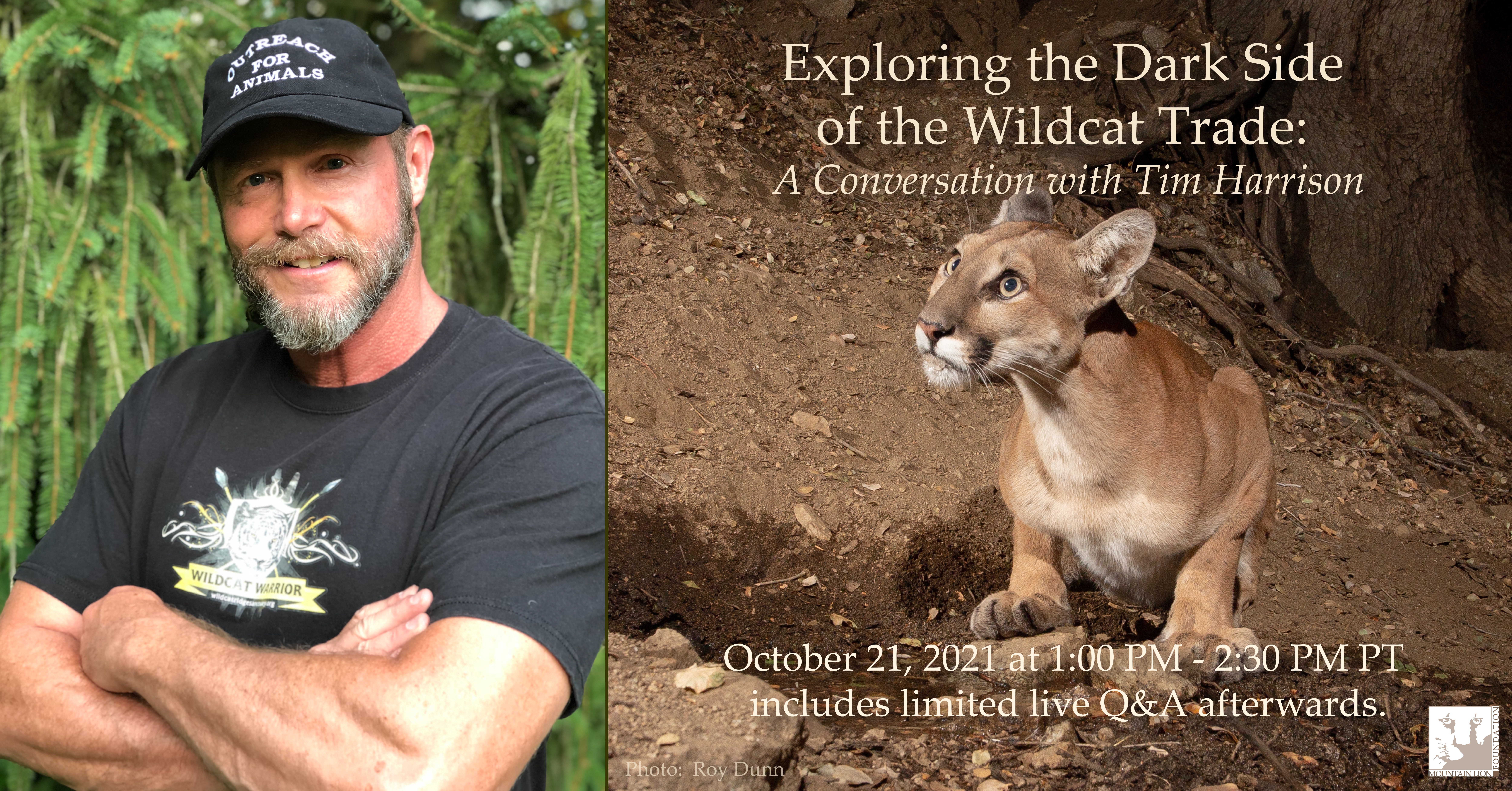
Exploring the Dark Side of the Wildcat Trade: A Conversation with Tim Harrison

Exploring the Dark Side of the Wildcat Trade: A Conversation with Tim Harrison

Join us as Tim Harrison, author, Director of “Outreach For Animals“, and star of two award-winning documentaries, discusses how he protects the public while advocating for a better life for exotic animals. He is joined with Mountain Lion Foundation’s own Jessica Janson.

About Tim Harrison:

Tim Harrison is a retired police officer, firefighter and paramedic for Oakwood, Ohio. Tim’s dedication to protecting the public crossed paths with the world of animal advocacy in October 2011 when Terry Thompson released 50 of the world’s most exotic animals on his hometown in Zanesville, Ohio and then took his own life. Thus began Tim’s crusade to educate and protect the public, while advocating for a better life for exotic animals.

Tim is the director of Outreach For Animals, a non-profit 501c(3) organization founded in 2001 by a group of police officers, firefighters, and paramedics whose mission is to educate young people to respect wildlife and its natural habitat. Over the years, their message has reached millions of people through all forms of media and outreach programs. The organization is committed to being the goodwill ambassador and liaison between humans and animals.

Tim is the star of two award-winning documentaries, The Elephant in the Living Room, which shines a light on the world of private exotic animal ownership, including the plight of several backyard lions, and The Conservation Game. The Conservation Game is set against the backdrop of a heated national debate on captive big cats in America, and follows Tim, who makes a bombshell discovery while undercover at an exotic animal auction.

Tim is also the author of three books including his newest, White Magic: The Curse of The White Tiger, which takes an in depth look at the myth surrounding the white tiger and an exploitative trade that endangers all wildcats.

Tim has rescued, relocated and advocated for exotic animals in the United States for over 47 years.

View information about The Conservation Game

End Federal Subsidies for States’ War on Carnivores, Move to Disqualify States from Federal Aid for Excessive Killing

For Immediate Release: Monday, September 27, 2021

Contact: 

Debra Chase, CEO, Mountain Lion Foundation
DChase@mountainlion.org
916-442-2666 ext. 103

End Federal Subsidies for States’ War on Carnivores
Move to Disqualify States from Federal Aid for Excessive Killing


Sacramento, CA —State game agencies could lose a substantial portion of their budgets for eradicating populations of mountain lions and other carnivores under a proposal put forward by the a coalition including the Global Indigenous Council (GIC), Public Employees for Environmental Responsibility (PEER), the Center for Biological Diversity, Mountain Lion Foundation, and a coalition of 25 Native American, conservation, and animal welfare organizations. The plan would deny federal wildlife management funding to states that excessively target wolves, cougars, bears, and other carnivores.

“In the midst of the sixth great extinction, we can no longer shut our eyes or run away from the problems our natural world is experiencing,” says Debra Chase, CEO of the Mountain Lion Foundation. “We need decisive action now to modernize the Pittman-Robertson Act and state agencies’ handling of mountain lions and other carnivores. It’s unethical and immoral for states to profit from the exploitation and extinction of our wildlife. If Secretary Haaland acts on our petition, this new rule will hold states accountable to the public they serve and the wildlife they are committed to protect when they ignore sound science and seek to profit by inflating population count and undercounting killings of our carnivores.”

Since the removal of federal Endangered Species Act protections for gray wolves, states across the country have expanded controversial carnivore control programs that have long also been used against mountain lions, including trophy hunting, hunting contests, and trapping, without regard for maintaining sustainable populations or the integrity of ecosystems.

The coalition’s rule-making petition calls on Secretary of Interior Deb Haaland to adopt regulations making states ineligible to receive grants under the Pittman-Robertson Federal Aid in Wildlife Restoration and Sport Fish Restoration Acts if they allow hunting and trapping at levels that compromise healthy populations of wildlife, including carnivores. That condition is currently required under law but without an enforcement mechanism – a hole this petition would fill.

Under this proposal, Secretary Haaland, following public comment, would decide if a state applying for a federal grant is pursuing wildlife management practices inconsistent with the national goal of naturally diverse wildlife populations and healthy predator-prey dynamics.

This federal aid constitutes a significant portion of state game agency budgets across the country.  This year, approximately $1 billion in federal aid was funneled to state game agency coffers.

The petition is a reaction to recent actions in states such as Alaska, Idaho, Montana, and Wisconsin to, in essence, declare open season on wolves. In addition, the petition targets practices such as use of dogs to hunt mountain lions and bears, baiting and snaring of bears, “judas” wolf collaring, shooting bears, wolves, and their young in dens, aerial spotting for land-and-shoot removals, and nighttime hunting with artificial lights.

Groups sponsoring the petition are: GIC, PEER, and the Center for Biological Diversity, Humane Society of the US, The Native Conservancy, The 06 Legacy, Alaskans for Wildlife, Attorneys for Animals, Footloose Montana, Friends of the Clearwater, Global International Council, United Tribes, Mountain Lion Foundation, National Wolfwatcher Coalition, Oasis Earth, Predator Defense, Project Coyote, Project Eleven Hundred, Protect Our Wildlife, Sierra Club-Toiyabe Chapter, Southwest Environmental Center, The Endangered Species Coalition, The International Wildlife Coexistence Network,  The Rewilding Institute, Washington Wildlife First, Western Wildlife Outreach, Wildearth Guardians, Western Watersheds Project, Wyoming Wildlife Advocates, and Professor Adrian Treves of the University of Wisconsin.

###

Read the rule-making petition
https://www.peer.org/letter-to-secretary-haaland-pittman-robertson-wolves-09-24-2021-pdf/

Sign on to the letter of public support
https://mountainlion.org/2021/09/30/tell-secretary-haaland-no-state-funds-for-carnivore-slaughter/

Note $1 billion federal aid contribution this year to state game agencies
https://www.fws.gov/news/ShowNews.cfm?ref=$1-billion-sent-to-state-wildlife-agencies-bolstering-conservation-&_ID=36849

Look at state-by-state breakdown of federal aid to game agencies
http://ti.org/sfwdata.htm

Founded in 1986, the Mountain Lion Foundation is a national nonprofit organization with a mission to ensure that America’s lion survives and flourishes in the wild.

####

Statements from Leaders of Signatory Groups

The 06 Legacy, karol@the06legacy.com

“For too long, states in the Northern Rockies have directed dollars meant for conservation to the slaughter of America’s iconic predators. This rule will give us a chance to end the misuse of Pittman-Robertson dollars.” – Karol Miller, President, The 06 Legacy

Attorneys for Animals, beefriedlander@yahoo.com

“When states try to unleash trappers and hunters on wolves, this rule will enable us to raise our concerns in Washington and pressure authorities to change course.” – Bee Friedlander, J.D., President, Attorneys for Animals

Center for Biological Diversity, cadkins@biologocaldiersity.org

“Federal officials must stop ignoring the use of conservation funding by anti-wolf states to slaughter ecologically important carnivores. Federal wildlife management funds should only be given to states that can be trusted to conserve their wildlife for all Americans.” – Collette Adkins, carnivore conservation program director at the Center for Biological Diversity.


Endangered Species Coalition, tthorton@endangered.com

“Anti-wolf hysteria driven by special interests is threatening gray wolves like never before. This rule will give us a powerful tool to fight back by airing our concerns before states receive their Pittman-Robertson wildlife funding.” – Tara Thornton, Deputy Director, Endangered Species Coalition

Footloose Montana, loxodonta66@gmail.com

“Alarmingly, wildlife management in western states is moving toward colonial-era violence. Profiteers driving the commercialization and privatization of wildlife are outfitters, commercial trappers, trophy hunters and landowners including governors, legislators and fish and wildlife agencies. In this new world of wildlife management, bounties are paid to hunters and trappers by private organizations for each wolf killed, trophy hunters pay enormous sums to kill a wolf, a bear, an elk– the Safari Club International-style–absent any ethics and without concern for the impact on species, the torture by snares and traps or the health of ecosystems.” – Anja Heister, PhD, co-founder and board member of Footloose Montana, a Missoula-based nonprofit organization promoting trap-free public lands for people, pets and wildlife.

Heister adds, “The North American Model of Wildlife Conservation, which has been a protective shield for ‘sportsmen,’ has shown to be impotent in preventing extremists among them–thrill killers and predator haters–from hijacking state wildlife management, while cutting out the public from decision-making on wild animals.”

Global Indigenous Council, (703) 980-4595

“These wolf extermination bills passed and signed into law by rightwing extremists at the state level demonstrate that they are not only hunting democracy to extinction, they are also conflating Euro-Medieval sadism with so-called wildlife management to the same ends with wolves.” – Rain, Executive Director of the GIC and acclaimed film director.

Oasis Earth, richard.steiner@gmail.com

“Apex predators are vital to the health of ecosystems across America. This proposed rule will require the Interior Secretary to ensure that all state wildlife agencies receiving federal Pittman Robertson wildlife restoration funds fully protect these species.” – Rick Steiner, Director, Oasis Earth

Predator Defense, brooks@predatordefense.org

“States have been steadily pushing gray wolves back towards extinction since delisting in 2011,” said Brooks Fahy, executive director of Predator Defense. “With this rule we can keep the federal government from helping states kill wolves with funds specifically meant to help wildlife.”

Project Coyote, mlute@projectcoyote.org

“States have consistently demonstrated that they are beholden to a client service model catering to a declining demographic that focuses on consumptive uses over all other values for wildlife. In the face of climate and biodiversity crises, state wildlife policy needs to align with evidence-based conservation goals and broader public values. These excellent amendments to the Pittman-Robertson Act are a momentous step in the right direction.” – Michelle L. Lute, PhD, National Carnivore Conservation Manager, Project Coyote

Project Eleven Hundred, maryobrien10@gmail.com

“The work of state public land managers has implications for all wildlife — including pollinators. This rule will help ensure that funding decisions are based on science and consider direct and indirect consequences for diverse species.” – Mary O’Brien, PhD, Executive Director, Project Eleven Hundred

Protect Our Wildlife, info@protectourwildlifevt.org

“These regulations will ensure that Vermont’s leaders are held accountable for allowing trappers to maim and kill wildlife with weapons that have been banned elsewhere. Protect Our Wildlife urges Secretary Haaland to adopt the proposed rule.” – Brenna Galdenzi, President, Protect Our Wildlife

Public Employees for Environmental Responsibility, jruch@peer.org

“A healthy predator-prey relationship is necessary for healthy wildlife populations as a whole. No state, including Alaska, should receive millions of dollars in federal wildlife restoration aid each year, while they continue ecologically destructive efforts to severely reduce or eliminate populations of wolves, bears, coyotes, and mountain lions.” – Rick Steiner, a PEER Board member, conservation specialist, and retired University of Alaska professor.

Sierra Club, Toiyabe Chapter, brian.beffort@sierraclub.org

“Predators are integral parts of healthy ecosystems. Nevada and the Eastern Sierra need science-based, participatory wildlife management to maintain predators’ essential roles. This rule will help us secure that management.” – Brian Beffort, Director, Sierra Club Toiyabe Chapter

Southwest Environmental Center, kevin@wildmesquite.org

“The taxpayer-funded, state-sanctioned slaughter of predators must end. Under this rule, states will have to consider science and the voices of the vast majority of the public who oppose killing wolves – or risk losing their Pittman-Robertson dollars.” – Kevin Bixby, Executive Director, Southwest Environmental Center

Western Watersheds Project, emolvar@westernwatersheds.org

“The Biodiversity Crisis is one of the main problems facing our planet, and our own species, yet there are state agencies and legislatures that are pursuing anti-wildlife policies that are making it worse,” said Erik Molvar, a wildlife biologist and Executive Director of Western Watersheds Project. “If states are going to participate in wildlife-killing programs or push extinction agendas for species like wolves and prairie dogs that they find economically inconvenient, then they should absolutely be denied federal funding.”

Western Wildlife Outreach, lynn@westernwildlife.org

“Western Wildlife Outreach supports the GIC and PEER Petition for Rulemaking. Rulemaking will ensure states receiving Pittman Robertson Wildlife Restoration funds are determined to be eligible through a review of their wildlife management practices and consideration of input from public stakeholders. Responsible state stewardship of wildlife, particularly predators, must be evident.” – Lynn Okita, Board Chair, Western Wildlife Outreach

Wildearth Guardians, llarris@wildearthguardians.org

Pittman-Robertson dollars are intended to support wildlife and the ecosystems they call home. The state-led war on carnivores is the antithesis of conservation and should not be fueled by funds earmarked for wildlife preservation. – Lindsay Larris, Wildlife Program Director, WildEarth Guardians

Wyoming Wildlife Advocates, kristin@wyomingwildlifeadvocates.org

“Wyoming continues to allow for the killing of nearly half of their wolves each year and only manages for the minimum number of the species, not for healthy or biodiverse ecosystems. For the state to continue to receive federal grants, they need to think more holistically about large carnivore management. One hundred and sixty wolves for 97,000 square miles is not a sustainable population.” – Kristin Combs, Executive Director, Wyoming Wildlife Advocates

Independent Scientist

The global scientific community long ago reached consensus that competing interests hold back the progress of science because special interests pay for research that burnishes their images not for better approximations of reality. To reform the current U.S. system of financing most wildlife research, we should create a firewall between special interests in wildlife, such as the hunting industry, and the funding of wildlife research. That task begins with reform of PR funding mechanisms.” – Prof. Adrian Treves, PhD, Nelson Institute for Environmental Studies, University of Wisconsin – Madison, atreves@wisc.edu

CANCELLED: Lions in Nebraska – The Golden Ghosts Return: A Conversation with Author Valerie Vierk

Event Cancelled:
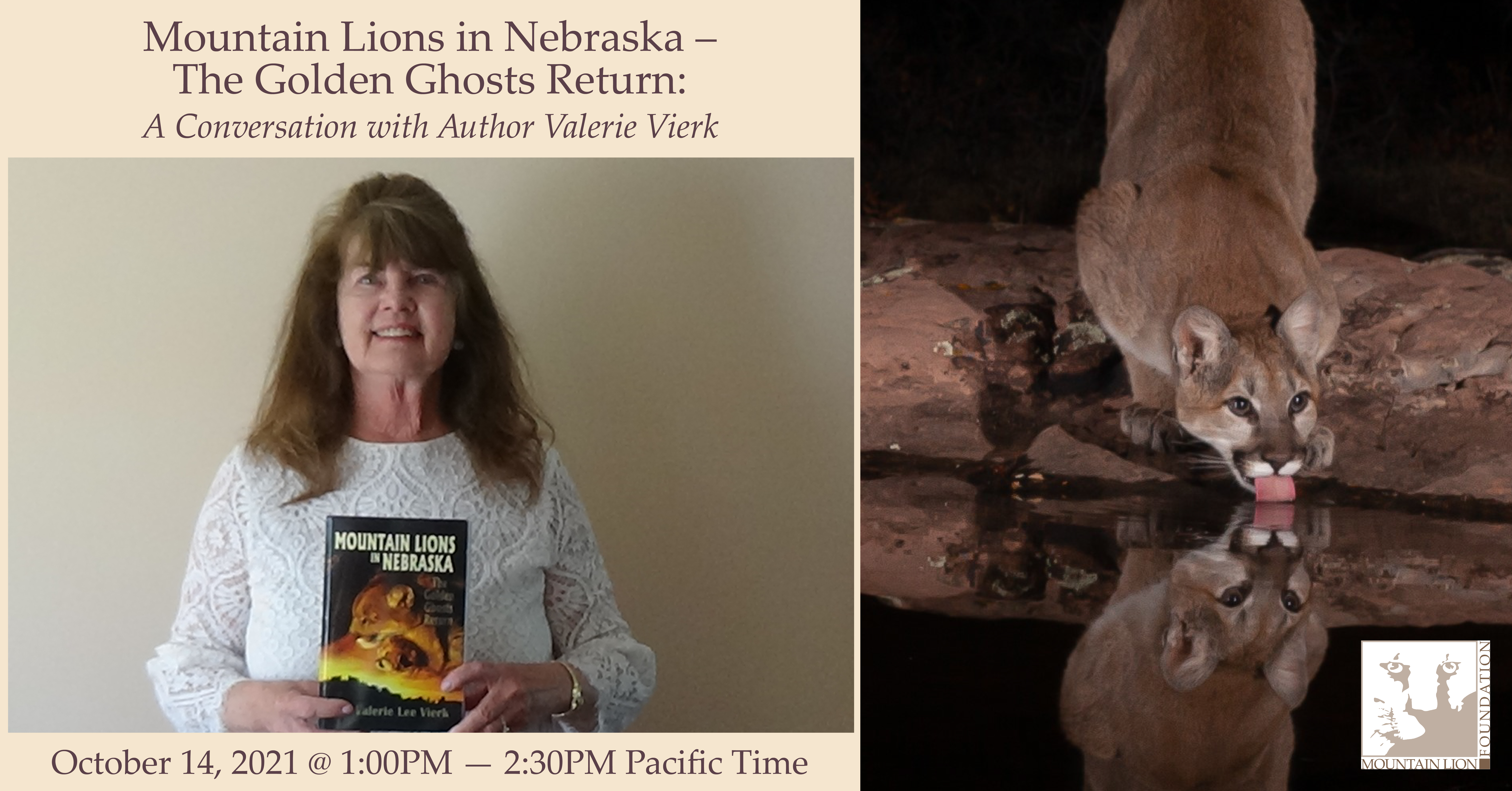
Mountain Lions in Nebraska – The Golden Ghosts Return: A Conversation with Author Valerie Vierk

October 14, 2021 @ 1:00PM — 2:30PM Pacific Time (US & Canada) includes limited live Q&A afterwards.

Unfortunately, due to poor weather and technological issues, this event has been cancelled. We will send out details on rescheduling or alternate options soon.


Join us for a conversation with author Valerie Vierk as she discusses her book – “Mountain Lions in Nebraska – The Golden Ghosts Return” with the Mountain Lion Foundation’s own Jessica Janson.

About Valerie Vierk:
Valerie Vierk is an author who writes poetry, fiction and non-fiction. A writer since her earliest years, in 2005 she published her first book, Gold Stars and Purple Hearts—the War Dead of the Ravenna Area.

Valerie’s sixth book, Mountain Lions in Nebraska—The Golden Ghosts Return, covers a brief history of mountain lions during the colonial times of the United States. It then weaves a tale of the lion in Nebraska during the early 1900s, moving into the “modern era” and the first documented killing of a cougar in the northwestern part of the state. The book tells the history of the often contentious issue of the big golden cats returning to their former homes in the Midwest after an absence of over a hundred years. Mountain Lions In Nebraska also gives brief histories of Nebraska’s neighboring states that allow trophy hunting of mountain lions–South Dakota, Colorado, and Wyoming. The book is richly illustrated with 90 photos, many taken by the author, plus political cartoons, maps, and charts.

Valerie’s fascination with mountain lions started in childhood. She believes it was prompted by her mother reading her and her brother Laura Ingalls Wilder’s Little House in the Big Woods. In this book, Pa Ingalls tells of a “black panther” chasing him and his horse through the woods. Garth Williams provided two sketches on the black panther and years later, upon looking at the book again, realized that was probably where her fascination for cougars began.

Additionally, Valerie is a life-long nature lover. She credits her late mother, Virginia, with introducing her to nature at a young age. Since 1974, Valerie has maintained a large bluebird trail to help the eastern bluebirds that are in need of housing since natural nesting sites are in short supply. In 2021, Valerie has a 140 box bluebird trail.

In 2012 she founded a non-profit titled “Holly Jean’s Hope Cat Spaying” to help the unowned cats of her little town of Ravenna, population 1,340. Years later this organization now feeds many cats each day in three locations.

Purchase Valerie’s book here:
Mountain Lions in Nebraska: The Golden Ghosts Return

Mountain lion shot and killed in Tucson, Arizona

Last Friday, a young male mountain lion was shot by a resident of Tucson, Arizona. The man found his dogs barking at the lion in his backyard, and claims that it charged him. Arizona Game and Fish Department (AZGFD) officials determined this to be a legal act of self-defense. They found the mountain lion, still alive, approximately a mile away from the scene. Officials decided to euthanize the young lion due to the severity of his injuries.

Tucson residents are well-accustomed to the presence of mountain lions in the area, with sightings documented as recently as just a few weeks prior. Under agency policy, mountain lions found to be a potential threat to human safety, such as due to behavior or location, are to be killed.