Behind the Scenes at Coexistence Camp 2024

The mission of the Mountain Lion Foundation is to ensure that America’s lion survives and flourishes in the wild. Our programs are designed to raise awareness about the importance of mountain lions and their roles in healthy ecosystems, advocate for policies that protect mountain lions, and support coexistence with these incredible carnivores.

A primary component of our coexistence programming is the Coexistence Ambassadors program, which trains people from around the country to be proactive ambassadors for human-lion coexistence in their own communities.

Every year, Coexistence Ambassadors receive hands-on training at Coexistence Camp, a weekend workshop on a regenerative sheep ranch in Mendocino County, California that is a successful model for small-scale ranching in lion country. At camp, Ambassadors learn:

  • The basics of mountain lion biology and behavior
  • How to present information to the public, including tabling at a public event and giving a community talk
  • Indigenous perspectives on coexistence
  • Tips on responding to urgent requests from livestock owners that are respectful and productive
  • Incident assessments, including wildlife tracking and “barnyard CSI” to determine what kind of animal may have been responsible for livestock losses
  • Trends and commonalities in how mountain lions are managed by state wildlife agencies across the country
  • Understanding coexistence tools in the field, like electric fences, deterrent devices and livestock guardian dogs


Coexistence Camp 2024 just happened! Here’s a sneak peek into the incredible weekend:

Tatum from Xa Kako Dile opens camp with a Pomo prayer. Photo by Chasity Smith.
Gowan Batist, Coexistence Programs Manager, introduces the Saturday program near the olive grove. Photo by Elizabeth Bennett.
Gowan gives a tour of the Herbalists without Borders herb garden. Photo by Elizabeth Bennett.
Hunter and little Griffin check in with the sheep flock while the group learns about deterrent fencing for rotation grazing. Photo by Chasity Smith.
Coexistence Ambassador Cody Hess visits with Cookie the sheep. Photo by Elizabeth Bennett.
Paige Munson, Mountain Lion Foundation Science and Policy Coordinator, and Robin Parks, California Field Representative, get to know Chego the Livestock Guardian Dog. Photo by Elizabeth Bennett.
Gowan presents on how to identify a mountain lion deer kill. Brambles the cat assists. Photo by Elizabeth Bennett.
Robin talks about the Habitat Conservation Fund (HCF) in California, which was recently safeguarded from state budget cuts. The HCF was established in 1990 by Prop 117 which also banned mountain lion hunting. California was the first, and remains the only, state where it is illegal to hunt cougars for sport. Photo by Chasity Smith.
Brent Lyles, Mountain Lion Foundation Executive Director, films a short video about the importance of coexistence programming. Photo by Elizabeth Bennett.
Gowan leads a tour of a predator-proof poultry set-up. Photo by Elizabeth Bennett.
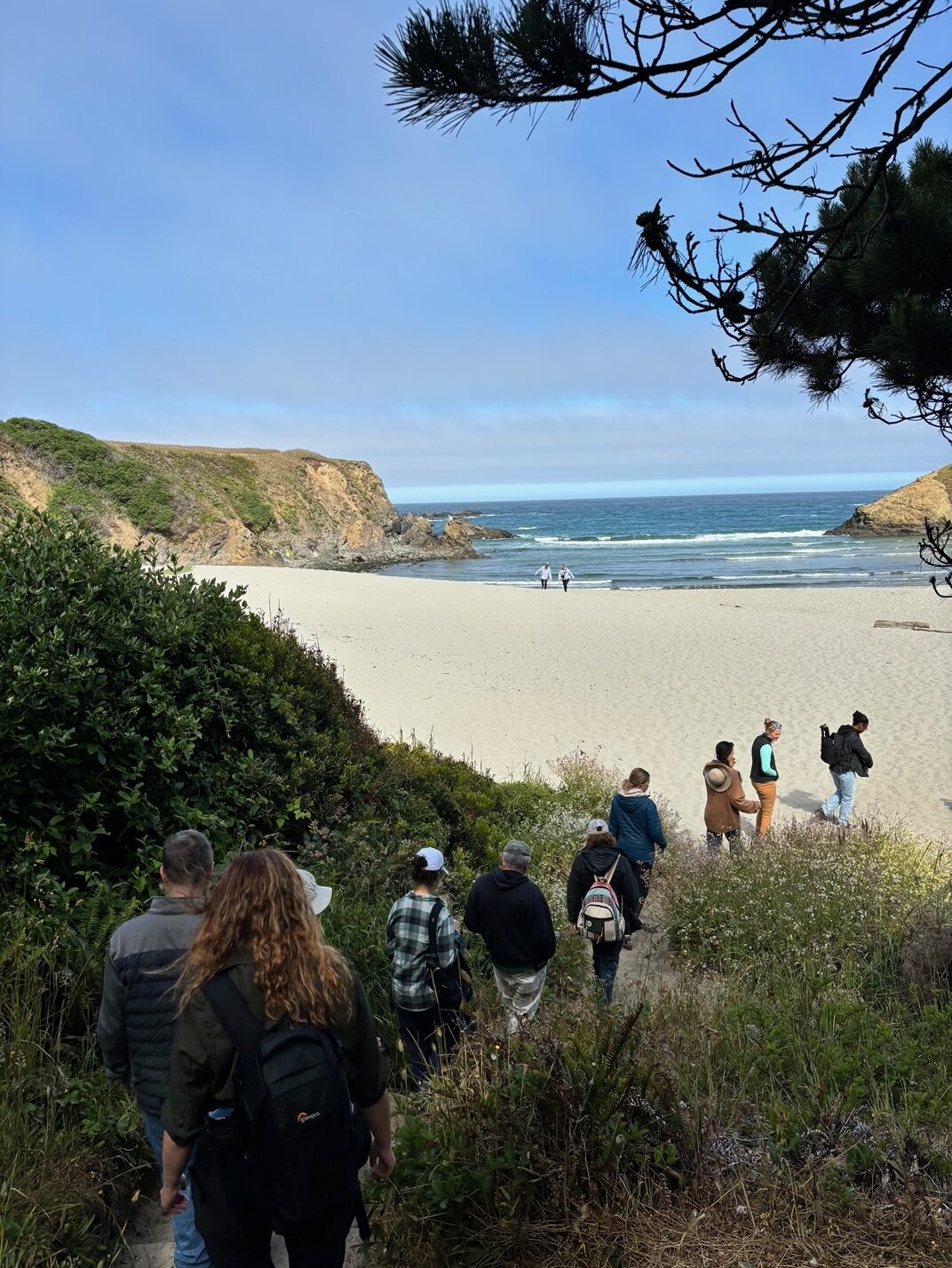
Hunter leads the group on a wildlife tracking hike to the beach. We saw signs of bobcat, mountain lion, black bear, grey fox, squirrel, gopher, shrew, osprey, and river otter. Photo by Chasity Smith.
Beginning of wildlife tracking hike. Photo by Elizabeth Bennett.
Spectacular end of wildlife tracking hike and Coexistence Camp 2024! Photo by Elizabeth Bennett.

The Mountain Lion Foundation Goes to Work in Colorado

By Paige Munson, Science and Policy Coordinator

July 1, 2024

In June, Mountain Lion Foundation staff Brent Lyles, Josh Rosenau, and Paige Munson were busy in Colorado, working to support mountain lions and communities living in lion country. We approached the work with the Foundation’s three main program areas in mind: education, advocacy, and coexistence.  

Education 

Paige, Josh, and Brent at the 103rd Annual Meeting of the American Society of Mammalogists

We were excited to attend the 103rd Annual Meeting of the American Society of Mammalogists. Here, we listened to the findings of ongoing research on mountain lions, species interactions, conservation biology, wildlife management, and more. Attending these conferences and talking with experts in the field helps our staff stay up to date with the latest research, in and out of print. We also set up an information table in the conference’s exhibit hall; this brought us more opportunities to connect with the conference attendees (working biologists from across the country), and it allowed us to offer a variety of resources about peaceful coexistence with mountain lions in Colorado and beyond.  

Brent presenting to a packed room at the Boulder Public Library. Photo by Paige.

After three days of learning, discussion, and awe-inspiring stories, we took on the role of educator at the Boulder Public Library. Here we hosted a crowd of eager community members looking to learn more about the mountain lions with which they share their state. Brent shared the story of the young male mountain lion who went on the longest known dispersal journey of any mammal. Afterwards, Brent explained the history of mountain lion hunting in Colorado and the current challenges the species faces in the state, including overhunting, roads, development, policy decisions, and human-wildlife conflict.  

Many members of the audience came to the presentation with insightful questions regarding mountain lion biology, how humans and mountain lions interact, and what we can all do to help them. We aimed to answer these questions while empowering the audience to be communicators themselves about the oft misunderstood mountain lion.  

Advocacy 

Josh collecting signatures in Boulder. Photo by Brent.

The CATs Campaign 

We also advocated on behalf of Colorado’s lions in two ways. The first was through the Mountain Lion Foundation’s support of the Cats Aren’t Trophies (CATs) campaign,a citizen-led effort to put Proposition 91 on the ballot this fall in Colorado. If passed, Prop 91 would prohibit the trophy hunting of mountain lions and end the hunting of trapping of bobcats in the state. This would be an historic achievement for Colorado, making it only the second state to fully protect mountain lions in perpetuity at the state level — the first was California, over 30 years ago.  The measure would also protect the endangered lynx, in hopes that the species will one day recover in Colorado and be free from hunting and trapping pressure as well.   

The Mountain Lion Foundation supports the ability of voters to decide whether mountain lions can be hunted in their state, and we hope that, with enough signatures now, and then enough votes in November, Coloradans will permanently protect their wild cats this fall.  

So, the Mountain Lion Foundation’s staff joined the many, many volunteer signature gatherers from across Colorado, collecting signatures outside of grocery stores, at local trailheads, at lunch with friends — anywhere we could think of!  

Testifying to the Colorado Parks and Wildlife Commission  

Staff attended a Colorado Parks and Wildlife Commission meeting in picturesque Winter Park to speak to the Commission about what to expect if Prop 91 passes and prohibits mountain lion hunting in Colorado, and about their proposed East Slope Mountain Lion Management Plan.  

Executive Director, Brent Lyles, spoke to the commission and summarized some of the existing science regarding mountain lions and their prey species. The consensus is that, in almost every case, “predator control” — killing carnivores — will not benefit ungulates in the long term. Director of Policy and Advocacy, Josh Rosenau, detailed the status of mountain lions, ungulates, and people in California, the only state to have banned mountain lion hunting in the West. After decades without mountain lion hunting, ungulate herds have not suffered, the rates of conflicts with humans are no worse and are often better than in other states with hunting, and the mountain lions have not overpopulated. Lastly, Science and Policy Coordinator, Paige Munson, spoke to the Commission about their draft East Slope Mountain Lion Management Plan. Some of the current management plans for units in Colorado are over twenty years old and lack contemporary science as a basis. The East Slope plan integrates this new evidence and corrects old management structures to be better aligned with other western states. She praised the positive changes, while suggesting further changes to improve it even more.  

We provided this scope of comments because our organization believes that mountain lion hunting is unnecessary, either ecologically or to help humans. The only reason to hunt mountain lions is to provide an opportunity to hunt mountain lions. Thus, we believe the voters of Colorado should have the right to decide whether lions are hunted in their state. And in those states where lions are hunted, it is critical that those states’ management plans reflect science and treat the species with the care they deserve.  

Coexistence 

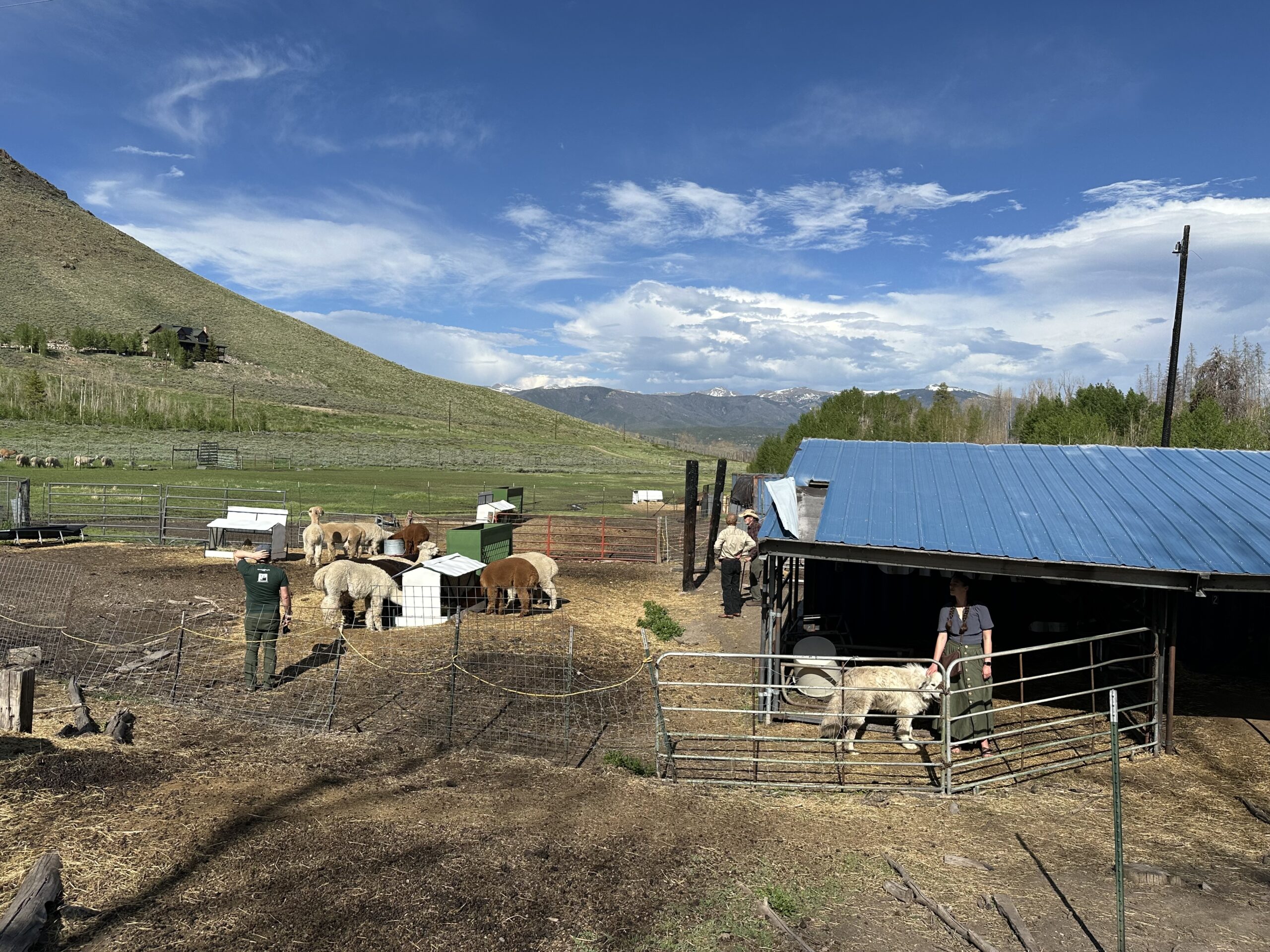
An alpaca ranch in lion country. Photo by Paige.

Saying we must coexist with wildlife is one thing but doing it can raise questions and often requires thoughtful, proactive strategy. That’s why the Mountain Lion Foundation aims to help people do both. We drove through scenic Grand County to visit an alpaca ranch with the CATs Campaign Manager, Sam Miller, who lives in Grand County.  

Alpacas in lion country. Photo by Paige.

There we were greeted by thirty alpacas and three Great Pyrenees puppies, eager to escort us to the house’s door. We sat down with the couple, who told us of their recent struggles coexisting with wildlife on the ranch. They suspected they had lost two livestock guardian dogs (LGDs) and one alpaca to mountain lions, one of which was confirmed by state agency personnel. Using LGDs is a tried-and-true method for protecting livestock, and it’s very rare for a cougar to kill an LGD, but it does happen.  The couple felt especially bad about the mountain lion that Colorado Parks and Wildlife killed because of their losses.  

The ranchers had recently acquired the three LGD puppies, which is a great choice — LGDs are most effective in a group. But despite their size, the pups aren’t ready to be the sole defenders of their flock without further training and maturity. The alpaca ranch had been hit hard over the years with wildfires: Their barn burned down, and there was damage to their fences at multiple points. After these hardships, the couple decided they were open to any help they could get to prevent more losses.  

Paige and livestock guardian dog. Photo by Josh.

After hearing their story and assessing the property, the Mountain Lion Foundation decided to take on the project of creating a more carnivore-safe ranch for their alpacas. We plan to return this fall to the ranch to help make their ranch safer for their alpacas and guardian dogs — and keeping livestock safe also keeps the local mountain lions safe because state agency personnel aren’t called in to lethally remove any lions.  

Our mission to “ensure that America’s lion survives and flourishes in the wild” is a lofty one. Our work in Colorado exemplifies some of the ways that the Mountain Lion Foundation sets out to accomplish that mission through education, advocacy, and coexistence. Stay tuned to learn more about the Mountain Lion Foundation’s work to protect and support America’s lion.  

A wildlife watcher, a wildlife agency, and a mountain lion on the eastern range

By Paige Munson, Science and Policy Coordinator

Sharing a home with mountain lions

Colin Croft is a lifelong Nebraskan, naturalist, wildlife watcher, and teacher of ethics and philosophy at his community college. Ten years ago, he realized he was sharing his property with mountain lions. In 2014, Colin placed camera traps near his home in the Wildcat Hills. He was familiar with the wildlife in his area but was shocked to find images of a mountain lion on the camera. He kept his trail cameras active and continued to discover more about the hidden life of his community lions that live on what’s considered the eastern range of breeding lion populations in the United States.

Map of range of mountain lion population in the United States
The range of breeding mountain lion populations in the United States.

Colin was thrilled to discover an animal that, most people assumed, no longer existed in Nebraska. His curiosity about the carnivore he’d seen on his camera prompted him to learn more about the cat, and inadvertently, about wildlife management in a state not known for lions.

Mountain lion management and the need for wildlife agency reform

“Mountain lions, to me, really opened up the world of wildlife management, “ said Colin. “When I was a young guy, I did a little bit of hunting, and a lot more fishing. I was familiar with our state parks and our state agency, but I never really thought about their role and what they did. It was through mountain lions that I understood the agency’s view on wildlife. I had never questioned it before. But there is this notion that the agency needs to focus on consumptive users, mainly the hook and bullet crowd, but also park users. But if you’re wanting to enjoy wild places and be a wildlife watcher, you’re excluded. I never really recognized that.”

Colin also learned more about the historical attitudes of wildlife agencies towards carnivores. The last of the state’s mountain lions were mostly eradicated by the late 1800s. Part of this eradication was due to the overhunting of prey species but also to systematic bounties placed on carnivores with the goal of wiping them out. Colin says, “We’ve made a lot of ethical progress…and I believe there is hope for change. The history of how we view mountain lions and other species is proof of our change in perspective. We don’t need to look back very far to see that these were unwanted animals to most. I think mountain lions are kind of emblematic of our movement away from that.”

Newspaper excerpt from 192 showing bounty price for mountain lions.
$3 bounties on Nebraska mountain lions in 1922. Source: USDA Farm’s Bulletin 1293: Laws Relating to fur animals 1922.

The first modern case of mountain lions returning to Nebraska was confirmed in 1991 in the Pine Ridge, an escarpment (steep slope) in the northwestern part of the state. In 1995, after a female mountain lion was shot and killed the legislature voted to list mountain lions as game animals. This status offers regulation to their hunting but can’t protect them from hunting itself. Nebraska Game and Parks has launched extensive radio-collaring programs and research, but most of this hasn’t been shared with the public nor submitted for peer review.

In 2014, the agency decided there were enough mountain lions to have a hunt, but the season has been canceled and reinstated more than once as the population numbers rise and fall. The agency’s latest population estimate for the Pine Ridge in 2021 was 33 mountain lions. No estimates have been determined for the Niobrara Valley or Wildcat Hills populations.

At Nebraska Game and Parks, the return of mountain lions to the state was seen as a success. However, “success” in this case only prompted the Agency to set population reduction goals after citing several complaints from landowners.

This logic didn’t make sense to Colin. He learned that mountain lions don’t overpopulate, making hunting unnecessary. He also learned that hunting won’t prevent conflict with humans. “It’s like trying to reduce crime by randomly imprisoning people.” Hunting doesn’t select for “problem” animals, so it is unlikely to solve for anything. Colin wants to see conflict with mountain lions dealt with on an individual level, with each case being treated uniquely, not a blanket assault on the species.

In addition to the Pine Ridge hunt, the Nebraska Game and Parks Commission voted to approve hunting in the Niobrara Valley in 2023. In June of 2024 the Commission will be voting on whether to hunt mountain lions in Colin’s home, the Wildcat Hills.

Colin acknowledges that things could be a lot worse in Nebraska. “Some people don’t want any mountain lions in Nebraska, or an open season on them. The agency seems to be trying to find a middle ground.”

Leaping Nebraska lion.
Leaping Nebraska lion. Trail photograph courtesy of Colin Croft.

The case for more research by wildlife agencies

People like Colin who live on the eastern range of lion populations rely on information from states where there’s been more investment into learning about cougars. Colin says, “We rely on research from western states. When we’re thinking about Midwestern states [John] Laundre said we should really be calling them river lions. He makes the point that waterways are their transportation and infrastructure. If you have steeper elevations like in the western states, water goes from point A to point B pretty quickly. Since Nebraska is so flat, we have a lot of meandering waterways. It would really be valuable to have more research in Nebraska to see if mountain lions behave and recolonize differently than in western states. But whatever research we have going on here is done by [Nebraska Game and Parks] for its own purposes. The only time Nebraskans see the research is when it’s used to justify adding another mountain lion hunting season.”

Despite his frustrations with the lack of research investment by his wildlife agency, Colin still finds good in the department, including its support of the Master Naturalist program and their outreach efforts to educate more people about wildlife. Nebraska Game and Parks also puts efforts towards projects like the Nebraska Legacy Project that focuses on conservation. Colin has become a major voice advocating for reform at Nebraska Game and Parks through letters, hearings, petitions, and collaborative projects.

Outside of his work advocating for mountain lions in the Nebraska Game and Parks, Colin is an ambassador for the cougars in his own community. He hosts a Facebook page called “Nebraskans Living with Mountain Lions” to get people excited about the cats, shares his mountain lion images on iNaturalist for citizen science, and posts his mountain lion videos on his YouTube channel. He hopes sharing glimpses into the lives of lions will help people care about them as much as he does, and maybe to speak up for them too.

Two lions in Nebraska. One collared.
“Considering the way they’ve been treated, I think they deserve to be left alone. From an ethics standpoint, they have a life that matters to them and if they aren’t disturbing us, they’ve earned the right to be left alone if only for a generation or two. If there is scientific evidence otherwise, I’ll accept it. But until then, they deserve to be left alone in my book.” Quote and trail photograph by Colin Croft.

One small step for mountain lion protection in Texas

Sometimes small steps are enormously important. On May 23, Texas put two very modest protections in place for the state’s mountain lion population. Though modest, wildlife advocates nationwide celebrated that decision because it marked the first time that Texas has created rules to protect their native lions – ever.

These two new rules, both of which are now in place and enforceable, are common-sense laws that help prevent excessive cruelty to wild mountain lions. The first bans “canned hunts,” which is when an individual wild lion is captured and then later released under controlled conditions so that a trophy hunter can more easily shoot it. The second new rule mandates that traps for mountain lions be checked at least every 36 hours, which in most cases prevents those lions from slowly and painfully dying of dehydration or starvation. The trapped lions are usually still killed, but at least their deaths are likely less horrific.

A trap for mountain lions
A new law in Texas requires that traps like these be checked at least every 36 hours to hopefully prevent lions from dying a slow death from starvation or dehydration. Photograph courtesy of Fin & Fur Films.

Mountain lions are still legally considered “vermin” in Texas, and before now, lions in Texas had no legal protections whatsoever. All other states with lions in them have at least some minimal protections for their mountain lions. So, while these steps in Texas are small ones, they represent a significant change in Texas policy, and they may open the door to additional protections by the Texas Parks & Wildlife Commission down the road.

While the Mountain Lion Foundation played a small, supporting role in getting these new regulations passed, the lion’s share of the credit goes to Texans for Mountain Lions. This grassroots coalition includes Texas-based landowners, conservation experts, wildlife advocates, and mountain lion scientists. Over the last few years, this coalition has responded to reports of excessive lion killing in Texas and successfully advocated for the Texas Parks & Wildlife Commission to take these important animals more seriously. To their credit, the Commission created a stakeholder group to study the issues, and these two new rules came to fruition in large part because they were recommended by that stakeholder group.

Another recommendation was to require “harvest reporting” in Texas, meaning that any mountain lions killed by hunters, animal control officers, or trappers would have to be reported to the state’s wildlife agency, Texas Parks & Wildlife. Without data like these, it’s hard to know how many lions are being killed in Texas, so mandatory reporting is an important step toward more robust and proactive lion management. At their most recent meeting, the Commission voiced support for this, so we are hopeful that mandatory reporting will be put in place in Texas in the near future.

A beautiful Texas mountain lion
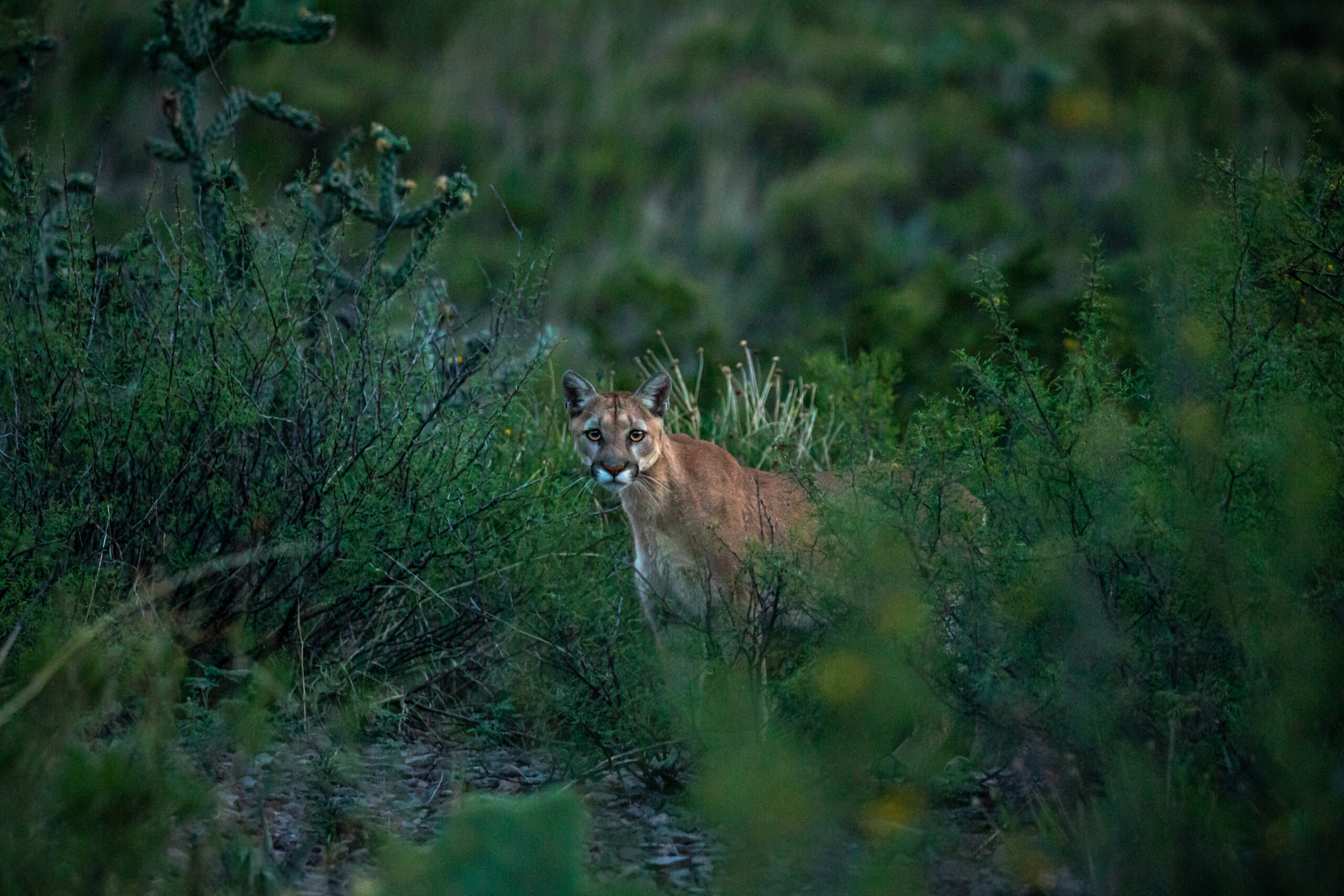
A mountain lion in Texas. Photograph courtesy of Fin & Fur Films.

The Mountain Lion Foundation thanks Texans for Mountain Lions, the Texas Parks & Wildlife Commission, and our Texas-based members and supporters for their vocal backing of these new and historic mountain lion protections in Texas – these two new rules are a small but important step in the right direction!

Call for Applicants! The Return of Coexistence Camp, June 28-30

The Mountain Lion Foundation is expanding our cohort of Coexistence Ambassadors! These incredible humans are proactive advocates for mountain lions where they live. Ambassadors receive in-depth, hands-on training at Coexistence Camps in working ranch/agricultural environments.


Our next  Camp will take place in Mendocino County, California on June 28-30. We want you to apply!


The Mountain Lion Foundation launched the Coexistence Ambassador program in 2023, and last year’s Ambassadors are out there right now, fostering coexistence in a number of different ways – they attend public events to staff a Mountain Lion Foundation table, write letters to their elected officials or to the local newspaper editor, help local producers install lion deterrents to protect their livestock, make public presentations about mountain lions, help their neighbors make good choices when mountain lions are seen or encountered in their community, advocate for lion safety on social media, and much more.


We now have trained Ambassadors in six different states.


If you are a passionate proponent of living peacefully with lions, and you want to increase your impact on their behalf, we invite you to apply for this special opportunity in northern California. Travel funds are available! We welcome applicants from anywhere in the U.S.


Apply to be a Coexistence Ambassador and attend our June Camp!


Space is limited. Please apply soon. 


Husking and table time at Coexistence Camp 2023. Image by Lynn Mason.
Coexistence Ambassador, Julie Marshall, loving a resident lamb. Image courtesy of Sean Hoover.
Group hike and wildlife tracking exercise in the Mendocino wilderness. Image by Ubaldo Hernandez.

Busted: Common Claims about the “Necessity” of Mountain Lion Hunting

Wildlife agencies, mountain lion hunters, and conservationists make a lot of claims about mountain lion hunting. Ultimately, their claims are a lot wrong (but also a little right). The United States has a long history of hunting mountain lions. Before 1950, rapid and dramatic changes to land use, overhunting of prey, and bounty hunts for mountain lions led to the extirpation of cougars from much of the US. Mountain lions have recovered in some of these areas thanks to protections for both them and their prey species. However, in many western states, mountain lions are classified as a game animal that can be hunted for sport.

Here are common claims made by wildlife agencies, lion hunters, and conservationists about the necessity of hunting mountain lions:

  1. Mountain lion populations need to be reduced or controlled—through hunting—to prevent mountain lions from damaging the deer or elk population.
  2. Mountain lion populations can be easily reduced or controlled through recreational hunting.
  3. Mountain lion hunting will reduce conflicts with livestock, pets, and people.
  4. Mountain lion hunting will improve the social acceptance of living with mountain lions.

The bases for these claims are varied, and include anecdotal evidence, some scientific evidence, intuition, and a sense of “justice.”

Claim 1: Mountain lion populations need to be reduced or controlled—through hunting—to prevent mountain lions from damaging the deer or elk population.

Scientific research and published peer-reviewed studies about the ecology of mountain lions do not support this claim. The first falsehood is the assumption that mountain lions will overpopulate or need control to begin with. The size of a mountain lion population is limited by food and territorial behavior. Based on these factors, a given area will have a carrying capacity of mountain lions that it can support; the lion population won’t rise above this capacity. Animal populations generally follow this type of population growth, with slower-breeding species (“k-selected” in biology terminology) reaching carrying capacity more gradually.

The carrying capacity of the environment can change for mountain lions if the environment changes, but ultimately overpopulation will not occur because of conflicts between lions and because they can move away from areas with too little food.

For some people, a stable population of lions on a landscape still feels like “too many,” leading to calls for population reductions. Not only is it difficult to reduce mountain lion populations through anything less than drastic levels of hunting (see Claim 2 below) but removing lions can reduce community safety as well (see Claim 3 below). Further, research tells us that lions have tremendous value to local food webs and ecosystems, so reducing lion populations through aggressive hunting damages those ecosystems.

Claim 2: Mountain lion populations can be easily reduced or controlled through recreational hunting.

This claim is complicated. Mountain lion populations do not need to be hunted to control their population, and hunting will only reduce their numbers if enormous numbers are killed (i.e., if the entire population is nearly extirpated).

Hunted mountain lion populations often exhibit source-sink dynamics. When young mountain lions leave their mother’s territories to find their own, males and females disperse, with males often traveling a hundred miles or more to find new homes. A heavily hunted lion population (or one in which more lions die from other causes than are born there) is called a sink. Males from less hunted populations are a source because they fill recently vacated territory in a nearby sink population. Source-sink dynamics account for why a heavily hunted population may never actually have fewer mountain lions.

In most areas of the American West, there is usually a source available to provide for sinks. Game reserves, nearby states with lighter levels of hunting, and areas of the landscape that are difficult for hunters to access are common factors that create a source population within dispersal distance of a sink. Significant disruptions to the mountain lion population can happen in a sink population even while immigration maintains levels at the carrying capacity, and in some cases that disruption increases the local mountain lion population.

Of course it is possible to eradicate mountain lions. Florida is now the only state east of the Mississippi River that has a breeding population of cougars (i.e., the Florida panther). However, cougars weren’t extirpated from the eastern US because of sport hunting. They were eradicated because their prey (e.g. deer and elk) were overhunted, their habitat was dramatically altered/reduced, and governments put bounties on their heads. In the western US, states with hunting programs that aim to control or reduce mountain lion populations are unnecessary and ineffective for their intended outcome.

Big lights, little lion. Image by Jason Klassi.

Claim 3: Mountain lion hunting will reduce conflicts with livestock, pets, and people.

A great deal of research has gone into exploring whether killing carnivores reduces the likelihood of conflict with people, with mixed results. While more robust studies are needed in this area, recent analyses of the existing research concluded that killing carnivores doesn’t reduce conflict — and in fact may make it worse, leading to decreased safety for livestock, pets, and people.

Source-sink dynamics explain this conclusion. Killing a mountain lion doesn’t mean that there is one less lion with which to have conflict. It simply means there is an empty territory for other, younger and less experienced mountain lions to fill.

Non-lethal methods to protect livestock and pets (such as night-penning, fences, livestock guardian dogs, and motion sensor lights) will likely provide better chances of long-term success because these methods do not rely on the unrealistic absence of mountain lions. Learn more about coexisting with mountain lions here.

In terms of human safety, mountain lion attacks are an incredibly rare event. You have a greater chance of being struck by lightning than attacked by a cougar. Research on the subject is admittedly slim, due to a thankfully tiny sample size. Read more about the risk of mountain lion attacks here.

If mountain lions exist in the wild, there will always be a real, though minuscule, risk of attack. The recreational hunting of mountain lions won’t change that, unless every lion is eradicated. A world without wild animals, including carnivores like mountain lions, would be an ecological catastrophe.

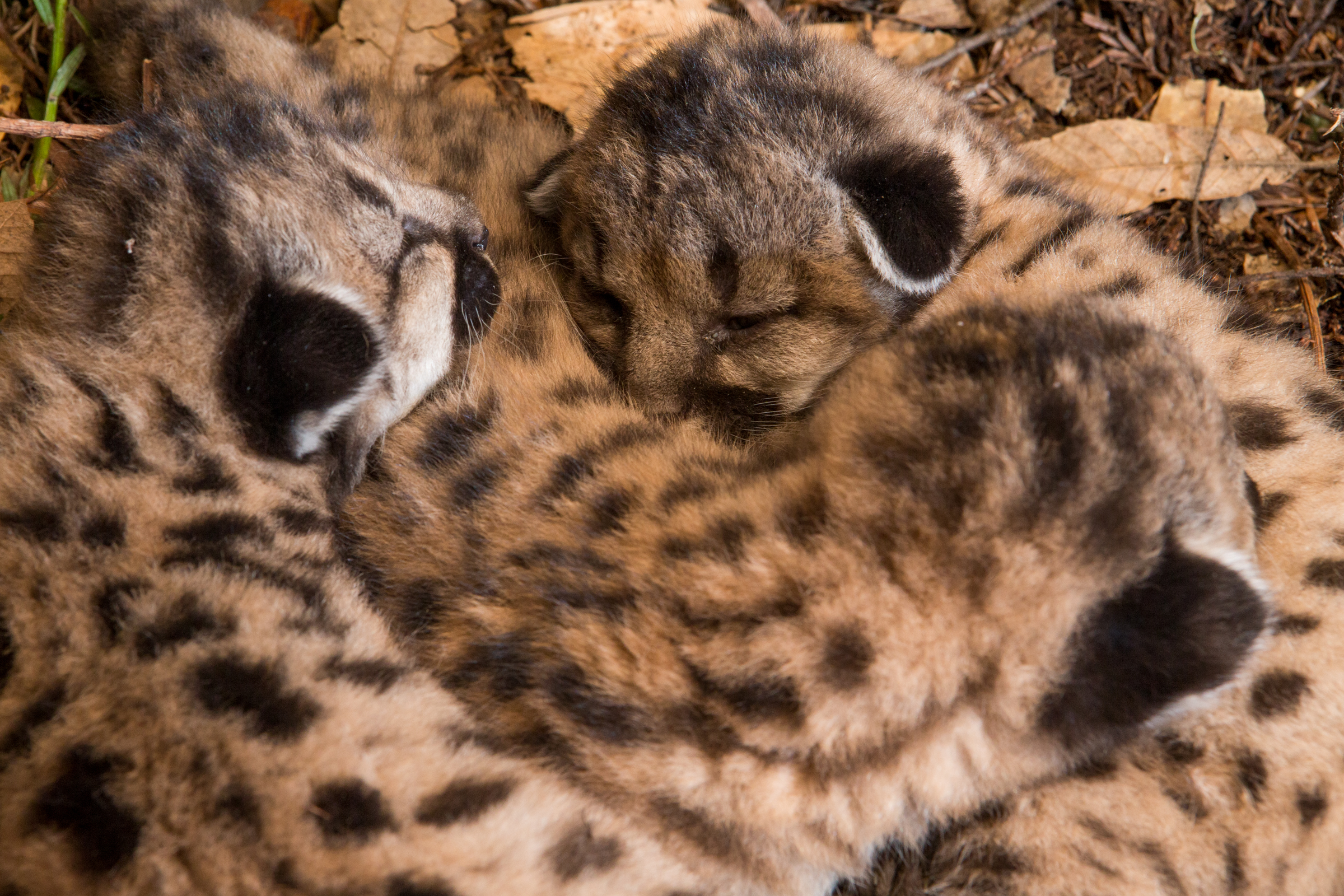
15 day old kittens in den. Image courtesy of Sebastian Kennerknecht and the Santa Cruz Puma Project.

Claim 4: Mountain lion hunting will improve the social acceptance of living with mountain lions.

This is a frequent claim made in regions where people are struggling to coexist with mountain lions, either due to livestock losses or fear of them as predators. Increased mountain lion hunting is often offered as a salve for these issues, even if it won’t actually fix the problem. Hunting won’t reduce conflict, and it usually won’t successfully reduce the population. Hunting is offered not to fix the problem but to make people feel better, or for retribution after livestock is lost.

Regardless, hunting won’t solve these problems. But knowing more about these cats and learning to live with them peacefully might. To learn more about mountain lion biology and behavior, check out the Mountain Lion Foundation’s new resource: Essential Guide to Recent Scientific Research on Mountain Lions.

References

Cooley, Hilary S, Robert B Wielgus, Gary M Koehler, Hugh S Robinson, and Benjamin T Maletzke. 2009. “Does Hunting Regulate Cougar Populations? A Test of the Compensatory Mortality Hypothesis.” Ecology 90 (10): 2913–21. Dellinger, Justin A, Daniel K Macon, Jaime L Rudd, Deana L Clifford, and Steven G Torres. 2021. “Temporal Trends and Drivers of Mountain Lion Depredation in California, USA.” Human Wildlife Interactions 15 (1). https://doi.org/https://doi.org/10.26077/c5bb-de20

Elbroch, L. Mark, and Adrian Treves. 2023. “Why Might Removing Carnivores Maintain or Increase Risks for Domestic Animals?” Biological Conservation 283 (July): 110106. https://doi.org/10.1016/j.biocon.2023.110106.

Hawley, Jason E., Paul W. Rego, Adrian P. Wydeven, Michael K. Schwartz, Tabitha C. Viner, Roland Kays, Kristine L. Pilgrim, and Jonathan A. Jenks. 2016. “Long-Distance Dispersal of a Subadult Male Cougar from South Dakota to Connecticut Documented with DNA Evidence.” Journal of Mammalogy 97 (5): 1435–40. https://doi.org/10.1093/jmammal/gyw088.

Huffmeyer, Audra A., Jeff A. Sikich, T. Winston Vickers, Seth P.D. Riley, and Robert K. Wayne. 2022. “First Reproductive Signs of Inbreeding Depression in Southern California Male Mountain Lions (Puma Concolor).” Theriogenology 177 (January): 157–64. https://doi.org/10.1016/j.theriogenology.2021.10.016.

Larue, Michelle A., Clayton K. Nielsen, and Brent S. Pease. 2019. “Increases in Midwestern Cougars despite Harvest in a Source Population.” The Journal of Wildlife Management 83 (6): 1306–13. https://doi.org/10.1002/jwmg.21693.

Laundré, John W., and Christopher Papouchis. 2020. “The Elephant in the Room: What Can We Learn from California Regarding the Use of Sport Hunting of Pumas (Puma Concolor) as a Management Tool?” PLoS ONE 15 (2). https://doi.org/10.1371/journal.pone.0224638. 20

Lennox, Robert J., Austin J. Gallagher, Euan G. Ritchie, and Steven J. Cooke. 2018. “Evaluating the Efficacy of Predator Removal in a Conflict Prone World.” Biological Conservation 224 (August): 277–89. https://doi.org/10.1016/J.BIOCON.2018.05.003.

Logan, Kenneth A. 2019. “Puma Population Limitation and Regulation: What Matters in Puma Management?” Journal of Wildlife Management 83 (8): 1652–66. https://doi.org/10.1002/jwmg.21753

Robinson, H. S., Wielgus, R. B., Cooley, H. S., and Cooley, S. W. (2008). Sink populations in carnivore management: Cougar demography and immigration in a hunted population. Ecological Applications, 18(4), 1028– 1037. https://doi.org/10.1890/07-0352.1

Teichman, Kristine J., Bogdan Cristescu, and Chris T. Darimont. 2016. “Hunting as a Management Tool? Cougar-Human Conflict Is Positively Related to Trophy Hunting.” BMC Ecology 16 (1). https://doi.org/10.1186/s12898-016-0098-4

Q&A with Cougar Research Pioneer, Dr. Maurice Hornocker

Cover of Maurice Hornocker's book

Dr. Maurice Hornocker is a world-renowned expert on big cats, especially mountain lions. His memoir “Cougars on the Cliff: One Man’s Pioneering Quest to Understand the Mythical Mountain Lion,” was recently released by Lyons Press and chronicles his ground-breaking study of cougar ecology sixty years ago in the Idaho Primitive Area. He agreed to answer the following questions posed by The Mountain Lion Foundation.

*The views represented here are those of the author, and they do not necessarily reflect those of the Mountain Lion Foundation.

————————————-

What’s the biggest change you’ve seen over your career in how researchers think about mountain lions?

The biggest change has been acknowledging the need for a better understanding of not just total numbers, but regional population differences and characteristics. Think of cats as coins in your pocket. Total value is important. But denomination of the coins is more revealing.

With deer, elk and fish, we’ve concentrated on total numbers because of the desirability of these species for either food or recreation. At the same time, we ignored the life history of species that kill other animals for food.

The sociology of individual regional populations is still lacking in cougar research. Mountain lions, because they are so adaptable, behave differently in the desert than they do in the rain forest, in the wilderness versus the outskirts of Los Angeles. So we must continue paying more attention to the denomination of the coins – the life history of these specific regional populations.

What’s the most surprising thing you’ve learned (about anything) by researching mountain lions?

Cougars are stay-at-homes.

Only newly independent young cats, or those who are ejected from their territory for various reasons, wander in search of permanent homes. The general thinking, according to the old scientific literature, was that they wander all over the place. Not so. They have home ranges and territories. And they stick to the territories unless there’s a natural disaster like forest fires, floods, or something regional that changes the home range acceptability.

In addition to being home bodies, mountain lion sociology, adaptability and population makeup has been surprising. For example, Yellowstone National Park and the nearby Jackson Hole area have virtually the same ecosystems. But our research showed that cougars behave entirely different in the two places. We attribute this to Yellowstone cougars living in a more natural environment compared to Jackson Hole where there’s more human encroachment and activity.

If you could allocate a large National Science Foundation grant to advance mountain lion research, what would be the research you would most like to move forward?

Again, there’s a need for more attention to regional populations. Southern and Northern California, for example, offer contrasting habitats. Mountain lion populations in both regions should be studied for differences and similarities. Accordingly, management should be based on those data.

Research should also focus on human-cougar interactions. People are moving into cougar habitat and increasing the likelihood for bad encounters. Home sites and concurrent landscaping attract deer. Deer attract cougars. Because cougars experience few if any negative experiences in these locations, lions can become habituated and pose a threat to pets and humans. Studies on ways to create negative experiences for cougars (ranging from physical harassment to high-frequency acoustical sounds and other deterrents) would be beneficial.

DNA studies may also lead to more management options. We should sample the DNA of cougars in regional populations and find out if there are differences. Some of these cats might be more likely to interact with or avoid humans? If so, studies on relocation or removal would be beneficial.

While the cats are highly adaptive, they can be stressed and behave in different ways in different habitats. Mountain lions, for example, behave differently in parks and refuges compared to areas where they become stressed by human activities like hunting. (By the way, I have never opposed hunting mountain lions, as long as populations are flourishing and the hunting is done legally and in an ethical manner.)

So DNA analysis might be one way to better understand population differences.

What are the biggest unanswered questions you see in mountain lion management?

If we’re going to manage regional populations, we need to know numbers, behavior and social structure. The recent state-wide census in California, estimating the cougar population at around 4,500, looks like a very thorough one. But we need to identify those specific areas in the state where distinct populations occur. The results could help guide further management options.

We must also gear management to minimizing cougar attacks on humans. Until recently, most of the attacks have occurred on Vancouver Island where there’s a stressed mountain lion population. The majority of human-cougar encounters involve young inexperienced cats. These cougars probably have had a tough time making a living and become habituated to areas occupied by humans where nothing negative happens to them. They hang around and became very bold, and sometimes very dangerous.

I’ve always recommended the prompt removal of such emboldened animals because if there’s one attack, then every cougar will be considered a criminal. It’s like the red-headed bank robber casting suspicion on all red-headed people.

Remember, mountain lions by nature shy away from humans. While conducting our ten-year study in Idaho’s wilderness, Wilbur Wiles and I never carried a gun. Many cougars had numerous opportunities to attack, but they never did. They tried to avoid us.

So problem cats should be removed or euthanized promptly with full public disclosure. [Animal shelters across the U.S.] euthanize hundreds of thousands of pets annually with no apologies. Eliminating emboldened mountain lions from our neighborhoods is better for both cougar conservation and human safety.

What would you say to wildlife agencies, community members, and media in states like Nebraska where mountain lions are beginning to return?

It’s all positive. Mountain lions are moving eastward across the country. Some places in states like Nebraska are over-populated with deer. The arrival of a major predator in such areas will be a positive influence for the entire ecosystem, just as wolves have become in Yellowstone National Park. People should be prepared and management agencies need to let the public know when the cats arrive.

That said, cougars are not going to grow out of control and kill all the deer. Nor will they adversely affect the hunting of deer by humans. Managers should emphasize the self-regulating nature of cougar populations which has been demonstrated in credible studies conducted throughout the mountain lion’s historic range.

Lastly, a lesson from Siberia where colleagues and I studied tigers for years. The indigenous people of Siberia consider healthy tiger populations an indicator of healthy forests. For that reason, the big cats are revered. The same could happen in the United States. Flourishing mountain lion populations might not only signal renewed understanding, but also vibrant ecosystems and in the long run a healthier wild America.

New Resource Available: Essential Guide to Recent Scientific Research on Mountain Lions

SEE THE UPDATED EDITION (DECEMBER 2024) OF THE ESSENTIAL GUIDE TO RECENT SCIENTIFIC RESEARCH ON MOUNTAINS

…………………………………………………………………………………………………………………………..

Cougar attacks on people are incredibly rare, and when they do happen, they tend to make headlines across the country. Two recent and deeply tragic incidents, one in Washington state and one in California, generated both a flurry of media coverage and a flurry of important questions: Are lion populations increasing? What tools will help with managing mountain lion conflicts? Does mountain lion hunting make attacks more likely?  

Cover of guide to research

With questions like these in mind, the Mountain Lion Foundation has created a new and helpful publication, the Essential Guide to Recent Scientific Research on Mountain Lions. In it, you’ll find straightforward, plain-language answers to some of the most commonly asked scientific questions about mountain lions, backed up by extensive citations from recent scientific research. In creating this new resource, we relied on published, peer-reviewed studies, and if you’re interested in digging deeper, we provided links to those studies so that you can read them for yourself. We also reached out to some of today’s most well-respected cougar scientists to get their feedback on early drafts of this document, to make sure we’re getting our facts right.  

Here at the Mountain Lion Foundation, we’re often the first ones that journalists call when an attack happens. Even in calmer times, we get calls almost every day from our members, from reporters, and from high-level decision-makers, asking us these and other questions about mountain lions: Is hunting a necessary tool to manage mountain lion populations? Are mountain lions returning to their eastern range? What about Chronic Wasting Disease? A big part of our work is serving as a clearinghouse for the best information about mountain lions, and with this publication, we’re able to provide all of these diverse communities with a handy, concise reference that not only shares answers using the best available science, but also debunks some common (and frustratingly persistent!) myths about mountain lions.  

Fascinating new research studies that focus on cougar biology, behavior, social structure, ecology, and more are happening all the time. As new scientific reports are published, we’ll be updating this Guide regularly to reflect that new information. It’s an exciting time for mountain lion science! New lines of research have been made possible by new technologies, and in some cases, longstanding beliefs about the species are being questioned and explored, leading to surprising new discoveries.  

Check out the Mountain Lion Foundation’s new Essential Guide to Recent Scientific Research on Mountain Lions — and tell us what you think! Email us at info@mountainlion.org.  

Risk and Recreation: What we know about mountain lion attacks in North America

Recent tragedies such as the mountain lion that attacked and killed Taylen Brooks in California and the harrowing mountain lion attack on Keri Bergere and her friends while mountain biking in Washington have left the rare occurrence of mountain lion attacks fresh in the minds of many.  

The Mountain Lion Foundation offers our sincere condolences to those who have been affected by these attacks. On the rare occasions when they do happen, mountain lion attacks can be devastating.  

Mountain lion attacks are incredibly rare, but there is no such thing as “risk free”  

In spite of their rarity, each story of a mountain lion attack can incite fear, often quickly followed by a flurry of ill-informed plans to prevent such attacks. There have been 29 cases (not all confirmed) of fatal mountain lion attacks on humans in North America since 1868, for an average of about 0.18 attacks per year. For context, each year in the US on average 777 people die from mosquito-borne illnesses, 28 people are struck by lightning, at least 20 people die from firearm-related hunting accidents, 86 people die from animal venom, and about 35,000 to 45,000 people die from motor vehicle accidents. By contrast, in California alone, two mountain lions die of car strikes every week, on average. 

Mountain lions are not a major public safety risk, but attacks on humans may have become more frequent after bounties were abolished and lion populations began to recover in the early 20th century. Despite the long odds of human injury, hearing about an attack can make people want to “do something.” However, it’s important to keep these risks in perspective: wildlife, including mountain lions, are valuable to people for both aesthetic and ecological reasons. We value activities that bring us into the outdoors, closer to our wild neighbors. As we work, play, and recreate in these wild spaces, our risks will never truly be eliminated. There is no such thing as “risk free” in the wilderness.  

In his 1992 paper on the topic, Paul Beier stated: 

“Although attacks were much rarer in the “bad old days” when deer were market hunted and cougars were shot on sight. The risk was still greater than zero. There has been at least 1 attack in every decade since 1890. It is impossible to reduce this small risk to zero without eliminating either cougars or humans from cougar habitat. Neither ‘solution’ is acceptable.”  

California mountain lion standing on rock.
California mountain lion. Image courtesy of Jason Klassi.
The research on mountain lion attacks in North America 

With an incredibly small sample size and varying record-keeping practices for different incidents, understanding the risk factors when analyzing mountain lion attacks has been a challenge for many in the field. Nonetheless, researchers have studied these attacks to understand them better.  

Most attacks from mountain lions happen during the day, in summer and fall, and in wildlife areas where humans are recreating. The attacks typically do not happen when mountain lions are most active, nor are lions coming into developed spaces to attack humans. The attacks occur when humans are most active in mountain lion territories, indicating mountain lions are not seeking people out.  

Mattson et al (2011) created a model using data from all mountain lion attacks in North America since 1890, to identify risks factors:  

Young and/or unhealthy mountain lions are the most likely to attack humans, and the least likely to cause death in the victim. However, in the incredibly rare instances where healthy adult mountain lions attack people, the attack is more likely to be fatal — while the risks of adult attacks are lower, the consequences are greater.  

The presence of a dog seems to reduce the likelihood of a mountain lion attack during the daylight. Dogs do not need to be excluded from trails to prevent attacks. This doesn’t hold true when a dog is at a residence at night. Securing dogs inside at night is a safer choice for the dog. (House cats too, for that matter.)  

When encountering a mountain lion, the people who are aggressive (yelling, throwing objects, looming large, charging the animal, or using a weapon) are much more likely to avoid an attack entirely.   

Children are more likely to be attacked by mountain lions than adults, but the presence of adults in a group doesn’t seem to deter a mountain lion from attacking. However, the presence of adults able to defend the child dramatically increases a child’s chance of survival if attacked.  

Activity also seemed to affect the likelihood of an attack and fatality. People engaged in more erratic or high-energy activities, like running or mountain biking, were at a greater risk for attack and fatality. This may be because the prey response is more easily triggered in mountain lions from these movements. Additionally, these activities may reduce a person’s ability to respond quickly to a mountain lion and act aggressively, or to notice a nearby mountain lion quickly enough to stop and back away.  

Compared to other large carnivores, mountain lion attacks have had a low fatality rate. Of known attacks, 15% of mountain lion attacks were fatal. Known attacks from the African lions, tigers, and leopards were all much deadlier with fatality rates of 62%, 78%, and 32%, respectively. 

California mountain lion walking in the dark.
Cougar in California. Image courtesy of Jason Klassi.
Management approaches to reduce attacks 

Most people agree that preserving public safety is a priority. Mountain lion encounters are unlikely, and the likelihood of death from one is even slimmer, making their public safety risk very low. Regardless, we should still do what we can to prevent attacks.  

Research into mountain lion management has identified that high levels of hunting lead to a population made up of primarily young mountain lions. This leads researchers such as Beier (1991) and Mattson, et al (2011) to speculate that higher hunting levels could make mountain lion populations “riskier.” The ability to reduce attacks through reduced hunting levels has never been observed, however we do have data to show that the absence of hunting doesn’t make an attack any more likely. In fact, some of the regions with the highest level of fatality due to mountain lion attacks also have some of the highest levels of hunting, such as Vancouver Island. Research on livestock depredations shows the same pattern, with areas with high hunting or more frequent lethal responses to depredation (including El Dorado County, CA, according to research by Dellinger, et al., 2021) showing higher rates of conflict in subsequent years. 

In states where mountain lions are hunted, advocating for low levels of hunting that do not result in populations with age structures skewed toward young cats could be a strategy to reduce the likelihood of mountain lion attacks.  

Staying safe and enjoying the outdoors 

The best way to avoid a mountain lion attack is to never go into wild lands with mountain lions. For most people who love the outdoors, though, that is an unacceptable way to live, especially to avoid such a low-likelihood event. You are almost certain to never be faced with a mountain lion attack and are most likely safe to spend your time enjoying the outdoors.  

To stay safe in mountain lion country you can carry pepper spray or a loud safety horn, travel in a group, supervise children, stay vigilant, and maybe bring a dog. Learn more about mountain lion safety here 

It is the Mountain Lion Foundation’s hope that attacks on humans are as rare as possible, and that people can continue to safely enjoy the outdoors and share the land with wildlife.  


References 

Beier, P. (1992). Cougar attacks on humans: an update and some further reflections. In Proceedings of the Vertebrate Pest Conference (Vol. 15, No. 15). 

Brothers tried to fight off mountain lion during fatal attack in Northern California, family says. (2024). Associated Press. https://apnews.com/article/california-mountain-lion-attack-brothers-92b8b951c5e8d62a889af494d2d3642d 

Dellinger, J. A., Macon, D. K., Rudd, J. L., Clifford, D. L., & Torres, S. G. (2021). Temporal trends and drivers of mountain lion depredation in California, USA. Human Wildlife Interactions, 15(1). https://doi.org/https://doi.org/10.26077/c5bb-de20

Grant, Melissa. (2024) Five against the wild: A gripping tale of courage and survival in cougar territory. Living Snoqualmie. https://livingsnoqualmie.com/five-against-the-wild-a-gripping-tale-of-courage-and-survival-in-cougar-territory/ 

Mattson, D., Logan, K., & Sweanor, L. (2011). Factors governing risk of cougar attacks on humans. Human-Wildlife Interactions, 5(1), 135–158. https://www.jstor.org/stable/24868869 

Laundré, J. W., & Papouchis, C. (2020). The Elephant in the room: What can we learn from California regarding the use of sport hunting of pumas (Puma concolor) as a management tool?. PLOS ONE, 15(2), e0224638. 

Peebles, K. A., Wielgus, R. B., Maletzke, B. T., & Swanson, M. E. (2013). Effects of remedial sport hunting on cougar complaints and livestock depredations. PLOS ONE, 8(11), e79713. 

Robinson, H., & DeSimone, R. (2011). The Garnet Range mountain lion study: characteristics of a hunted population in west-central Montana. Montana Department of Fish, Wildlife & Parks. 

Wang YY, Weiser TG, Forrester JD. Cougar (Puma concolor) Injury in the United States. Wilderness & Environmental Medicine. 2019;30(3):244-250. doi:10.1016/j.wem.2019.04.002 

Will new rules for our National Wildlife Refuges help mountain lions?

The US Fish and Wildlife Service (USFWS) released a policy update for public comment through March 5th, 2024, for the National Wildlife Refuge System (NWRS). The purpose behind these regulations is to provide clarification and directives for ensuring biological integrity, diversity, and ecological health (BIDEH). The policy update also explicitly addresses climate change.  

What might the changes mean for mountain lions and other wildlife in the Wildlife Refuge System? 

The National Wildlife Refuge System (NWRS)

Size and Benefits of the NWRS

The National Wildlife Refuge System is one of the many public land types managed under the US Department of the Interior. The National Wildlife Refuge system encompasses 760 million marine acres and 95 million land acres. The amount of land acres it protects is equivalent to nearly 15,000 square miles, comparable to the state of Maryland.  

The Wildlife Refuge System comprises 15 percent of the 620 million acres of federally owned land in the United States. Federally owned land makes up approximately 27 percent of the United States, most of which is in the West. Despite the “smallness” of our 95-million-acre National Wildlife Refuge System, the benefits to wildlife and communities are immense.

A 2022 study assessed the social cost of carbon and estimated the carbon sequestration of the National Wildlife Refuge system results in about 976 million dollars in avoided emissions due to the Refuge System’s conservation practices.  Maintaining protected lands such as the National Wildlife Refuge System is one of the many necessary actions to fight climate change.   

A mountain lion on the move
A CA lion on the move. Image courtesy of Colin Eckert.

BIDEH in the National Wildlife Refuge System  

The National Wildlife Refuge System is mandated to uphold BIDEH: biological integrity, diversity, and ecological health). To clarify and strengthen the BIDEH mandate, the Service provided the following definitions in their proposed updates: 

Biological integrity: the capacity of an ecological system to support and maintain a full range of biotic composition, structure, function and processes over time that exhibit diversity, connectivity, and resilience at genetic, organism, population, and community levels.  

Diversity: the richness and abundance of living organisms, the genetic differences among them, and communities and ecosystems in which they occur.   

Ecological health: composition structure and functioning of soil, water, air, and other abiotic features, including the abiotic processes that shape the environment. 

Before these updates, BIDEH was evaluated by referencing historical conditions. With the updates, BIDEH will also consider irreversible landscape changes from climate change and human activity.  

Changes in the proposed policy updates

The updated regulations specifically prohibit the use of carnivore control, agricultural use, and mosquito control on Wildlife Refuges. We support these changes and also believe more can be done.

Carnivore control  

There is little evidence to support the use of killing native carnivores as a management tool. Increasing evidence each year points to the profound benefits of carnivores in their ecosystems. Yet, carnivore, or predator control, is still widely practiced in the US and sanctioned through state wildlife agencies, even the USDA. Much of this is in part due to long-standing beliefs toward wild carnivores, financial interests, and the US history of persecuting America’s wildlife to the point of mass extirpation and extinction.   

This prohibition on carnivore control will help ensure the protection of important keystone species on Wildlife Refuges. However, the language isn’t absolute: “We may implement lethal predator control only when all other feasible methods have been fully evaluated and such control is considered the only practical means of addressing a specific, significant conservation concern and ensuring BIDEH.”   

Current use of carnivore control in the Hart Mountain National Antelope Refuge

As hopeful as these changes are, we may still see the use of lethal control for carnivores including mountain lions. One example of lethal control of mountain lions has been in the Hart Mountain National Antelope Refuge (NAR) in Oregon because of a decline in the bighorn sheep population.   

Bighorn sheep were extirpated in Oregon, but the Hart Mountain population was established through conservation translocations of 20 sheep in 1954. The herd was incredibly successful, and even became a source population for other efforts to establish bighorn sheep herds in Oregon. In 2017, the population reached 150 individuals before it began declining, with no sign of disease. In 2020 the population was down to 48 individuals.

Researchers assessed that habitat was a likely cause, but current rates of mortality and decline were imperiling the population. Most of this mortality came from mountain lion predation. Typically, ungulates are resilient to predation, but small populations, those lacking in quality habitat, or those experiencing types of human disturbance can become more vulnerable to any form of mortality, including predation.   

To help the bighorn sheep population, habitat restoration efforts and the lethal control of mountain lions began on the refuge in 2022 according to USFWS’s approved management plan. It is unclear if lethal control of mountain lions will continue in the Hart Mountain NAR, given the policy updates. We expect that it likely will.   

The need for nonlethal carnivore control strategies in endangered species protection

Wildlife translocations and lethal predator control are management interventions that have been used on behalf of bighorn sheep for decades; however, nonlethal approaches have not been. Nonlethal approaches to prevent predation are specific to predator species, prey species, and existing habitat. Due to most prey populations’ resilience to predation from native carnivores, there has been little occasion to explore nonlethal methods to prevent predation on bighorn sheep.   

In cases where immediate interventions are required, managers rely on the most supported and easiest to implement solution. From this standpoint, lethal removal of mountain lions is the favored solution as it is supported by current evidence specifically for struggling bighorn sheep populations. However, this also will not allow for the advancement of nonlethal methods for protecting vulnerable bighorn sheep populations from mortality.  

Under the proposed policy updates, it is likely that nonlethal methods simply won’t be used or tested because they aren’t well explored yet and thus aren’t supported by enough data. The Mountain Lion Foundation has recommended that the USFWS amend the language to require that when lethal control is used, nonlethal methods must be utilized and tested at the same time. If the USFWS accepts these changes, it could help expand the use of nonlethal strategies and our knowledge base for achieving conservation objectives without killing native carnivores.   

Additionally, lethal control of carnivores may become too much of a threat to endangered carnivores. The mountain lion is currently under review for state endangered species status in California, and conservation is best served with approaches that do not rely on choosing which endangered species to kill.  

A mountain lion sniffs the ground.
A CA mountain lion emerges on the trail. Image courtesy of Colin Eckert.

Submit your comments

The Mountain Lion Foundation applauds the policy updates proposed by USFWS for the National Wildlife Refuge Service as an important step in safeguarding the Refuge system. There are further steps that could be taken, specifically regarding their language on carnivore control, but we encourage the public to support the most recent proposal.

USFWS has received more than 20,000 comments so far. Submit your comments on the proposed rule updates here through March 5.