Learn to recognize mountain lions and the signs they leave behind.
Mountain lions are elusive animals that are often heard about but rarely seen. Whether you’ve spotted an animal, found tracks on a trail, discovered signs of wildlife activity, or captured a trail camera image, this guide can help you identify evidence of mountain lion presence and distinguish it from other wildlife.
What Did You Find?
Start with what you observed.
PHOTO: Roy Dunn
I Saw an Animal
Learn how to distinguish mountain lions from bobcats, coyotes, dogs, and other commonly misidentified animals.
Identify an Animal →
I Found Tracks
Compare mountain lion tracks to those of dogs, bobcats, and other wildlife to learn what to look for in the field.
Identify Tracks →
PHOTO: Flickr/Dave Gengrich
I Found Signs
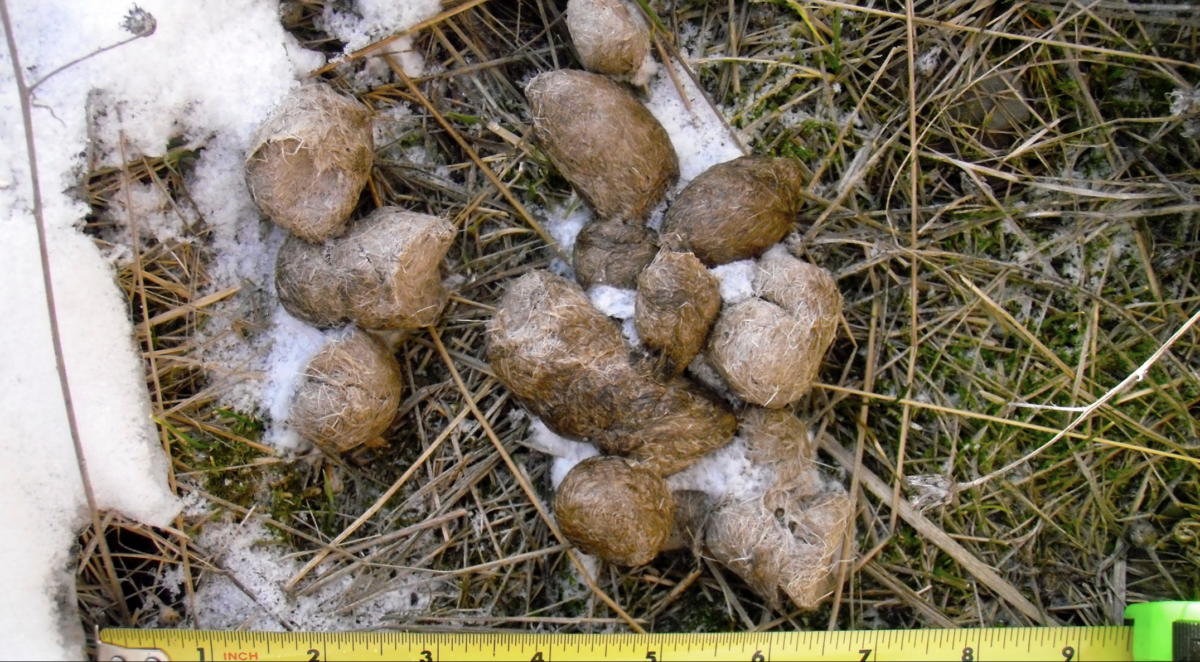
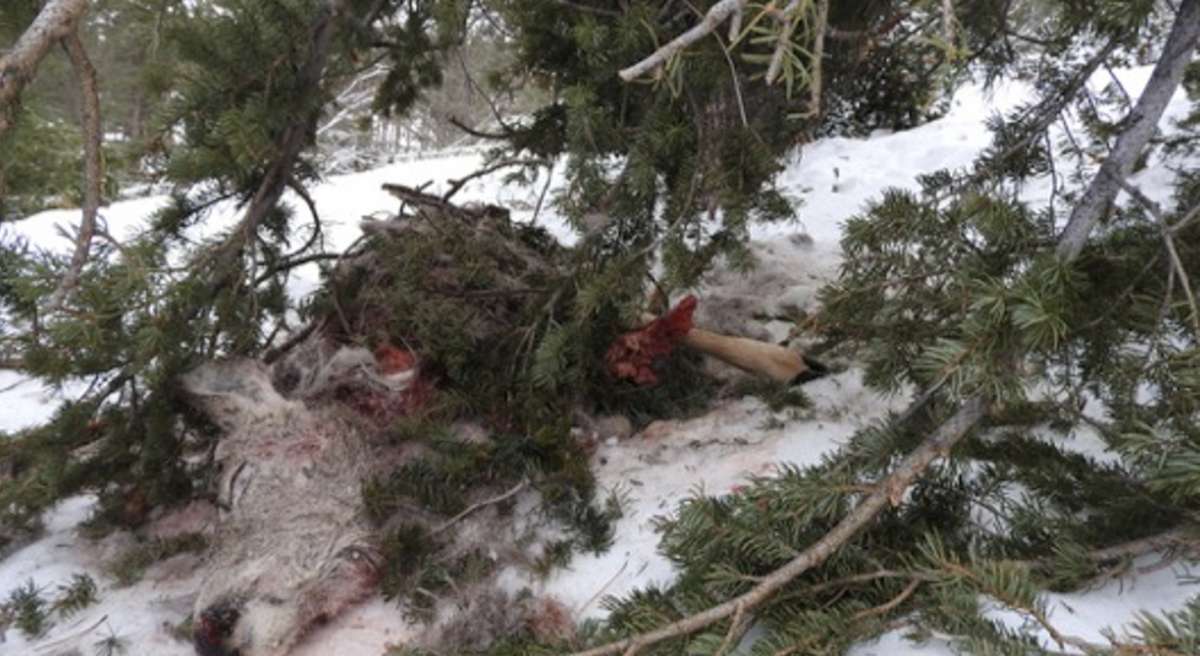
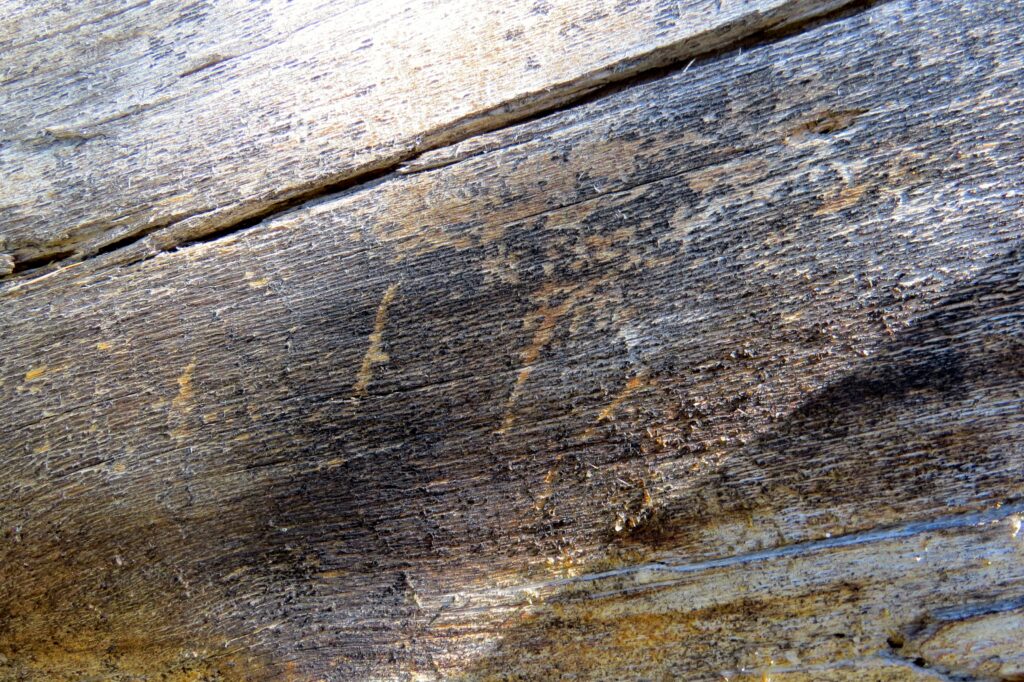
Learn to recognize scrapes, scat, cached prey, and other evidence of mountain lion activity.
Identify Signs →
PHOTO: Sean Hoover
I Captured a Trail Camera Image
Use body shape, tail length, movement, coloration, and other visual clues to identify mountain lions in photos and videos.
Identify Trail Camera Images →
Mountain Lion or Something Else?
Many animals are mistaken for mountain lions.
Mountain lions are elusive and often seen only briefly. Lighting, distance, movement, and terrain can make identification difficult. Understanding a few key characteristics can help distinguish mountain lions from other commonly misidentified animals.
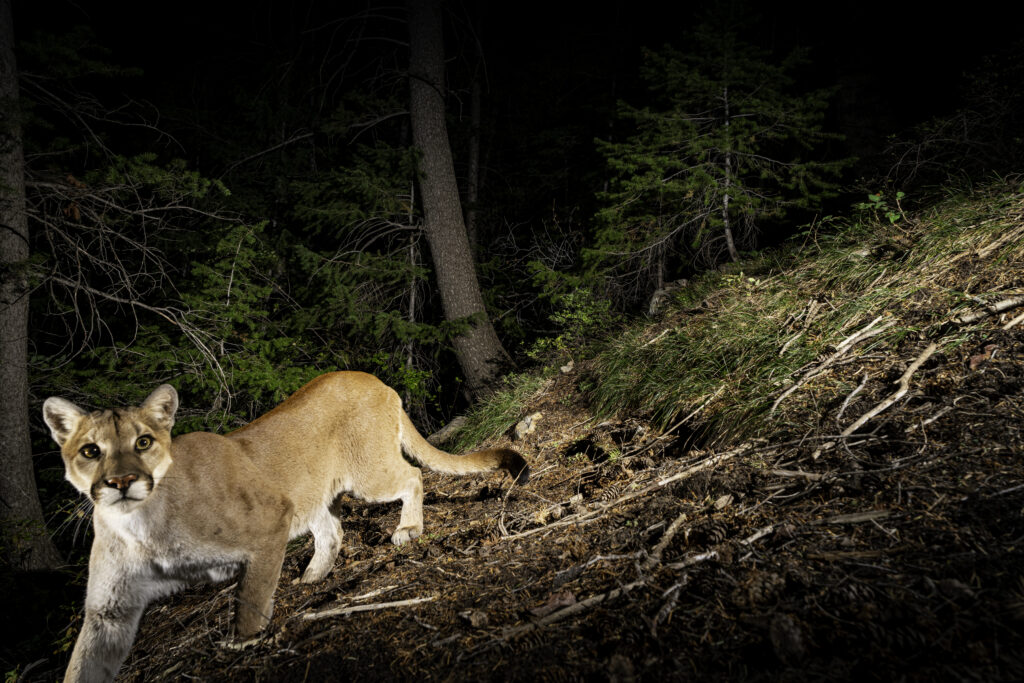
Mountain Lion
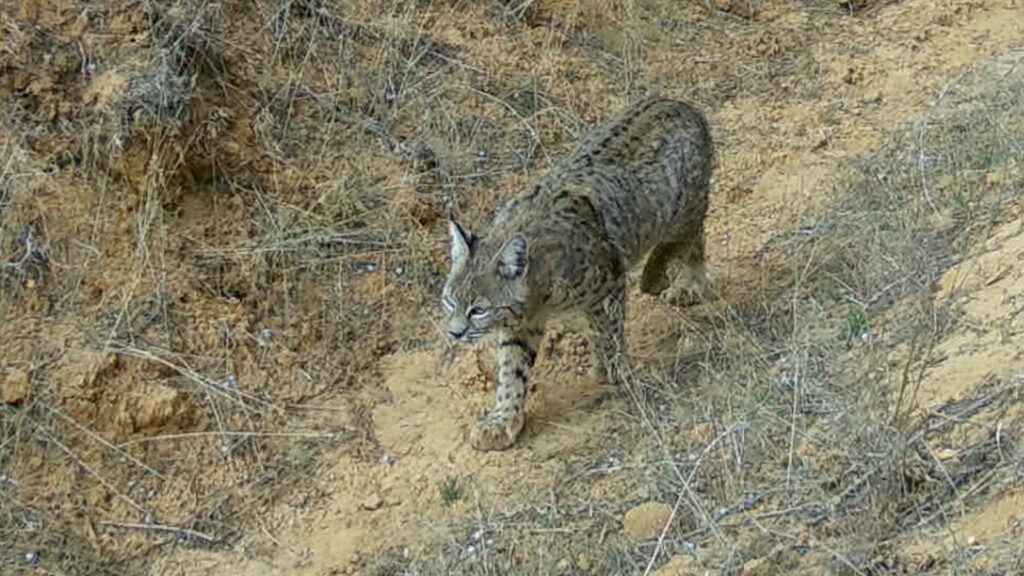
Bobcat
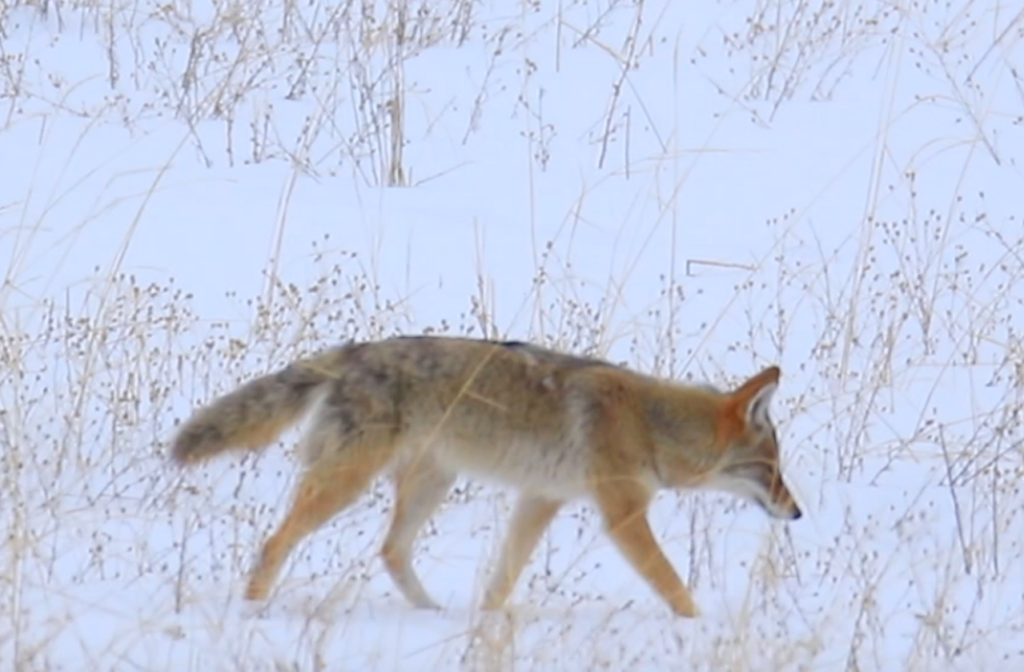
Coyote
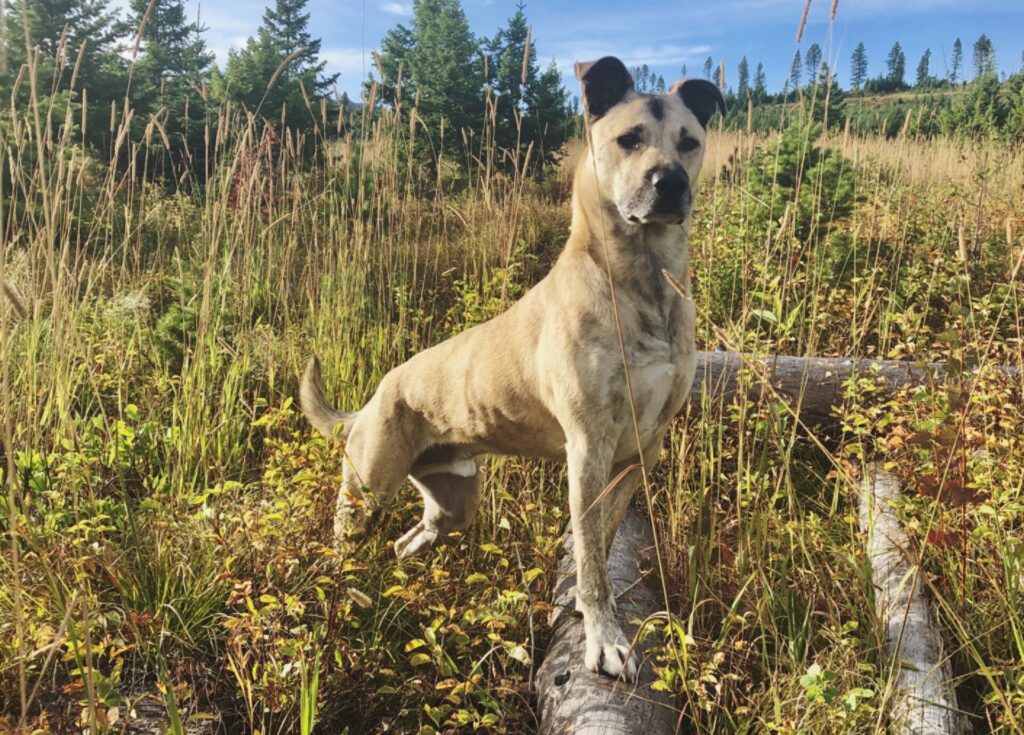
Domestic Dog
Long tail. Powerful build. Rounded head.
Short tail. Smaller body. Pointed ears.
Long legs. Bushy tail. Dog-like appearance.
Highly variable, but usually identifiable by posture and movement.
Mountain lions have long, thick tails that can measure nearly as long as their body. Their ears are rounded, and their movement is typically more fluid.
Bobcats are much smaller than mountain lions and have a short “bobbed” tail. They often display spots or markings and may have visible ear tufts. Coat is typically more grey.
Coyotes are frequently mistaken for mountain lions at a distance. Unlike mountain lions, they have a longer, narrow muzzle, pointed ears, and have a bushy tail. Coat is typically more grey.
Many large dogs are mistaken for mountain lions, especially in low light. Dogs tend to move differently, often carrying their tails higher and showing a more energetic gait.
Key Traits:
Long tail
Uniform tawny coat with a white belly
Rounded ears
Powerful shoulders and hindquarters
Typically walkers
Claws usually absent in tracks
Key Traits:
Short tail
Smaller size
Ear tufts
Often spotted
Typically walkers
Claws usually absent in tracks
Key Traits:
Pointed ears
Long muzzle
Bushy tail, carried low
Often purposeful, linear movement
Gait can appear to have a bounce
Often trot
Key Traits:
Tail often carried higher
Broader variation in color and shape
More erratic movement patterns
Visible claw marks in tracks
Tracks & Paw Prints
Learn what to look for on the ground.
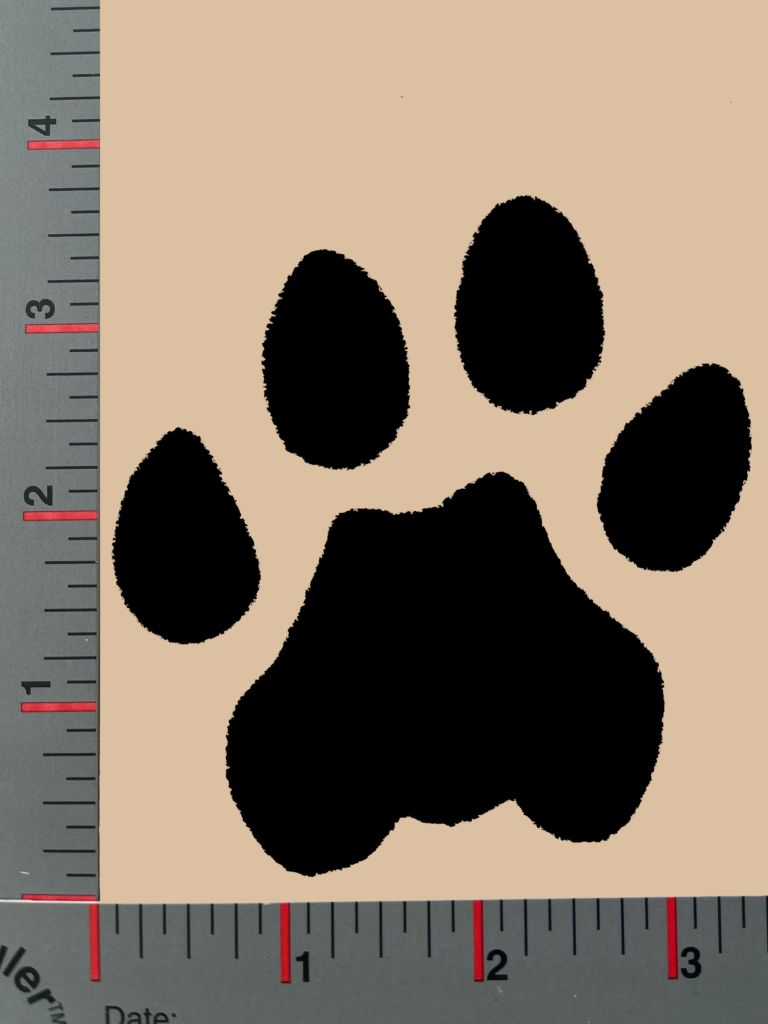
Mountain Lion
Bobcat
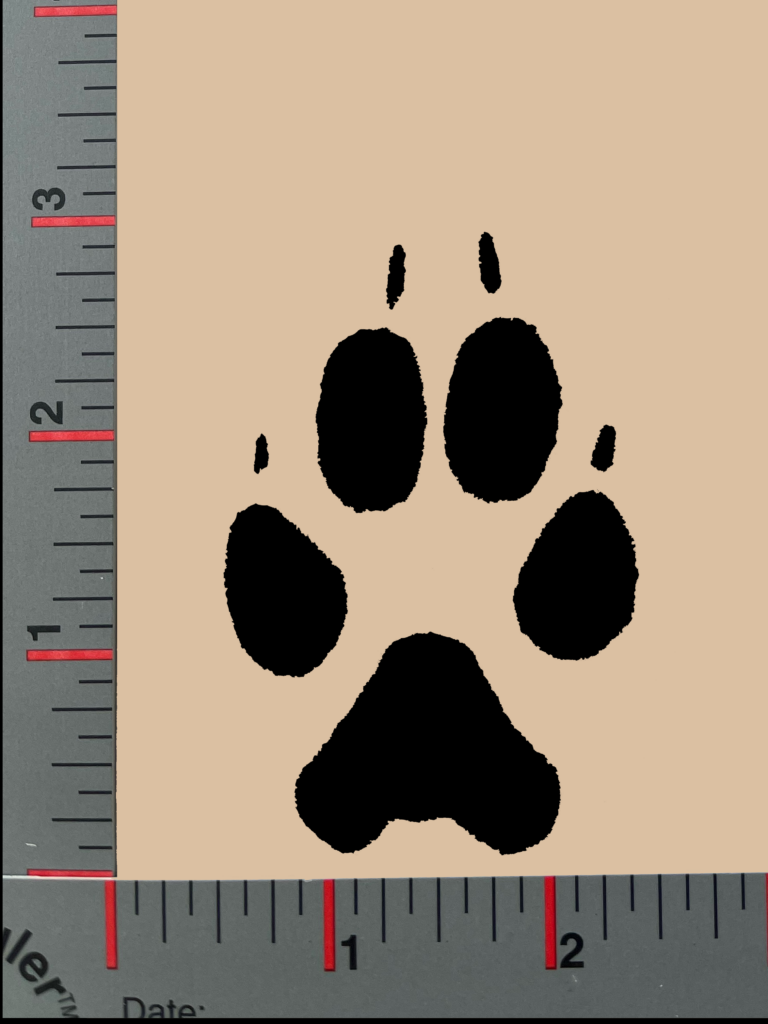
Coyote
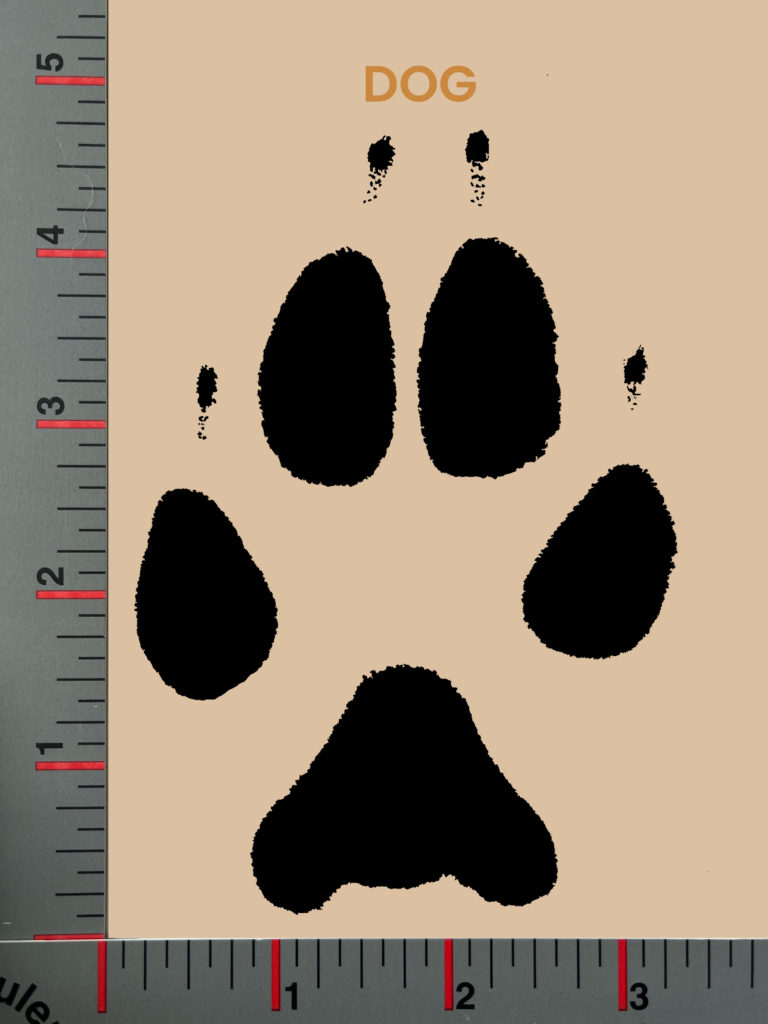
Dog
Rounded shape
Four toes
Usually no claw marks
Heel pad is large relative to toe size
Asymmetrical shape with one leading toe
Little internal negative space between heel and toes
Typically 3.25-4+ inches long
Rounded shape
Four toes
Usually no claw marks
Heel is pad large relative to toe size
Asymmetrical shape with one leading toe
Little internal negative space between heel and toes
Typically 1.75-2.75 inches long
Oval, narrow shape
Four toes
Visible claw marks
Smaller heel pad relative to toes
Symmetrical shape with parallel leading center toes
Internal negative space makes ‘X’ shape
Typically 3-3.5 inches long
Oval, narrow or rounded shape depending on breed
Four toes
Visible claw marks
Smaller heel pad relative to toes
Symmetrical shape with parallel leading center toes
Internal negative space makes ‘X’ shape
Size varies by breed
Quick Tip: Mountain lion and bobcat tracks usually do not show claw marks because cats retract their claws while walking. Dog and coyote tracks often show visible claw marks.
Signs of Mountain Lion Activity
Mountain lions often leave clues behind.
Even when a mountain lion is never seen, signs of its presence may remain. Learning to recognize these clues can help you better understand the wildlife using an area.
Scrapes
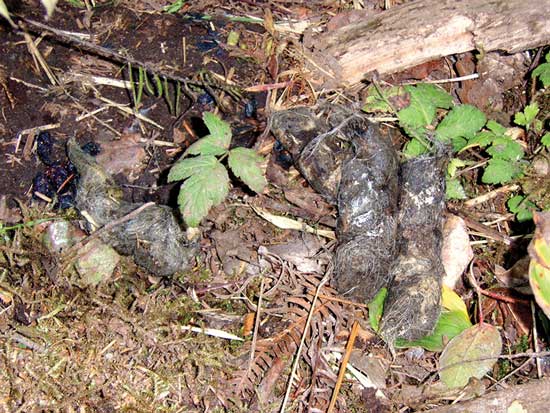
Scat
Cached Prey
Scratch Marks
Territory markers made with the hind feet. Cougars pile duff or debris and then mark with urine and sometimes scat. These are typically under trees or in sheltered areas, but can be in the open along trails.
Evidence of recent activity. Cougar scat is segmented, cylindrical, and large. At kill sites, scat will be buried in a latrine, but scat can also be left along travel routes.
A mountain lion’s meal saved for later. Cougars typically cover their food resources to hide them from scavengers. They will bed nearby and return to feed.
Visual and scent communication. These are often more rare to find and can be difficult to identify. Cougar claws are thin compared to other animals that scratch trees, like bears.
Important: Never approach or disturb a cached prey item. Mountain lions may remain nearby and often return to feed over several days.
Trail Camera Identification
Look beyond the photo.
Trail camera images can provide valuable clues, but lighting, camera angle, distance, and motion can sometimes make identification challenging. Looking at a few key characteristics can help distinguish mountain lions from other animals.
Tail Length
One of the easiest clues to spot. The tail is long and has a black tip.
Body Shape
Built for power and stealth with a muscular build.
Head & Ears
Small features reveal a lot. Note coloration.
Movement & Posture
Watch how the animal carries itself and how it moves.
Quick Identification Checklist
Likely a Mountain Lion If:
Long tail nearly as long as the body
Rounded ears
Powerful shoulders and hindquarters
Uniform tawny coat with white belly
Fluid movement
Not Sure?
We're here to help.
Not every observation is easy to identify. Photos, videos, tracks, and other signs can sometimes be confusing or incomplete.
If you’d like to share an observation, photo, video, or story, we’d love to hear from you.
It helps us identify tracks if you can photograph them with a reference for scale and can also photograph the track pattern or gait.
Share Your Mountain Lion Story →
Continue Learning
Understanding is the foundation of safety.
The more we understand mountain lions, their behavior, and the landscapes they inhabit, the better equipped we are to make informed decisions, reduce conflict, and share space responsibly. Explore additional resources to deepen your knowledge and build confidence in mountain lion country.
Coexistence
Living alongside mountain lions starts with understanding.
Learn how people and mountain lions can successfully share landscapes through awareness, prevention, stewardship, and practical solutions that benefit both wildlife and communities.
Find answers to common questions about mountain lion behavior, habitat, safety, conservation, and coexistence, all grounded in science and informed by experience.