
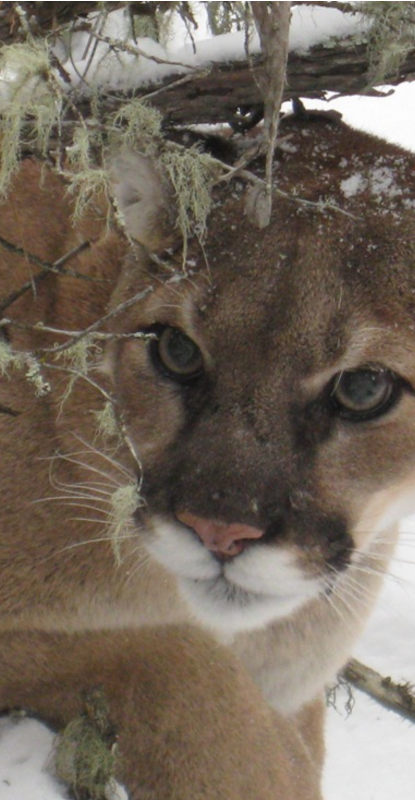
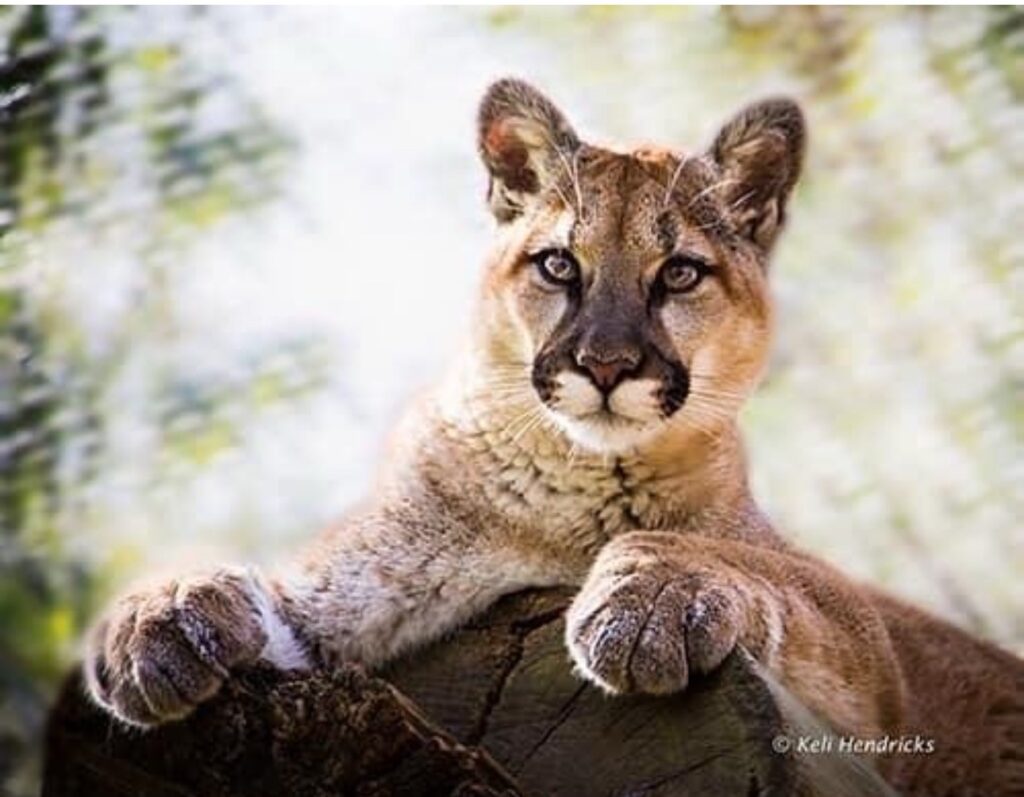
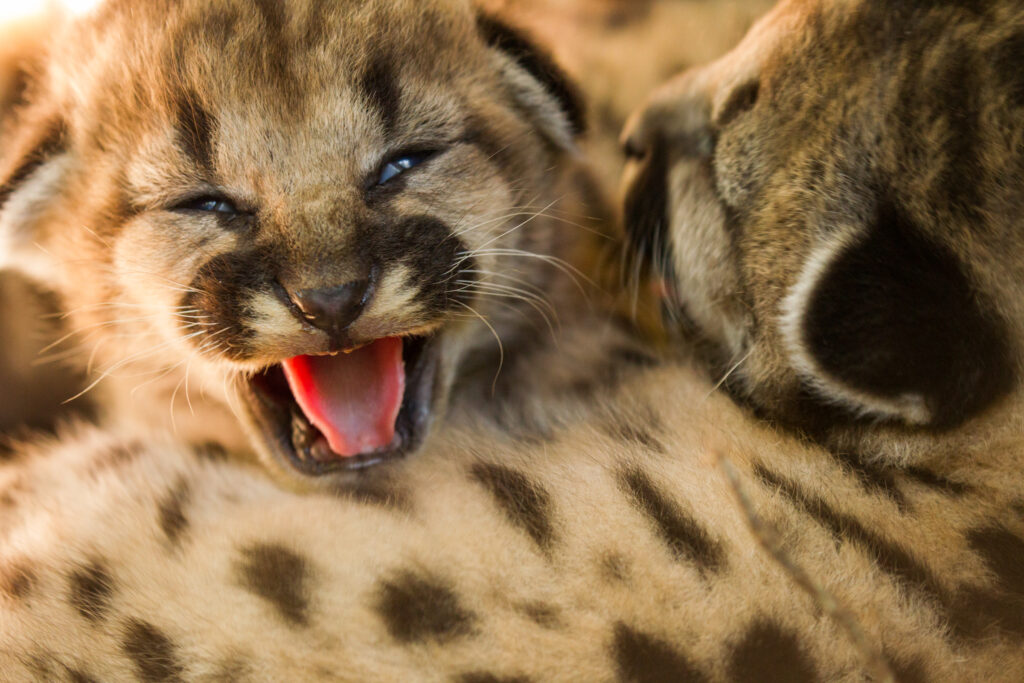

Mountain lions once ranged across nearly all of the Americas. Habitat loss, fragmentation, and fear-driven policies are putting their future at risk.
They play a critical role across their range. As apex predators, they help regulate deer populations, contribute to healthy and resilient ecosystems, and support biodiversity across diverse landscapes.
Protecting mountain lions is about more than protecting a single species, it means protecting the wild heritage of America. It is about advancing practical coexistence solutions that keep communities safe, preserving biodiversity, and ensuring future generations inherit healthy, connected landscapes.
Puma concolor
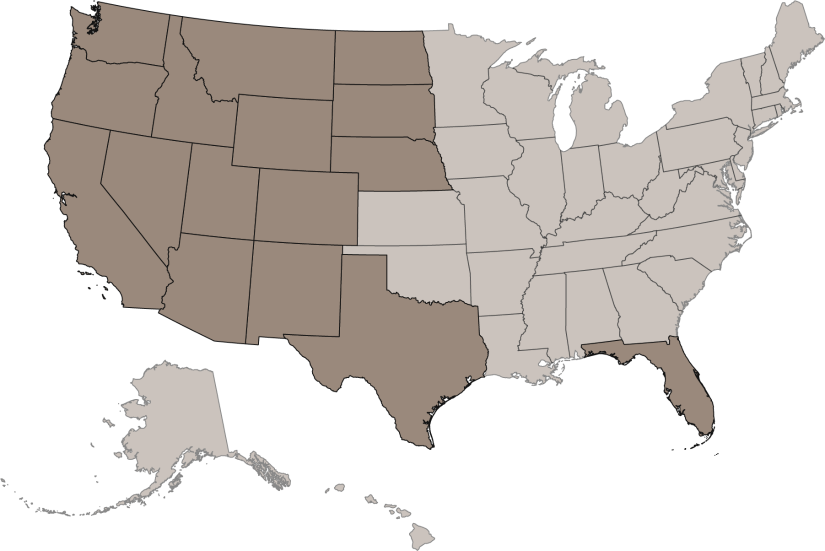
Found from Yukon, Canada to Patagonia in Chile, as well as populations in 16 U.S. states.
Solitary but not isolated, can be active any time of day. Human activity impacts cougar activity – they’re more active during the day where hunting or recreation pressure is less.
Cougar, puma, panther, catamount, painter, and mountain lion all refer to the same animal.
Obligate carnivores that hunt a variety of prey, but primarily ungulates.
A keystone species helping shape healthy, connected landscapes.
Mountain lions use large home ranges and depend on connected habitat to find food, mates, and safe places to live.
They are stalk and ambush predators with powerful bodies, sharp senses, and specialized teeth and claws.
After a three month gestation period, females raise kittens on their own, teaching them how to survive, until the young disperse at around 15 months of age.
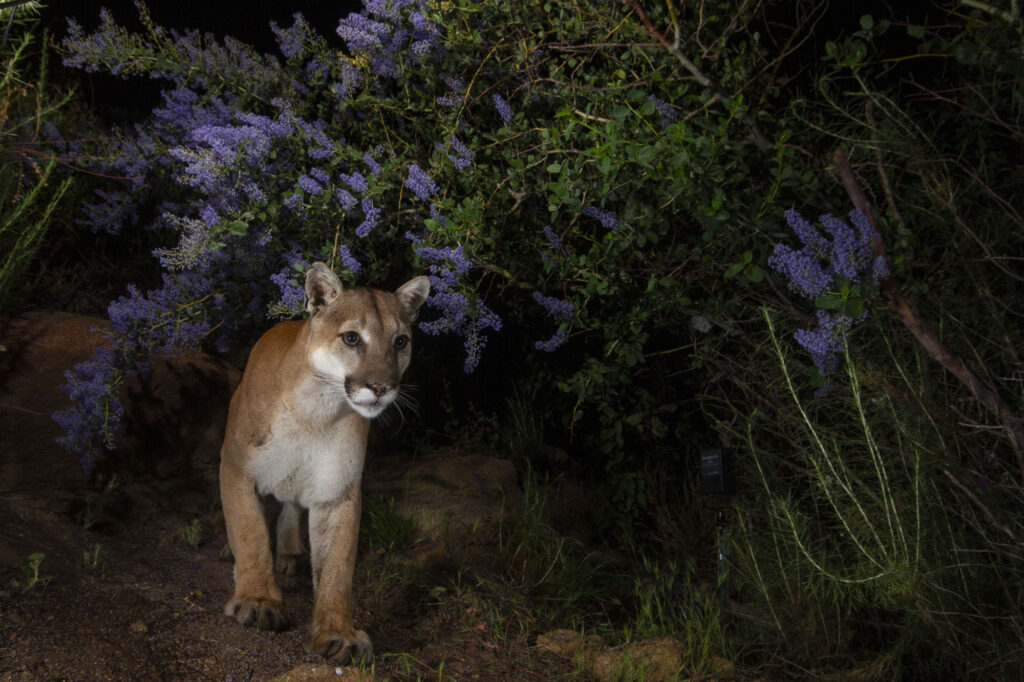
Mountain lions can live in forests, deserts, mountains, wetlands, and other landscapes when habitat and prey are available.
Mountain lions are among the most adaptable mammals in the Americas. They can be found in deserts, forests, mountains, wetlands, and grasslands wherever suitable habitat and prey are available.
Once ranging across nearly all of North and South America, mountain lions now occupy a smaller and increasingly fragmented range in many regions. Their long-term survival depends on connected landscapes that allow them to move, find mates, and maintain healthy populations.
Mountain lions play an important role in the ecosystems they inhabit. As apex predators, they influence relationships between wildlife, vegetation, and the landscapes we all depend on.
Their presence affects far more than their prey, contributing to ecological processes that help support biodiversity, habitat health, and resilient landscapes.
Part of a larger ecological story.
Mountain lions can live in forests, deserts, mountains, wetlands, and other landscapes when habitat and prey are available.
Supporting diverse and resilient ecosystems.
Mountain lions require large, connected habitat to survive. As an umbrella species, conserving those landscapes for lions means benefiting countless other species and ecological processes.
Protecting lions means protecting habitat.
Mountain lions require large, connected territories to survive. Conserving those landscapes benefits countless other species and ecological processes.
Mountain lions are remarkably adaptable, but adaptation has limits. Across their range, habitat loss, fragmentation, vehicle collisions, and conflict with people continue to create challenges for mountain lion populations.
Understanding these pressures helps us better understand why conservation, coexistence, and connected landscapes matter.
Less space to live and roam.
As communities expand and wild lands are converted to other uses, mountain lions lose access to the habitat they need to survive.
Barriers can isolate populations.
Roads, development, and other infrastructure can divide habitat, making it more difficult for mountain lions to move, find mates, and maintain genetically healthy populations.
Roadways are a growing threat.
Many mountain lions are killed while attempting to cross highways and roads that intersect important movement corridors.
Most conflicts can be prevented.
When mountain lions, people, pets, and livestock share the same landscapes, conflicts can occur. Education and practical coexistence measures help reduce risk and improve outcomes for both people and wildlife.
Understanding mountain lions is just the beginning. Explore practical coexistence guidance, learn how to stay safe in mountain lion country, discover the science behind The Lion Effect, or dive deeper into mountain lion biology and ecology.

Learn how people and mountain lions can successfully share landscapes.

Know what to do before, during, and after an encounter.

Discover how mountain lions influence ecosystems and why those connections matter.

Discover how mountain lions influence ecosystems and why those connections matter.