Southern Utah photographer Melani Wright is using camera traps and a lifelong love of the outdoors to help others see – and care about – the wildlife living alongside them.
You don’t have to be a wildlife biologist or full-time conservationist to make a difference for mountain lions. Sometimes meaningful advocacy begins with a personal passion, a camera, and a willingness to help others see the natural world differently.
Southern Utah photographer Melani Wright has loved art, photography, and the outdoors her entire life. But photographing the wildlife around her home presents a challenge: many animals are wary of people, and some are most active when people aren’t around.
So Melani began experimenting with camera trapping.
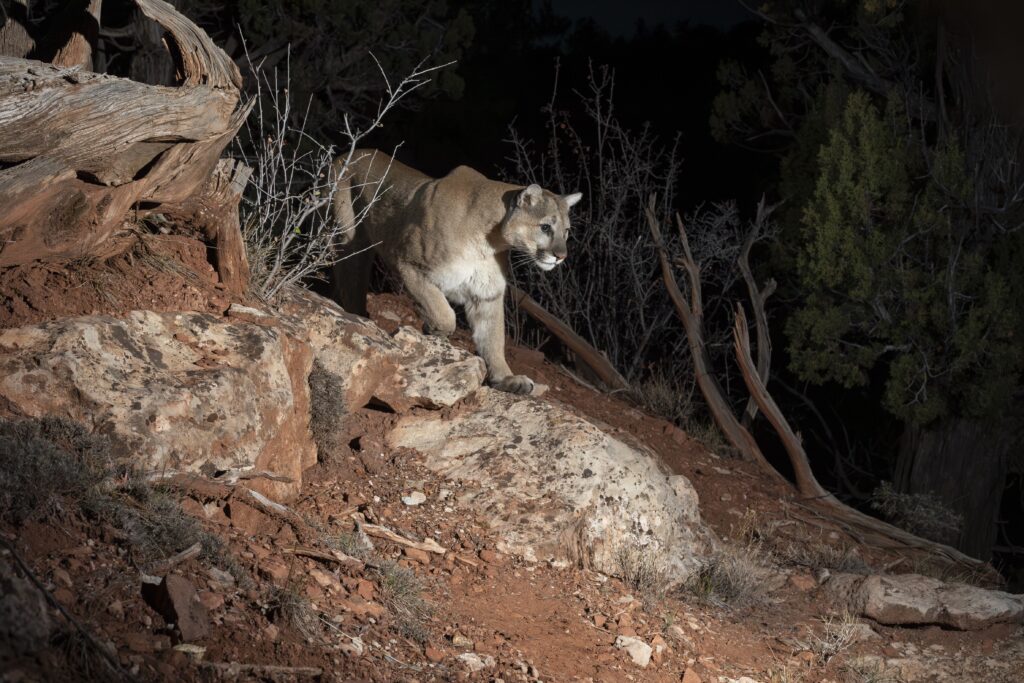
Using remotely triggered, high-quality cameras, she can capture images of mountain lions and other elusive wildlife while allowing the animals to move naturally through their habitat without a photographer standing nearby.
Seeing the Whole Wild Landscape
Today, Melani is building a portfolio documenting the remarkable diversity of life in southern Utah.
Mountain lions may be at the top of her list of “cool animals,” but her work extends much further. Birds, insects, plants, and other wildlife all become subjects—and together they tell a larger story about the interconnected landscapes they share.
“I hope my photography and social media posts can help promote the idea of being good stewards of the natural world we have inherited,” she says.
It’s an idea that connects closely with the Lion Effect. Mountain lions don’t exist apart from the landscapes around them. They are part of a much larger web of relationships among wildlife, habitat, water, plants, and people.
Photography can make those connections visible.
Wildlife in a Changing Utah
During her 33 years in southern Utah, Melani has watched communities expand into places once occupied by burrowing owls, kit foxes, and other wildlife. Natural corridors between communities have become fewer and narrower, leaving animals with less room to live and move safely.
She’s also learned something through years of actively seeking wildlife in the mountains: finding wild animals isn’t easy.
Mountain lions and other wildlife generally try to avoid people. Yet fear and misunderstanding can profoundly influence the way people think about these animals and the policies used to manage them.
That matters particularly in Utah, where mountain lions are facing increased pressure following major changes to state management policies.
Through her photographs, Melani hopes she can help people see these animals differently.
“If they don’t see it, how will they care about protecting it?” she asks.
Finding Your Way to Make a Difference
That’s part of what Utah Wild is about.
Protecting Utah’s mountain lions will require more than any one organization. It takes people willing to contribute what they have—whether that’s scientific expertise, a voice in their community, time to volunteer, or, in Melani’s case, an extraordinary ability to reveal wildlife most of us rarely have the opportunity to see.
Photography. Education. Volunteering. Advocacy. Conversation.
There are many ways to help people better understand mountain lions and protect the landscapes they need.
Melani found hers.
We’re also deeply grateful to Melani for donating the use of her photography and video to the Mountain Lion Foundation. You’ll see some of her remarkable images in MLF’s 2027 calendar and in educational and outreach materials throughout the coming year.
Explore Melani’s work at Zen Photo Journey →
[Get Involved with Utah Wild →]
Explore Melani’s work at Zen Photo Journey →
Instagram: @zenphotojourney
YouTube: @zenphotojourney
Facebook: Zen Photo Journey