PHOTO: Frank Weigel
Some management decisions are more difficult to reverse than others. Building a road into an intact landscape is one of them.
The U.S. Department of Agriculture has formally proposed rescinding the 2001 Roadless Area Conservation Rule, which limits most new road construction, road reconstruction, and timber removal across nearly 45 million acres of national forest land. Our land. The public has until September 21st to comment.
This is still a proposal, and rescinding the rule would not immediately authorize a particular road, timber sale, or development project. What it would do is remove a consistent national safeguard and shift future decisions to individual forests. Roads and other development could then be approved one project at a time, while their combined effects increasingly fragment the larger landscape that wildlife depends on.
USDA is proposing to fully rescind the Roadless Rule, removing national protections from around 45 million acres. It also analyzed a less extensive alternative that would retain some protections, but still remove them from 31.7 million acres. Even under that option, most of the lands currently covered by the rule would lose its safeguards.
Why This Matters for Mountain Lions
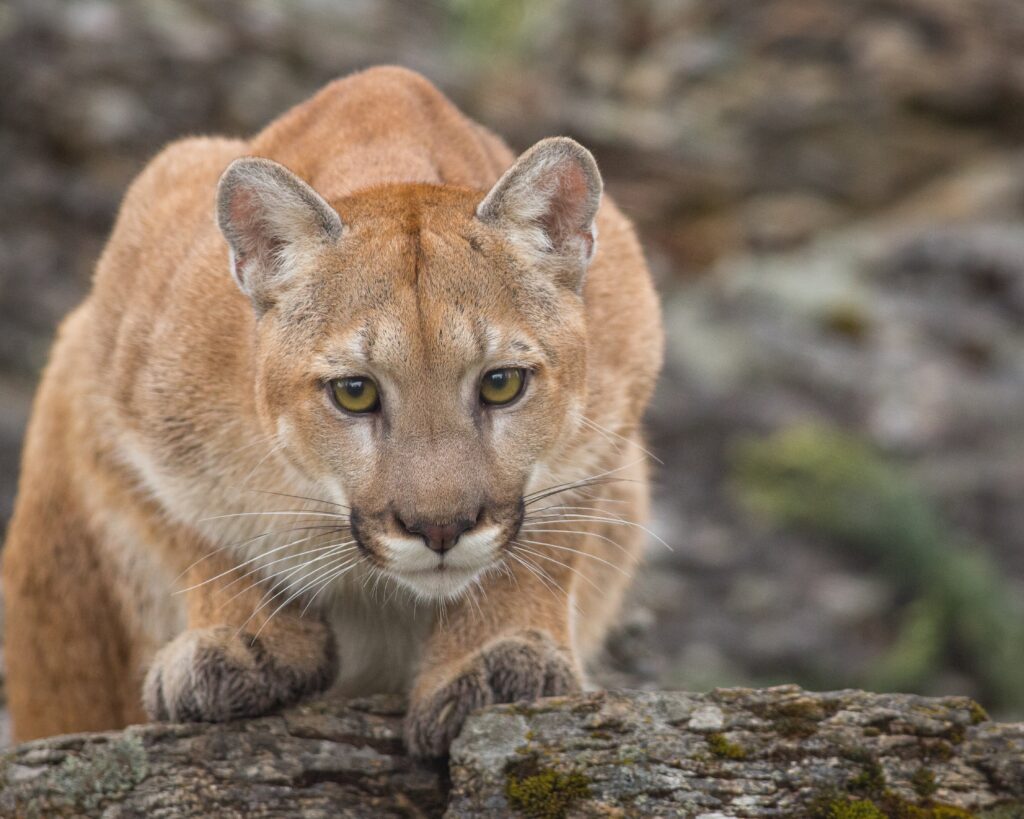
Not every affected acre is mountain lion habitat, and separate roadless rules in Idaho and Colorado would remain. Still, large portions of the affected lands lie within western forests where mountain lions hunt, raise young, and move between populations.
Mountain lions are remarkably adaptable, but that adaptability can lead us to underestimate their need for secure, connected habitat. An individual lion may cross or even travel along a low-use road. The larger concern is what follows an expanding road network: more motorized access, more disturbance, changes to vegetative cover, increased population pressure, and more opportunities for human-caused mortality.
A road may begin as access for a single project, but its ecological influence rarely ends with the road’s construction. It changes who can reach a place, how often they can reach it, and what additional landscape uses may become possible.
Research in western Montana found that mountain lions selected areas with greater canopy cover and avoided roads. A recent statewide California study found that roads and development inhibited the movements of dispersing lions, while vegetative cover helped make some crossing locations more permeable.
For a species that occupies large territories and depends on dispersal to maintain healthy populations, the cumulative effects matter. Protecting connectivity before it is compromised is far more effective than trying to rebuild it later.
MLF recognizes the serious challenges posed by wildfire, insects, disease, and changing forest conditions. We support thoughtful, science-based forest management, including carefully designed thinning and prescribed fire where they are needed. Forest management and habitat conservation do not belong on opposite sides of this discussion.
The existing Roadless Rule contains exceptions that allow legitimate safety and management needs to be addressed. The question is whether those needs justify removing national protections across nearly 45 million acres. We do not believe they do.
Take Action by September 21st
Submitting a meaningful comment can be simple:
- Open the official federal comment portal. https://www.regulations.gov/commenton/FS-2025-0001-223869
- Ask USDA to reject Alternative 2, full rescission, and select Alternative 1, the No Action alternative, which keeps the Roadless Rule in place.
- Add a sentence about why connected wildlife habitat or a national forest you know matters to you, then submit your comment by September 21st.
Here is language you can personalize:
“I urge USDA to reject full rescission of the 2001 Roadless Rule and select Alternative 1, the No Action alternative. The national rule provides consistent protection for secure, connected habitat used by mountain lions and other wildlife. Please fully consider how new roads, increased motorized access, vegetation removal, and human-caused mortality can accumulate across a landscape. Where forest treatment is necessary for community safety or ecological resilience, use targeted, science-based approaches that minimize permanent roads and protect wildlife habitat and connectivity.”
A short, personal comment is enough to place your concerns in the public record. This is an opportunity to protect connected habitat before the decisions affecting it become much harder to undo.