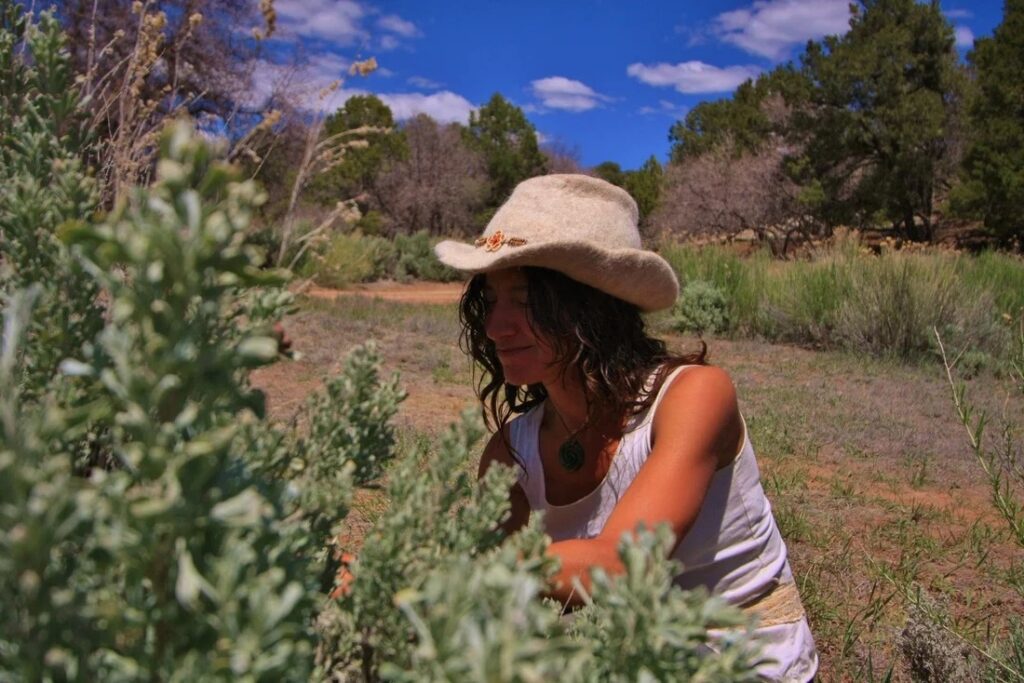
PHOTO: Anthony Trumbo
In Boulder, Utah, wildness is never far away. The small community sits between the Aquarius Plateau and Grand Staircase-Escalante National Monument, surrounded by lands that mountain lions and other wildlife have inhabited for generations.
For Boulder resident Constance Lynn, that proximity has shaped a deeply personal understanding of coexistence. She and her partner, Matt, moved to Boulder in 2008, and Constance describes life there as one in which “there is no separation between us and the wildlife who inhabit this area.”
Through Night Raven ReWilding, Constance works to help people deepen their relationship with the natural world, encouraging individuals to engage with and care for the “Beings of Nature as our kin.” It is a perspective that runs throughout her work: that humans are not separate from wildlife and wild places, but members of the same larger ecological community.
A Community Conversation Takes Root
As Constance and Matt learned more about WRI-7707, HB125 and HB469, they created Cougar Field Notes and the Cougar Wildlands Initiative to keep their community informed and help people take action by contacting elected officials and wildlife agencies.
Along the way, Constance drew on relationships with Joshua, Paul Garvey, an MLF board member and active mountain lion advocate in southern Utah, as well as Denise Peterson of Mountain Lion Conservation, agency contacts and members of the local hunting community. Those conversations gave her a much deeper education in the politics and wildlife-management decisions affecting Utah’s mountain lions.
For Constance, learning more also brought grief and a need to respond. Her answer was to organize A Vigil Walk on Behalf of Our Cougar Kin, turning that grief into a public act of witness, community and care.
“I have always been a walker,” Constance explains. She describes walking through the mountains and deserts with offerings, blessings, grief, and gratitude. The vigil brought that personal practice into her advocacy, creating a peaceful way to bear witness and bring greater awareness to what is happening to Utah’s mountain lions.
For Constance, it was also something more: “our walk as a prayer.”
“We All Belong to Earth”
At MLF, we often say that wildlife belongs to all of us. Constance embraces that idea, while offering another way to think about our relationship with wildlife.
“I believe that we all Belong to Earth,” she says.
Her perspective asks us to see people as part of, rather than apart from, the ecological community. As she explains it, coexistence means recognizing that every species, including humans, has an ecological role and a responsibility to the larger whole.
“May our care arise from recognizing the intrinsic value of each and every Being and their inherent right to their existence,” she says.
That view also challenges the fear and misunderstanding that too often surrounds mountain lions. Constance believes that political and media narratives can create unnecessary fear, making education and accurate information essential to changing the conversation about cougars.
You Don’t Have to Be an “Activist”
One of the most powerful messages from Constance’s experience is that caring for mountain lions does not require someone to think of themselves as an activist.
People can contact elected officials and wildlife agencies. They can share information with friends, tell stories, make art, post on social media, or simply help someone else understand mountain lions differently.
Constance encourages people to begin with what they feel and care about and then find a response that feels meaningful to them.
Above all, she says, “their care matters.”
Her hope now is what she calls an “active hope”, that Utah will change course on WRI-7707, HB125 and HB469 and move toward a future in which mountain lions and other wildlife can “flourish and thrive in the lands that have been their home for millions of years.”
The Cougar Wildlands Initiative is a reminder that conservation does not happen only in courtrooms, legislatures or scientific studies. It also begins in communities, when people learn what is happening, come together, speak for wildlife, and find their own way to turn care into action.