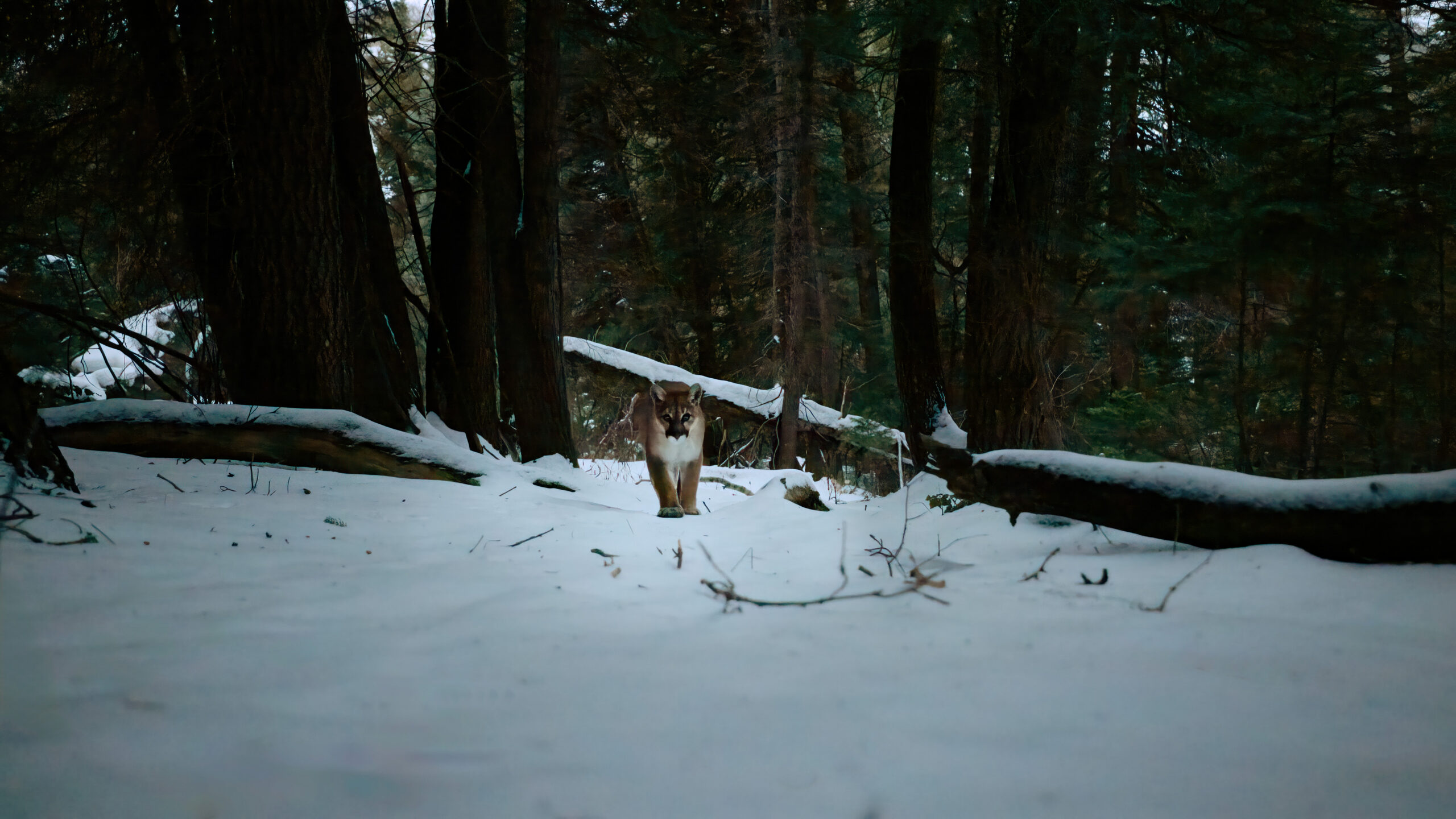
Just days after this issue of Lions Share reaches you, the Wallis Annenberg Wildlife Crossing is scheduled to open to animals above the 101 Freeway near Los Angeles.
Covered with native vegetation, the bridge will reconnect habitat that has been divided by traffic for decades. For mountain lions in the Santa Monica Mountains, it offers a safer route toward new territory and potential mates. Read more about the crossing here: 101 Wildlife Crossing.
The High Cost of Fragmented Habitat
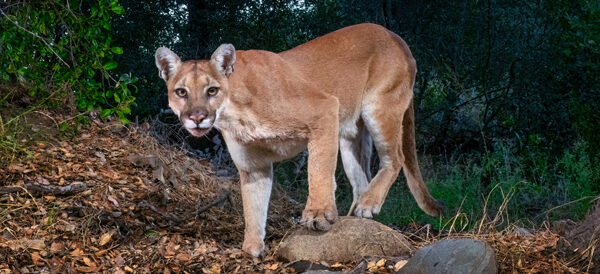
The need is urgent. A new UC Davis report estimates that vehicles kill at least 780 mountain lions in California each year—about 18% of the state’s estimated population. Roads are especially consequential for Southern California’s small, isolated lion populations: they can kill animals attempting to travel and prevent others from reaching the habitat they need. Read the study here.
A Conservation Milestone
The Wallis Annenberg crossing is a remarkable response, made possible by years of research, public investment, philanthropy, and determined advocacy. The National Wildlife Federation’s #SaveLACougars campaign and its public agency partners led the project. The Mountain Lion Foundation and our supporters have worked with nearby communities on coexistence, sharing practical ways to protect pets and livestock, and advocating for state support of wildlife crossings.
Keeping Wildlife Connected
And there is more good news ahead. Near Temecula, partners are designing a second vegetated crossing over Interstate 15 at Rainbow Canyon. It would reconnect the Santa Ana and Palomar mountains, where the highway has severely restricted wildlife movement. California awarded $4 million this year to advance its design and permitting. MLF previously joined other conservation groups in securing protection for a nearby wildlife corridor—part of the larger work of keeping a path open for Santa Ana mountain lions.
A bridge is one part of that work. The UC Davis researchers emphasize that effective fencing is also needed to guide wildlife toward safe passages and away from traffic. Protecting the land on either side matters, too. These projects show what becomes possible when people commit to all three: safe crossings, connected habitat, and coexistence with the lions who live alongside us.
To everyone who has supported MLF and the many organizations working to make these connections possible: thank you. When the crossing opens on December 2, we hope you’ll share in the pride of seeing a long-held vision become a path forward.
What You Can Do
Utah allows mountain lions to be hunted year-round, with no limit. Ask Utah’s leaders to restore science-based safeguards for mountain lions and to commission an independent scientific review of the state’s predator-removal study. Visit Utah Wild to learn how to make your voice heard.
Sources: Utah Division of Wildlife Resources, 2025 Utah Cougar Annual Report (Pub. 26-22); population estimates from Utah Division of Natural Resources memo, Nov. 14, 2025.