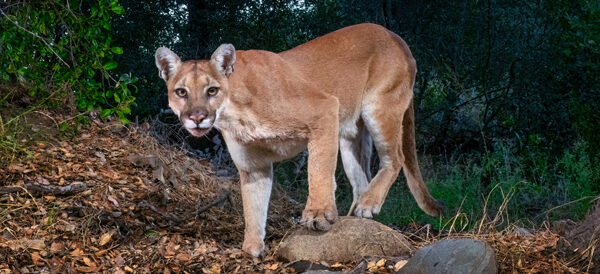
A fresh snowfall can reveal a life we rarely see.
Across a quiet hillside, a line of pawprints may show where a mountain lion passed during the night. The lion itself is probably long gone.
Life in a Winter Landscape
Mountain lions remain active all winter. They travel through their territories, follow deer and other prey, and look for shelter from the weather. A lion that makes a kill may cover it with leaves, dirt, or snow and return to feed over several days. These traces offer a glimpse of how a wild animal lives through the cold months.
When Tracks Become a Threat
Snow reveals those movements to people, too. In places like Utah, hunters can follow a fresh lion track across the landscape. With year-round hunting and trapping permitted there, winter can be a particularly dangerous time for a lion whose path is suddenly visible.
For those of us who live or spend time in lion country, the best response to a track is to appreciate it from a distance. Give the animal room to move and leave any hidden carcass undisturbed: a lion may still be nearby or return to feed. Coexistence begins with understanding that we share this landscape, even when we never see its most elusive resident.
Winter Coexistence Checklist
Keep pets close. Bring cats and dogs indoors at night. Accompany dogs outside after dark and keep them leashed on walks, especially around dawn and dusk. Learn more about protecting pets.
Give deer space from your home. Do not feed deer, and avoid leaving food that draws them into your yard. Where deer gather, lions may follow. Learn more about coexistence.
Secure small livestock overnight. Use a sturdy, fully covered enclosure; in snowy areas, make sure its roof can bear the snow load.
Pay attention on winter trails. Keep children close and pets leashed. If you find a deer carcass, particularly one covered with snow or debris, leave the area and give the lion space.
If you encounter a lion, stay calm. Do not run or approach it. Face the animal, give it an escape route, make yourself look larger, and back away slowly.
Sources: Utah Division of Wildlife Resources, 2025 Utah Cougar Annual Report (Pub. 26-22); population estimates from Utah Division of Natural Resources memo, Nov. 14, 2025.