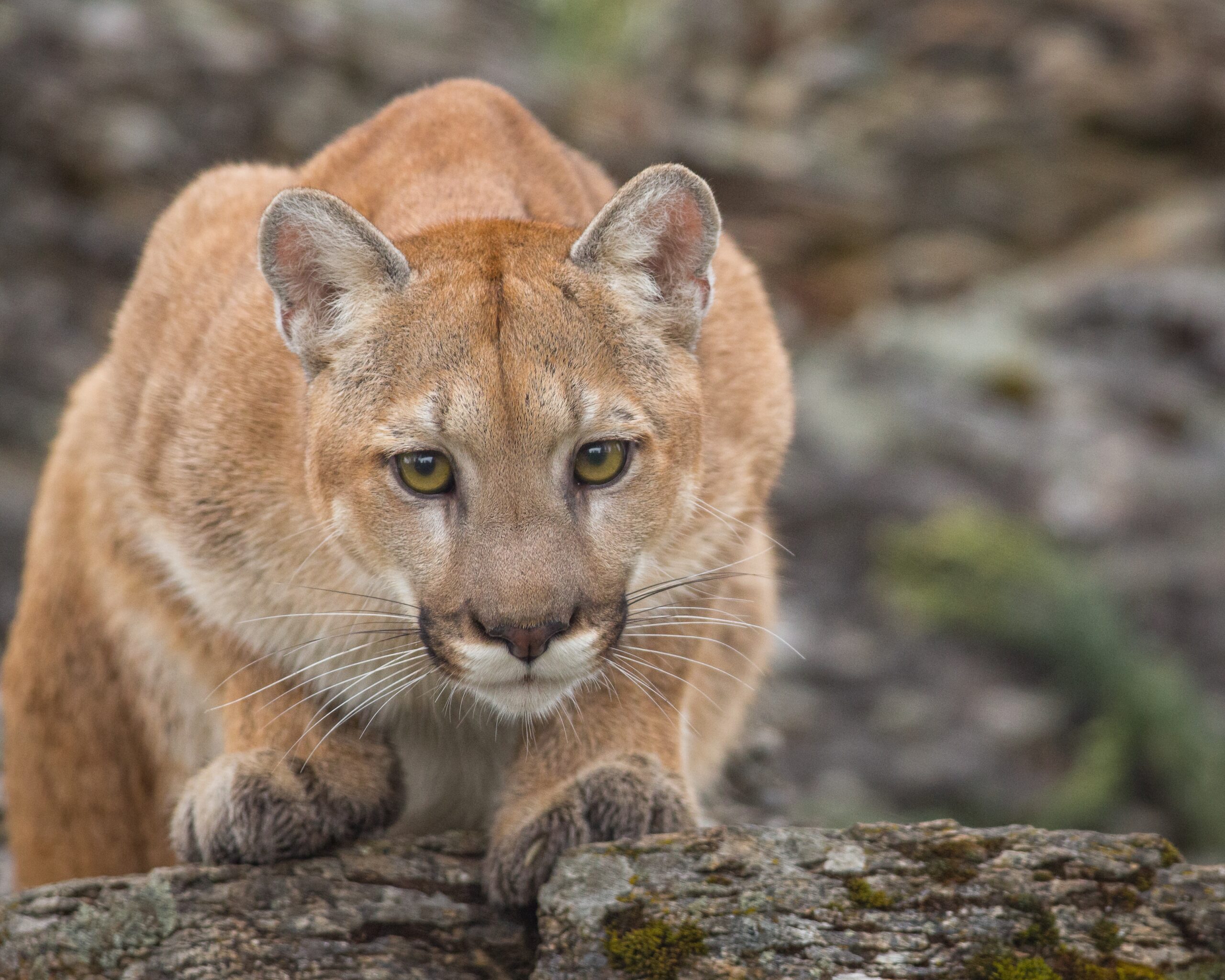
PHOTO: Anthony Trumbo
New litigation challenges the science behind Arizona’s mountain lion hunting policies, and raises larger questions about wildlife management and the public trust.
On August 7, the Center for Biological Diversity and Arizona conservationist Robin Silver filed suit against the Arizona Game and Fish Commission, the Arizona Game and Fish Department (AGFD), and Department Director Tom Finley. The case asks a state court to suspend the sport-hunting of mountain lions until Arizona’s lion population has recovered to sustainable reproductive levels.
The Mountain Lion Foundation applauds the Center for Biological Diversity and Robin Silver for bringing these concerns before the court and creating an opportunity for careful review of Arizona’s mountain lion management. State wildlife agencies have an essential and often difficult responsibility to balance science, public values, and practical realities, and MLF respects their expertise and sees them as important conservation allies. That respect also means taking credible questions about population data and hunting levels seriously. This case provides an opportunity to examine whether Arizona’s current approach is supported by sufficiently reliable evidence and whether it is consistent with Arizona’s responsibility to protect wildlife for present and future generations.
The Mountain Lion Foundation is not a plaintiff in the lawsuit. But the case raises issues at the heart of MLF’s work: whether mountain lion management is grounded in sound science, whether hunting levels allow for viable populations over the long term, and whether state wildlife agencies are fulfilling their responsibility to manage wildlife for the benefit of the entire public.
What Arizona’s hunting records show
At the center of the lawsuit is an extraordinary set of numbers drawn largely from AGFD’s own hunting and aging records.
Between 2018 and 2024, sport hunters killed 1,937 Arizona mountain lions for which age data were available — an average of 277 lions each year. According to the complaint, 54 percent of those lions were two years old or younger. That included 518 lions one year old or younger and another 519 two-year-olds. Females represented 41 percent of the lions killed.
At the other end of the age spectrum, just 8 percent were six years old or older.
Those numbers matter because mountain lions reproduce relatively slowly. AGFD itself reports that females generally do not first breed until approximately 2½ to 3 years old and that young lions can remain dependent on their mothers for 11 to 18 months. Removing large numbers of young animals before they reproduce along with breeding-age females can have consequences that extend well beyond the number of animals recorded in annual hunting totals.
The complaint also cites research identifying adult female survival as one of the most important factors governing mountain lion population growth. Dependent cub survival is estimated at 51% when the mother survives, and just 14% when she is killed. Those losses likely never appear in hunting statistics.
Three models, the same warning
The plaintiffs submitted three separate population-modeling analyses conducted by wildlife demography experts. The three models cover a variety of approaches that converge towards the same broad conclusion: current levels of sport hunting are not sustainable over the long term.
One analysis projected that, without immigration of animals into the state, and if the same annual number of reported sport-hunting deaths continued regardless of population size, mountain lions on the state’s non-tribal lands could reach functional extirpation in roughly 15 years. Another concluded that the current hunting zone hunting thresholds appear to require kitten survival or other demographic rates higher than those supported by published research.
Former AGFD large-carnivore biologist Ron Thompson and wildlife biologists Dr. Aletris Neils and Dr. Angela Darnell Baker also submitted declarations supporting these modeling conclusions.
These analyses and opinions were presented by the plaintiffs. They have not yet been tested through the adversarial court process, and the court has not ruled on their validity or the merits of the lawsuit. But they present questions that deserve serious scrutiny before additional lions are removed from the population. AGFD has so far declined to address the substance of the case publicly, citing the pending litigation.
A public trust question
The lawsuit is about more than population models.
Arizona law expressly states that wildlife resources are managed “in trust” for the benefit of all residents and visitors and recognizes the preservation, protection, management and restoration of wildlife as a matter of public policy.
The plaintiffs argue that continuing to authorize mountain lion hunting at the current levels will drive the population downward, violating their public trust responsibility. Their legal claims include allegations that the state’s actions are arbitrary and capricious, inconsistent with its statutory wildlife-protection duties, and in violation of Arizona’s public trust doctrine.
That argument raises an important question well beyond Arizona: What does it mean for a wildlife agency to hold animals in trust for the public?
Wildlife is a shared public resource, valued in different ways by hunters, photographers, scientists, hikers, Tribal communities, rural residents and people who may never see a mountain lion but believe wild places should continue to support wild carnivores.
For MLF, meaningful public trust management requires looking beyond how many animals may legally be killed in a particular year. It requires asking whether management will sustain healthy, resilient populations for future generations.
What happens next
Arizona’s 2026–27 general mountain lion hunting season is scheduled to begin August 21, 2026 and continue through May 31, 2027. The plaintiffs are asking the Maricopa County Superior Court to suspend mountain lion hunting until self-sustaining reproduction and population recovery have been established and verified.
Whatever the ultimate outcome in court, the Arizona case puts a critical issue into sharp focus. Decisions about mountain lions should begin with reliable population data, credible science and a commitment to maintaining healthy populations, not with predetermined hunting objectives that sometimes fail to take the best available science into account.
For nearly four decades, the Mountain Lion Foundation has worked for exactly that principle: mountain lions deserve management based on science, coexistence and the long-term public interest.
Arizona’s mountain lions belong to future generations as much as they belong to us today. Their management should reflect that responsibility.